
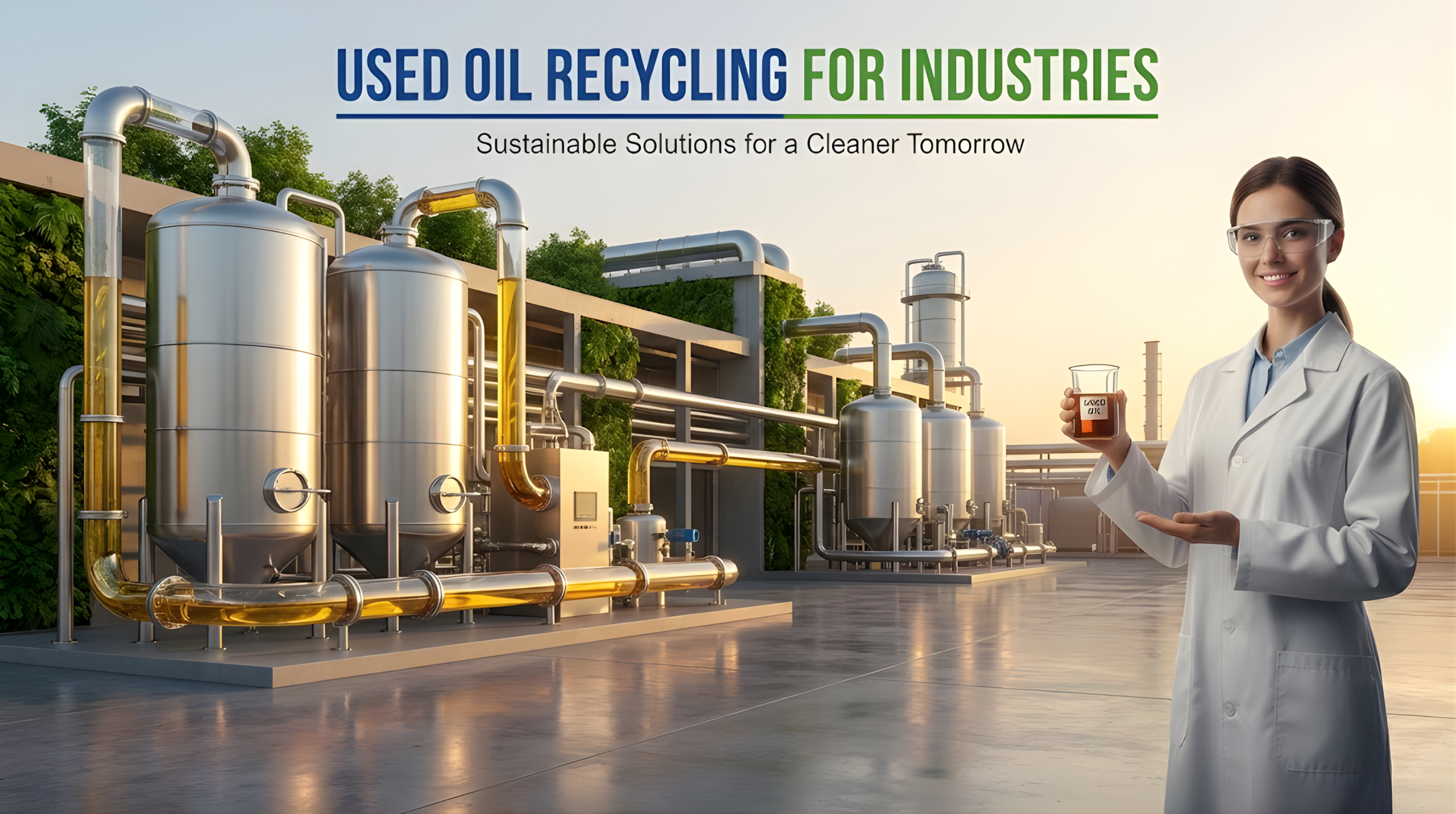
What is Used Oil Recycling for Industries?
Used oil recycling for industries generates tons of used oil from machinery, engines, and hydraulic systems every day. Used oil recycling for industries transforms this waste into valuable resources like fuels and lubricants. Companies adopt these practices to cut costs and meet environmental regulations.
Safety-Kleen, a leader in oil re-refining, processes over 200 million gallons annually, recovering 90% as base oil. The global waste oil market projects growth to $26.58 billion by 2034. Businesses gain compliance and efficiency through authorized programs at rerolrefinery
Why Used Oil Recycling Matters for Industries
Factories, automotive shops, and power plants churn out contaminated oil constantly. Heat, metal shavings, water, and dirt degrade lubricants quickly. Without proper used oil management, this hazardous waste oil pollutes soil and groundwater severely.
EPA warns that one gallon of used oil contaminates one million gallons of freshwater. Rerolrefinery steps in with industrial used oil recycling solutions tailored for Chennai operations. We prevent environmental disasters while turning waste into profit.
India produces 1.3 million tonnes of used oil yearly, but formal waste oil recycling covers just 15%. This gap highlights the urgent need for sustainable oil recycling adoption across manufacturing sectors.
Common Sources of Used Oil in Industries
Used oil recycling for industries manufacturing plants generate hydraulic fluids from presses and CNC machines daily. Automotive service centers collect engine oils from fleet maintenance. Steel mills and shipyards produce massive volumes of gearboxes and heavy equipment.
Power generation facilities contribute turbine lubricants contaminated by fuel leaks. Marine industries face strict anti-pollution rules, making oil re-refining essential. rerolrefinery handles all these streams with precision.
- Engine oils from diesel trucks and cars
- Hydraulic fluids from industrial presses
- Gearbox lubricants from cranes and mills
Chennai factories trust our Chennai oil recycling services for seamless pickups.
The Complete Used Oil Recycling Process

Collection and Storage Phase
Teams at rerolrefinery arrive with vacuum trucks for safe collection. Industries store used oil in labeled, leak-proof drums or IBC totes as per CPCB guidelines. We issue Form 10 manifests for full traceability from pickup to processing.
Proper storage prevents spills and fires, a common hazard in hazardous waste oil handling. Our drivers segregate oil types on-site to optimize downstream oil re-refining efficiency.
Pre-Treatment: Dewatering and Demulsification
Dewatering kicks off pre-treatment by separating free water through gravity settling in heated tanks. Chemicals break stable emulsions where water binds tightly to oil droplets. Centrifuges then spin out the remaining moisture at high speeds.
This stage removes 95% of the water content, preparing feedstock for advanced purification. Wastewater undergoes treatment before safe discharge, ensuring zero environmental release.
We monitor pH levels closely to neutralize acids from oxidized oil.
Filtration and Demineralization in Used Oil Recycling
Filtration and demineralization form critical pre-treatment stages in industrial used oil recycling. These steps remove contaminants that degrade downstream processes like distillation. Operators at rerolrefinery execute them precisely to maximize base oil recycling yields in Chennai facilities.Oil Recycling Process
Industries generate used oil loaded with metal shavings, sludge, water, and additives from machinery wear. Filtration traps large particles early, preventing equipment clogs later. Demineralization targets dissolved inorganic that distillation cannot handle effectively.
These stages follow dewatering, where bulk water exits via gravity settling. Clean feedstock entering distillation boosts efficiency by 20-30%. Poor execution contaminates the final base oil, failing API standards.
Safety matters – acid handling demands PPE and ventilation. Our Chennai oil recycling plants maintain zero-incident records through rigorous protocols.
Detailed Filtration Process Breakdown
Filtration starts with coarse mechanical separation. Operators pump used oil through 100mesh vibrating screens that capture chunks larger than 150 microns. Metal shavings from engine bearings and gearbox wear collect here first.
Next, bag filters rated at 25-50 microns snag finer dirt and carbon soot. Pressure differentials signal cake buildup; operators swap bags every 4-8 hours. Backflushing with clean oil extends bag life by 50%.
Progressive Filtration Techniques
High-shear cartridge filters polish to 10 microns, removing 98% of solids overall. Self-cleaning designs use differential pressure sensors to trigger automatic purges.
Centrifugal separators spin at 10,000 RPM, flinging particles outward based on density. Lighter oil exits the center nozzles while solids eject peripherally. It dry-separates without consumables, cutting costs 40%.
Membrane filtration emerges for submicron cleanup. Ceramic membranes with 0.1micron pores retain 85% ash content, including wear metals. Backpulse cycles prevent fouling; flux rates hit 50 LMH.
| Filtration Type | Particle Size | Removal Efficiency [denveroil] |
|---|---|---|
| Vibrating Screens | >150 microns | 100% coarse debris |
| Bag Filters | 25-50 microns | 95% fine solids |
| Cartridge Filters | 10 microns | 98% total solids |
| Centrifuges | 5-20 microns | 90% dynamic separation |
| Ceramic Membranes | <1 micron | 85% ash/de-ashing |
Demineralization Chemistry and Execution
Demineralization employs sulfuric acid (96%, 5-15% treat rate) to protonate additives and precipitate inorganics. Zinc dialkyldithiophosphates (ZDDP) antiwear agents convert to insoluble sulfates. Calcium detergents form gypsum sludge.
Operators charge acid into heated (80-90°C) agitated reactors. High-shear mixers ensure intimate contact for 30-60 minutes. pH drops to 1-2, coagulating metals like iron and copper from wear.
Settling cones allow sludge gravity separation over 4-6 hours. Interface detectors trigger bottom drains, yielding 10-20% acid tar sludge by volume. Neutralization with lime prepares sludge for hazardous landfill.
Reagent Optimization Strategies
Proprietary emulsion breakers (50-200 ppm) enhance phase splitting. Polymer flocculants bridge fine precipitates for faster settling. Continuous-flow designs reduce residence time to 2 hours.
Advanced plants recycle 70% acid via distillation towers. Caustic scrubbing captures SO2 fumes for sulfur recovery.
Fine polishing filters (1-5 microns) follow demineralization. Activated carbon beds adsorb residual organics, decolorizing feedstock.
Equipment and Operational Best Practices
Industrial setups use stainless 316L reactors with steam jackets for precise heating. Variable-speed agitators (50-300 RPM) match viscosity changes. PLC controls automate dosing based on inline turbidity sensors.
Safety interlocks halt the acid pumps if ventilation fails. Secondary containment basins hold full reactor volumes. Operators don chemical suits, face shields during charging.
Daily startups purge lines with nitrogen. Shutdowns flush with caustic to neutralize residues.
Monitoring Key Performance Indicators

Inline particle counters track cleanliness (ISO 4406 codes). Acid value titration confirms additive removal. Metal scans via XRF verify demineralization efficacy.
Target: <50 ppm total metals post-process. Yield loss stays under 5%.
Integration of Upstream and Downstream Stages
Filtration precedes demineralization to protect the acid reactors from plugging. Post-demineralized oil feeds thin-film evaporators directly. Clean stock minimizes distillation fouling, extending run lengths 3x.
Dewatering first removes 95% water via vacuum or centrifuges, preventing acid dilution. Combined stages prepare Group II base oil feedstock.
| Pre-Treatment Stage | Key Action | Efficiency denveroil+1 |
|---|---|---|
| Dewatering | Gravity + heat | 95% water removal |
| Demulsification | Chemical breakers | Breaks 99% emulsions |
| Filtration | Screens + bags | 98% solids capture |
| Demineralization | Acid treatment | Removes 90% additives |
Environmental and Economic Impacts
These stages divert 90% contaminants from incineration, cutting CO2 by 0.5 tonnes per tonne oil. Acid sludge volumes shrink 30% with optimized dosing.
Capex for 10KL/day unit: INR 2 Cr; opex INR 8/liter processed. ROI hits 24 months via higher distillation yields.
Chennai regulations mandate neutralization before SPCB disposal. Our plants achieve 99.9% capture efficiency.
Modern Innovations and Alternatives
Ionic liquids replace sulfuric acid, reducing sludge by 70%. Ultrasound cavitation accelerates precipitation 5x. Electrodialysis demineralizes without chemicals.
AI models predict optimal acid rates from oil spectrography, cutting overtreat 15%.
Hybrid ceramic-polymer membranes combine filtration strength and fluxing 100 LMH.
Case Study
A local steel mill processed 500 tonnes monthly. Upgraded filtration cut distillation downtime 40%; demineralization dropped metals from 1,200 ppm to 45 ppm.
Savings: INR 12 lakhs/year in yields alone. Base oil met Group II specs.
Challenges and Troubleshooting
Emulsion persistence? Increase breaker dose to 20%. Slow settling? Add flocculant. Filter blinding? Precoat with diatomaceous earth.
Acid corrosion? Upgrade to Hastelloy internals. Variable feed? Blend tanks stabilize the composition.
Future Directions in Technology
Bio-based demulsifiers slash toxicity 90%. Nanofiber filters boost capacity 4x. Closed-loop acid cycles aim for zero waste.
rerole] pilot membrane tech, targeting 92% overall recovery.
Best Practices Summary
- Preheat oven to 60°C minimum
- Automated acid dosing via pH feedback
- Cycle filters preventively
- Log all KPIs daily
- Train operators quarterly
Mastering filtration and demineralization elevates industrial used oil recycling from basic collection to premium base oil production. Chennai Industries partnering with us to achieve 85% yields.
Advanced Re-Refining Techniques
Propane desasphalting extracts asphalt residues using solvent extraction. Vacuum distillation then fractionates the oil by boiling points, isolating light gases, naphtha, and heavy base stocks.
Hydrotreating injects hydrogen over catalysts to strip sulfur, nitrogen, and metals. Clay treatment adsorbs trace colors and odors for crystal-clear output.
Fractionation Breakdown
High-boiling fractions yield lubricating base oils. Lower cuts produce fuels or petrochemical feedstocks. Temperatures are kept below 400°C under vacuum to prevent cracking.
Quality tests confirm API standards before dispatch.
Environmental Benefits of Industrial Used Oil Recycling
Used oil recycling slashes landfill use and incineration emissions dramatically. Re-refining consumes 30-50% less energy than crude oil refining. One tonne recycled offsets 1.5 tonnes of virgin crude extraction.
Groundwater protection stands out – recycling prevents toxic leaching into aquifers. Our processes capture volatiles for safe reuse, cutting VOC emissions by 70%.
Chennai industries gain ESG credibility, winning green tenders easily.
- Reduces CO2 by 1.1 tonnes per tonne processed
- Conserves 42 barrels of crude per 1,000 gallons
- Avoids ocean spills in marine applications
EPA endorses re-refining as the top disposal method.
Economic Advantages for Businesses
Waste oil recycling cuts disposal fees by 40%, saving lakhs annually. Re-refined base oil sells 25% cheaper than virgin stock. Closed-loop systems minimize new purchases entirely.
EPR used oil credits to generate revenue – producers traded surpluses on CPCB portals. A Chennai steel mill client saved INR 50 lakhs last year through our program.
ROI hits 200% within 12 months for high-volume generators. Tax incentives under India’s green initiatives add a further boost.
| Economic Factor | Annual Savings Example icipackagingcoatings |
|---|---|
| Disposal Fees | INR 20 lakhs avoided |
| New Oil Costs | INR 15 lakhs reduced |
| EPR Credits | INR 10 lakhs earned |
| Energy Bills | INR 5 lakhs lower |
Regulatory Compliance in India
CPCB’s Hazardous and Other Wastes Rules classify used oil as hazardous above certain PCB thresholds. EPR mandates start at 10% recycling in 2026, scaling to 50% by 2031.
Register on eprusedoil.cpcb.gov.in for tracking. SPCBs authorize recyclers like us; non-compliance risks INR 10 lakh fines or shutdowns.
Market Statistics and Future Projections

India’s used oil recycling market stood at USD 4.05 billion in 2025, growing to USD 6.37 billion by 2033 at 5.8% CAGR. Lubricant demand hits 5-6 MMT by FY31.
Globally, waste oil recycling will reach $77.73 billion by 2032. Formal collection targets 50% by 2030 via the National Used Oil Association.
Safety-Kleen’s 200M gallon benchmark inspires our 10,000-tonne capacity expansions.
Industries We Serve with Expertise
Steel and metalworking plants recycle cutting oils efficiently. Automotive fleets manage engine waste at scale. Marine shipyards comply with IMO regulations using our services.
Power plants repurpose it as boiler fuel. Textile and chemical factories cut hydraulic disposal costs.
- 500+ Chennai clients served yearly
- 100 tonnes weekly capacity
- Custom on-site filtration available
Our Comprehensive Used Oil Recycling Services
Door-to-door collection across Tamil Nadu with real-time tracking. On-site audits quantify waste streams for optimization.
Full re-refining to Group II base oils with EPR certificates.
Implementation Best Practices
Conduct quarterly used oil audits to baseline volumes. Train staff on spill-proof storage protocols.
Schedule weekly pickups for high generators. Integrate EPR reporting into compliance software.
- Partner with CPCB-authorized firms only
- Use digital manifests for audits
- Pilot small batches before scaling
Technological Innovations Ahead
AI optimizes distillation yields to 90% soon. Membrane tech enhances demineralization precision. Blockchain tracks EPR chains transparently.
Case Studies of Success
A Chennai auto hub recycled 1,000 tonnes, saving 35% on lubricants. Steel giant earned INR 30 lakhs in credits. Marine operators avoided MARPOL fines via our burner fuel conversion.
Challenges and Solutions
High logistics costs? We offer bulk discounts. Contamination issues? Pre-sort on-site.
Variable quality? Our multi-stage process standardizes the output.
Global Benchmarks and Lessons
Safety-Kleen recovers 90%; we match at 85% with local adaptations. Europe’s 70% formal rate guides India’s reforms.
FAQs
What filtration removes in the process?
Filtration traps metal shavings and sludge using screens and 10-micron bags, achieving 98% solids capture.
How does demineralization work?
Sulfuric acid precipitates additives and metals from heated oil, removing 90% inorganics after settling.
What are the 2026 EPR used oil targets?
India requires 10% recycling of sales volume, rising to 50% by 2031 via CPCB portal.
What pollution does recycling prevent?
One gallon contaminates 1M gallons of water; recycling cuts CO2 by 1.1 tonnes/tonne.
How to handle used oil filters?
Puncture, hot-drain oil for recycling, then scrap metal per EPA rules.
Is on-site oil re-refining possible?
Mobile units filter/dehydrate 10KL/day for factories.
What contaminants get removed?
98% solids, 90% metals/additives, sulfur <10 ppm via full process.
India’s recycling market size?
USD 4.05B in 2025, growing to 6.37B.
Proper used oil storage rules?
Labeled drums on spill pallets, no solvent mixing.
Can fuel-contaminated oil recycle?
Yes, distillation strips light after dewatering 95% water.