

How to Choose the Best Industrial Fuel Supplier in India
Introduction
India’s industrial sector is expanding rapidly, but rising fuel costs, inconsistent fuel quality, and supply disruptions continue to affect operational efficiency across manufacturing, textiles, chemicals, cement, and power generation industries. According to the India Energy & Climate Center, industrial energy demand in India has nearly tripled since 2000 and now accounts for around 36% of the country’s total energy consumption. Poor-quality industrial fuel can increase equipment wear, reduce combustion efficiency, trigger unexpected downtime, and significantly raise maintenance costs.This is why choosing the right industrial fuel supplier is no longer just a procurement decision it directly impacts productivity, operating expenses, and long-term business performance. From Furnace Oil (FO) and Light Diesel Oil (LDO) to Industrial Diesel Oil (IDO) and alternative fuels, industries require reliable supply, consistent quality, and timely delivery.
Understanding Industrial Fuel Supply in India
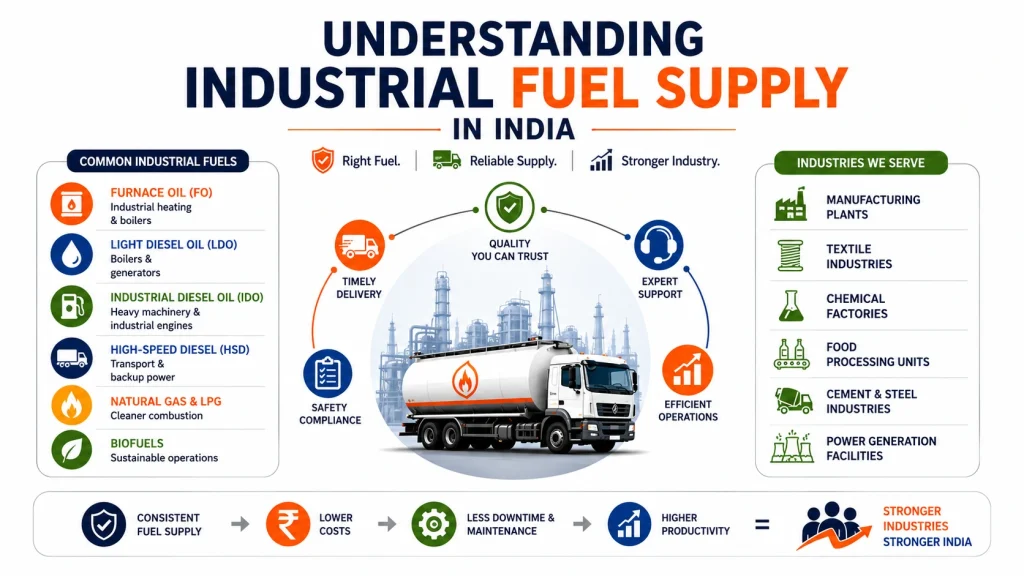
India’s industrial sector relies heavily on a stable and efficient fuel supply network to maintain continuous production. From manufacturing plants and textile mills to chemical factories and power generation units, industries require large volumes of fuel every day to operate boilers, furnaces, generators, and heavy machinery. According to the Ministry of Petroleum and Natural Gas, India remains one of the world’s largest energy consumers due to rapid industrial growth and infrastructure expansion.
Common industrial fuels used across India include:
- Furnace Oil (FO) for industrial heating systems
- Light Diesel Oil (LDO) for boilers and generators
- Industrial Diesel Oil (IDO) for heavy machinery
- High-Speed Diesel (HSD) for transportation and backup power
- Natural Gas and LPG for cleaner combustion
- Biofuels for sustainable industrial operations
What Is an Industrial Fuel Supplier?
An industrial fuel supplier is a company that provides fuels required for industrial operations, manufacturing processes, power generation, and heavy equipment usage. These suppliers ensure industries receive the right fuel type, proper fuel quality, and timely bulk deliveries to maintain uninterrupted production.
Industrial fuel suppliers do much more than simple fuel delivery. They help industries improve fuel efficiency, reduce operational risks, and maintain equipment performance. A reliable supplier also assists businesses with fuel storage, logistics planning, safety compliance, and emergency fuel requirements.
Common Types of Industrial Fuel Suppliers
- Bulk fuel distributors
- Furnace oil suppliers
- Diesel and LDO suppliers
- LPG and natural gas suppliers
- Biofuel and alternative energy suppliers
- Regional and pan-India fuel logistics companies
Role of Industrial Fuel Suppliers
- Deliver fuel in bulk quantities
- Maintain consistent fuel quality
- Provide scheduled and emergency deliveries
- Support industries with fuel management
- Ensure compliance with safety regulations
Common Types of Industrial Fuels Used in India
Indian industries use different types of fuels depending on operational needs, combustion efficiency, equipment design, and cost considerations. Choosing the right fuel directly affects productivity, maintenance costs, and environmental compliance.
Major Industrial Fuels Used Across India
| Fuel Type | Common Uses | Key Benefits |
| Furnace Oil (FO) | Boilers, furnaces, heaters | Cost-effective for large-scale heating |
| Light Diesel Oil (LDO) | Small boilers, generators | Cleaner combustion and lower maintenance |
| Industrial Diesel Oil (IDO) | Heavy machinery and industrial engines | Reliable energy output |
| High-Speed Diesel (HSD) | Transportation and backup generators | High efficiency and quick ignition |
| Natural Gas & LPG | Food processing, chemical plants | Cleaner emissions and efficient combustion |
| Biofuels | Sustainable industrial operations | Lower environmental impact |
Furnace Oil (FO)
Industries widely use Furnace Oil because it offers economical heating for large-scale operations. Cement plants, textile units, and steel industries commonly depend on FO for high-temperature applications.
Light Diesel Oil (LDO)
LDO works well in low-capacity boilers and industrial burners. It produces cleaner combustion than heavier fuels and reduces carbon deposits inside equipment.
Industrial Diesel Oil (IDO)
Industries use IDO for heavy-duty machinery and continuous industrial processes. Manufacturing plants often prefer it for reliable operational performance.
High-Speed Diesel (HSD)
HSD powers generators, transport fleets, and industrial backup systems. Industries value it for quick startup and consistent energy output.
Natural Gas and LPG
Food processing, pharmaceutical, and chemical industries prefer LPG and natural gas because they burn cleaner and help maintain strict environmental standards.
Industries That Depend on Industrial Fuel Suppliers
Industrial fuel suppliers support multiple sectors across India by ensuring uninterrupted fuel availability for daily operations. Reliable fuel supply helps industries maintain production efficiency, reduce downtime, and control operating costs.
Major Industries That Depend on Industrial Fuels
- Manufacturing plants
- Textile industries
- Chemical factories
- Food processing units
- Cement and steel industries
- Power generation facilities
Manufacturing industries use fuels like Furnace Oil and Industrial Diesel Oil to operate boilers, furnaces, and heavy machinery. For example, automobile manufacturing plants require continuous fuel supply for metal processing and production lines.
Textile industries, especially in states like Tamil Nadu and Gujarat, rely heavily on Furnace Oil for steam generation and fabric processing. Delayed fuel supply can disrupt entire production schedules.
Why Choosing the Right Industrial Fuel Supplier Matters
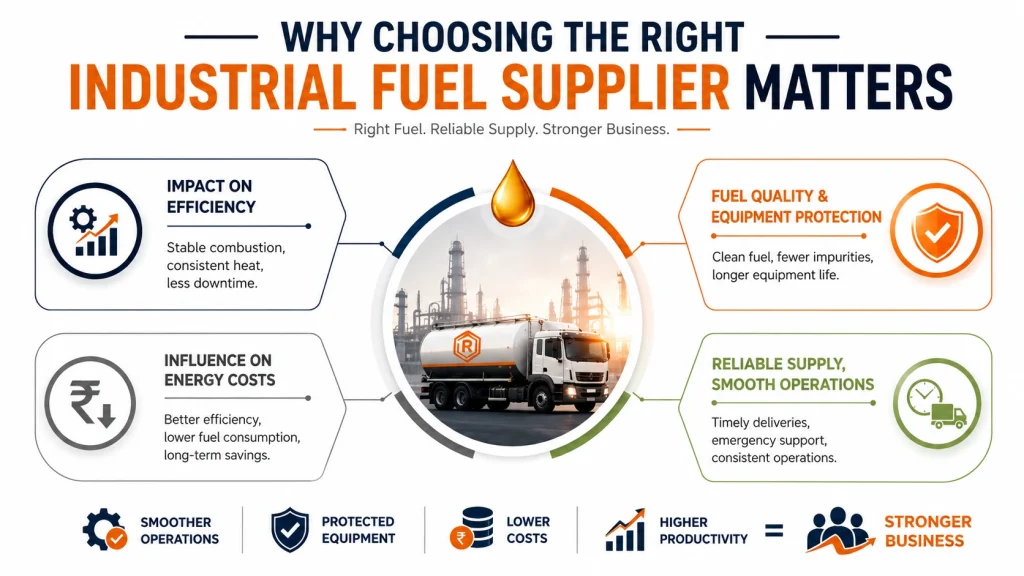
Choosing the right industrial fuel supplier directly affects productivity, operational stability, and long-term business costs. Industries across India depend on continuous fuel availability to run boilers, furnaces, generators, and heavy machinery without interruptions.
Reliable fuel suppliers help industries maintain smooth operations by providing consistent fuel quality, timely deliveries, and technical support. High-quality fuel improves combustion efficiency, reduces residue buildup, and lowers maintenance requirements.
The right supplier also helps businesses control rising energy costs. According to the International Energy Agency (IEA), energy expenses account for a significant share of industrial operating costs in manufacturing sectors worldwide.
Impact on Operational Efficiency
Operational efficiency depends heavily on fuel quality and supply reliability. Industries require fuels that burn efficiently, produce stable heat output, and support continuous production without equipment interruptions. The right industrial fuel supplier helps businesses improve productivity while reducing downtime and energy waste.
How Fuel Quality Improves Efficiency
- Ensures stable combustion performance
- Maintains consistent heat generation
- Reduces fuel wastage
- Prevents sudden equipment shutdowns
Consistent fuel quality plays a major role in industrial operations. Low-quality fuel often contains excess moisture, sulfur, or impurities that reduce combustion efficiency and create For example, a food processing plant using clean Light Diesel Oil (LDO) can achieve more stable heating temperatures and lower burner maintenance compared to facilities using contaminated fuel.
Benefits of Better Combustion Performance
- Faster heating processes
- Lower smoke emissions
- Improved energy transfer
- Reduced operational stress on machinery
Reliable fuel supply also minimizes costly downtime. Even a few hours of production stoppage can lead to major financial losses in industries such as cement, textiles, and steel manufacturing.
A dependable industrial fuel supplier helps businesses maintain:
- Timely fuel deliveries
- Emergency fuel availability
- Consistent operational schedules
- Better overall production efficiency
Fuel Quality and Equipment Protection
Fuel quality directly affects the performance, safety, and lifespan of industrial equipment. Boilers, furnaces, generators, and burners operate more efficiently when industries use clean and properly tested fuel. Poor-quality fuel often contains sludge, moisture, ash, and other contaminants that damage internal components and reduce operational reliability.
How High-Quality Fuel Protects Equipment
| Fuel Quality Factor | Impact on Equipment |
| Low moisture content | Prevents corrosion and rust |
| Reduced sulfur levels | Minimizes internal damage |
| Clean combustion | Reduces carbon deposits |
| Stable viscosity | Improves burner performance |
| Fewer impurities | Extends equipment lifespan |
Industries that use quality fuel often experience lower maintenance costs because equipment runs more smoothly and requires fewer repairs.
Benefits of Quality Industrial Fuel
- Prevents sludge accumulation
- Reduces unplanned maintenance
- Improves boiler efficiency
- Extends furnace lifespan
Consistent fuel quality also improves long-term equipment durability. Boilers and furnaces operating with clean fuel maintain stable combustion temperatures and experience less operational stress, helping industries avoid costly downtime and premature equipment replacement.
Influence on Energy Costs
Energy costs represent a major portion of industrial operating expenses, especially in sectors such as manufacturing, cement, textiles, chemicals, and steel production. The type and quality of fuel industries use directly affect fuel consumption, operational efficiency, and long-term profitability. Choosing the right industrial fuel supplier helps businesses control these costs more effectively.
How Quality Fuel Reduces Energy Costs
- Improves heat generation efficiency
- Reduces excess fuel consumption
- Minimizes heat loss
- Lowers equipment maintenance expenses
Long-Term Savings From Reliable Fuel Supply
- Reduced downtime and repair costs
- Lower boiler cleaning expenses
- Improved machinery performance
- Better production efficiency
Fuel wastage also decreases when suppliers maintain consistent fuel composition and timely delivery schedules. Industries avoid emergency fuel purchases, production delays, and inefficient combustion problems.
Key Factors to Consider When Choosing an Industrial Fuel Supplier
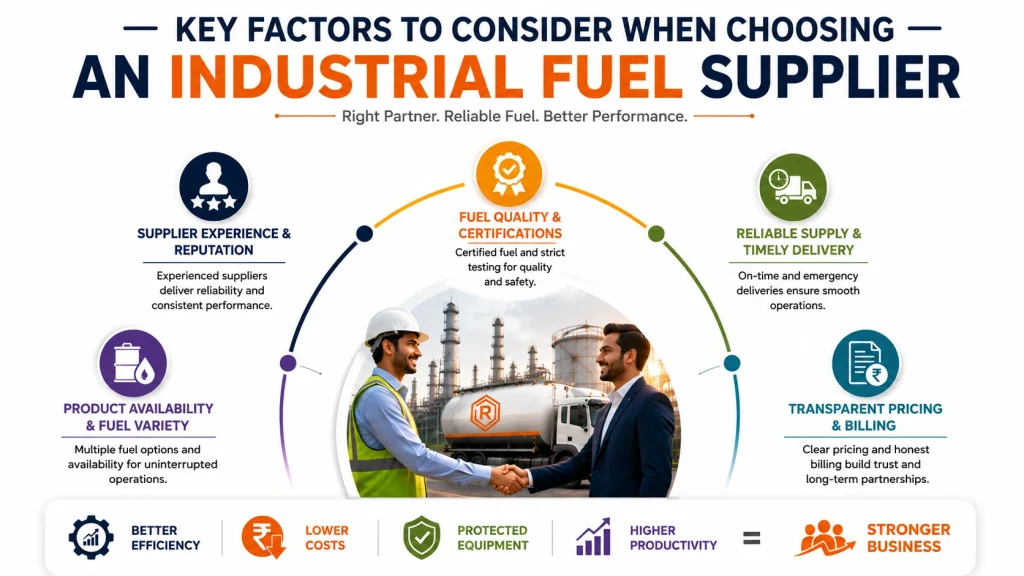
Choosing the right industrial fuel supplier requires more than comparing fuel prices. Industries must evaluate fuel quality, supply reliability, safety standards, and technical support before making long-term decisions. A reliable supplier helps businesses reduce downtime, improve combustion efficiency, and control operational costs.
Key factors to consider include:
- Fuel quality certifications and BIS compliance
- Consistent fuel testing procedures
- Industry experience and supplier reputation
- Availability of multiple fuel options
- Emergency fuel delivery capabilities
- Transparent pricing and billing
According to industry reports, poor fuel quality and delayed supply remain major causes of industrial downtime in India. Businesses that partner with experienced fuel suppliers often achieve better operational stability, lower maintenance costs, and improved long-term efficiency.
Fuel Quality Standards and Certifications
Fuel quality directly affects industrial performance, fuel efficiency, and equipment lifespan. Reliable industrial fuel suppliers follow strict quality standards and testing procedures to ensure industries receive clean, efficient, and safe fuel. Businesses should always verify certifications and fuel testing reports before choosing a supplier.
Important Fuel Quality Checks
- Calorific value testing
- Sulfur content analysis
- Moisture level inspection
- Viscosity measuremen
Fuel purity and calorific value play a major role in industrial efficiency. High-calorific fuel generates more heat with lower consumption, helping industries reduce energy costs and improve combustion performance.
Why Certifications Matter
- Ensure consistent fuel quality
- Reduce equipment damage risks
- Improve combustion efficiency
- Support environmental compliance
Reliable suppliers also conduct regular laboratory testing to maintain quality consistency across every fuel batch. Many suppliers provide fuel test reports to customers for transparency and operational assurance.
Key Certifications and Standards to Verify
- BIS compliance certification
- Safety and handling approvals
- Environmental compliance records
- Quality assurance documentation
Industries that prioritize certified fuel suppliers often experience fewer operational problems, lower maintenance expenses, and improved equipment performance over time.
Supplier Experience and Industry Reputation
Experience and industry reputation play a major role when selecting an industrial supplier. A supplier with years of operational experience usually understands industry-specific fuel requirements, logistics challenges, and safety standards better than new market entrants. Experienced suppliers also maintain stronger distribution networks and more reliable delivery systems.
Industries should evaluate how long the supplier has operated in the fuel sector and which industries they currently serve. A strong client portfolio often reflects reliability, fuel quality consistency, and professional service standards.
Factors That Reflect Supplier Reputation
- Years of industry experience
- Long-term client relationships
- Positive customer reviews
- Strong delivery performance
Customer reviews and testimonials also help businesses understand real operational performance. Consistent positive feedback about fuel quality, delivery timelines, and technical support usually indicates dependable service.
According to industrial procurement studies, businesses often prioritize supplier reliability over low pricing because fuel disruptions can create significant production losses.
Product Availability and Fuel Variety
Industrial fuel requirements vary across industries, equipment types, and production processes. A reliable fuel supplier should offer multiple fuel options and maintain consistent product availability to support uninterrupted industrial operations. Businesses often prefer suppliers who can meet both regular and emergency fuel demands without delays.
Industries commonly require different fuels for different applications. For example, textile units may use Furnace Oil for steam generation, while food processing plants often prefer LPG or Light Diesel Oil for cleaner combustion.
Important Fuel Options Offered by Suppliers
- Furnace Oil (FO)
- Light Diesel Oil (LDO)
- Industrial Diesel Oil (IDO)
- High-Speed Diesel (HSD)
- LPG and natural gas
Suppliers with wider fuel variety help industries choose the most cost-effective and efficient fuel for their operations. This flexibility becomes especially useful when fuel prices fluctuate or operational requirements change.
Why Product Availability Matters
- Prevents production downtime
- Supports continuous manufacturing
- Reduces emergency procurement costs
- Improves operational planning
Emergency fuel availability also plays a critical role in industrial operations. For example, a power generation facility cannot afford supply interruptions during peak production periods.
Conclusion
Choosing the right industrial fuel supplier is a critical business decision that directly impacts operational efficiency, fuel costs, equipment lifespan, and production continuity. Industries across India rely on consistent fuel quality, timely deliveries, and reliable logistics to maintain smooth day-to-day operations. A trusted supplier not only provides fuel but also supports long-term business stability through quality assurance, technical expertise, safety compliance, and dependable service.Throughout this guide, we explored the importance of fuel quality standards, supplier experience, product availability, operational efficiency, equipment protection, and cost management. Businesses that balance pricing with fuel reliability, safety standards, and service quality often achieve better productivity and lower maintenance expenses over time.Before entering a long-term partnership, companies should carefully evaluate a supplier’s certifications, delivery capabilities, customer reputation, fuel testing procedures, and emergency support systems.
FAQs
1. How do I choose the best industrial fuel supplier in India?
Choose an industrial fuel supplier based on fuel quality, delivery reliability, certifications, industry experience, pricing transparency, and customer support. Businesses should also verify whether the supplier can handle bulk orders, emergency deliveries, and long-term fuel requirements without operational delays.
2.What qualities should a reliable industrial supplier have?
A reliable industrial supplier should provide consistent fuel quality, timely deliveries, strong logistics support, safety compliance, transparent pricing, and responsive customer service. Experienced suppliers also offer technical guidance and customized fuel solutions for different industrial applications.
3.Why is fuel quality important for industrial operations?
Fuel quality directly affects combustion efficiency, energy consumption, equipment performance, and maintenance costs. High-quality fuel burns cleaner, reduces carbon deposits, improves heat generation, and helps industries avoid operational downtime and equipment damage.
4.Which industrial fuel is most cost-effective?
The most cost-effective industrial fuel depends on the application, equipment type, and energy requirements. Furnace Oil often works well for large-scale heating operations because of its lower cost, while LPG and natural gas provide cleaner and more efficient combustion for specific industries.
5.How can poor-quality fuel affect industrial equipment?
Poor-quality fuel can create sludge buildup, clog burners, damage pipelines, increase corrosion, and reduce combustion efficiency. These problems often lead to higher maintenance costs, equipment failures, and unexpected production interruptions.
6.What certifications should an industrial supplier possess?
Industrial suppliers should follow BIS standards and maintain proper safety, quality assurance, and environmental compliance certifications. Businesses should also request fuel test reports and documentation related to storage and transportation safety practices.
7.How do industrial fuel suppliers ensure fuel quality?
Reliable suppliers conduct regular laboratory testing to check calorific value, sulfur content, viscosity, moisture levels, and fuel purity. Many suppliers also maintain strict storage and transportation procedures to prevent contamination during fuel handling and delivery.
8.What industries commonly use industrial fuels?
Manufacturing plants, textile industries, chemical factories, food processing units, cement plants, steel industries, and power generation facilities commonly use industrial fuels for boilers, furnaces, generators, and industrial heating systems.
9.Can industrial suppliers provide emergency deliveries?
Yes, many industrial suppliers offer emergency delivery services to prevent operational disruptions during unexpected shortages or high-demand situations. Suppliers with strong logistics networks and backup storage facilities can usually respond faster during emergencies.
10.What is the difference between Furnace Oil and Industrial Diesel Oil?
Furnace Oil mainly supports large-scale heating applications such as boilers and furnaces, while Industrial Diesel Oil commonly powers heavy machinery, generators, and industrial engines. Furnace Oil generally costs less, but Industrial Diesel Oil provides cleaner combustion and easier handling.