

How to Choose the Right Furnace Oil Supplier
Furnace oil supplier selection plays a crucial role in ensuring smooth and efficient industrial operations. Industries that rely on boilers, furnaces, kilns, and thermic fluid heaters require consistent fuel quality to maintain stable combustion and optimal heat output. Choosing the wrong supplier can lead to poor fuel efficiency, higher operational costs, and increased equipment maintenance. According to the International Energy Agency (IEA), the industrial sector accounts for nearly 37% of global final energy consumption , highlighting the importance of reliable fuel sources for manufacturing and process industries.
For procurement teams and plant managers, selecting a dependable furnace oil supplier involves evaluating factors such as fuel quality, compliance with IS 1593 and ASTM testing standards , calorific value, and reliable bulk supply capabilities.
Working with the right supplier ensures consistent performance, operational safety, and uninterrupted industrial processes.
Understanding Furnace Oil and Its Industrial Importance
Furnace oil is one of the most widely used industrial fuels for generating heat in manufacturing and process industries. It is a heavy residual fuel obtained from the refining of crude oil and is primarily used in equipment that requires controlled and consistent thermal energy. Industries choose furnace oil because it delivers high calorific value, stable combustion, and cost-effective heat generation for large-scale operations.
What Is Furnace Oil?
Furnace oil is a residual fuel oil commonly used in boilers, furnaces, and thermic fluid heaters to produce heat for industrial processes. According to the U.S. Energy Information Administration, residual fuel oils like furnace oil are widely used in industrial heating due to their high energy density and efficiency.
Typical industrial applications include:
- Steam generation in industrial boilers
- Heat production in steel and cement furnaces
- Fuel for rotary kilns and thermic fluid heaters
- Process heating in chemical and manufacturing plants
Key Properties of Industrial Furnace Oil
Industries evaluate furnace oil based on several important characteristics:
- High calorific value for efficient heat generation
- Controlled viscosity to ensure smooth pumping and atomization
- Stable combustion properties for consistent heat output
- Compliance with standards such as IS 1593 and ASTM testing methods
These properties help maintain operational efficiency and protect industrial equipment.
Why Industries Depend on Furnace Oil for Process Heating
Furnace oil remains a preferred industrial fuel because of its reliability and scalability. According to the International Energy Agency, industrial activities account for a significant share of global energy consumption, with thermal fuels playing a key role in manufacturing processes.
Key reasons industries rely on furnace oil include:
- Reliable heat output for continuous production
- Compatibility with industrial boilers and furnaces
- Cost-effective fuel option for large-scale heating
- Easy storage and bulk transportation for industrial supply
Industrial Applications of Furnace Oil
Furnace oil is widely used across multiple industries because it provides reliable and high-temperature heat for large-scale operations. Its high calorific value and stable combustion properties make it suitable for equipment that requires continuous thermal energy. According to the International Energy Agency, industrial processes account for a significant share of global energy consumption, and thermal fuels like furnace oil remain essential in manufacturing sectors.
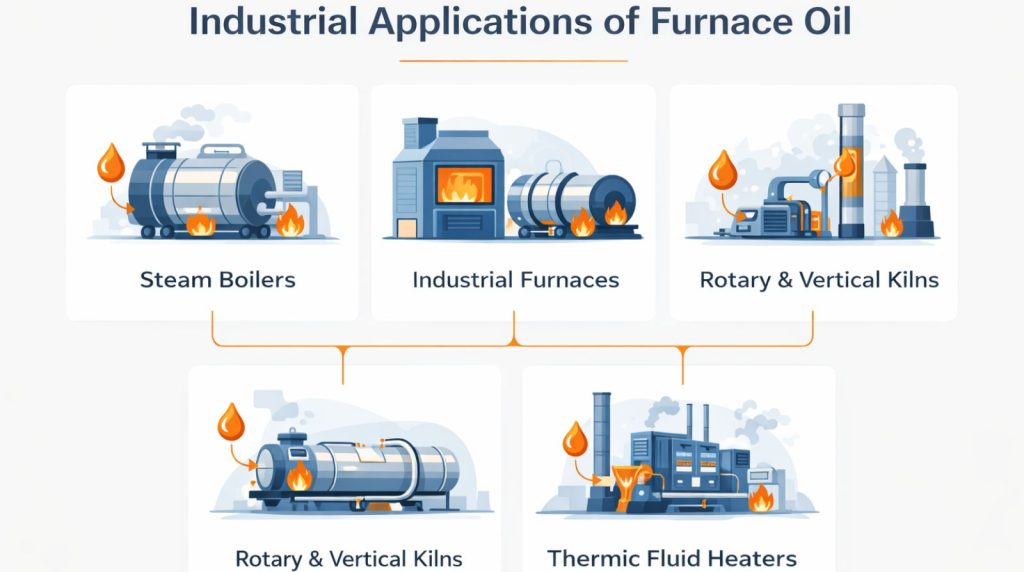
Steam Boilers
Steam boilers are one of the most common applications of furnace oil. Many industries rely on steam generation for production processes. Furnace oil is used to heat water in boilers, producing steam that powers machinery or supports manufacturing.
Typical industries using steam boilers include:
- Textile manufacturing
- Food processing plants
- Chemical industries
- Pharmaceutical production
Industrial Furnaces
Industrial furnaces require consistent heat for melting, shaping, or treating materials. Furnace oil supplier provides stable combustion and high heat output, making it ideal for metal processing and heavy manufacturing.
Common furnace applications include:
- Steel and metal fabrication
- Glass manufacturing
- Cement production
Rotary and Vertical Kilns
Kilns used in cement, lime, and ceramics industries often depend on furnace oil supplier as a heating fuel. These systems require continuous high temperatures to process raw materials effectively.
Thermic Fluid Heaters
Thermic fluid heaters use furnace oil to heat thermal oil that circulates through industrial equipment. This method provides uniform and controlled heating for processes that require stable temperatures.
Process Heating Systems
Many manufacturing facilities rely on furnace oil for general process heating. It supports operations such as drying, curing, distillation, and chemical processing, ensuring efficient production and reliable thermal performance.
Why Choosing the Right Furnace Oil Supplier Matters
Selecting the right furnace oil supplier is not just a purchasing decision.it directly affects fuel efficiency, equipment life, and operational stability. Poor-quality furnace oil can lead to incomplete combustion, higher fuel consumption, and frequent equipment maintenance. According to the International Energy Agency, inefficient fuel use in industrial heating systems can significantly increase energy costs and emissions, making fuel quality and supplier reliability critical for industrial operations.
Fuel Efficiency and Combustion Stability
High-quality furnace oil supplier ensures stable combustion and efficient heat generation in boilers, furnaces, and kilns. Poor-quality fuel with inconsistent viscosity or impurities can disrupt the combustion process.
Common issues caused by low-quality furnace oil include:
- Higher fuel consumption due to incomplete combustion
- Irregular flame patterns in boilers and furnaces
- Increased smoke and carbon deposits
- Reduced calorific efficiency
Reliable suppliers maintain consistent fuel specifications and testing standards, ensuring stable industrial heating performance.
Equipment Protection and Maintenance
Industrial equipment is designed to operate within specific fuel quality parameters. Using substandard furnace oil can damage burners, clog fuel lines, and cause excessive soot buildup.
Operational risks include:
- Burner nozzle blockage
- Increased furnace downtime
- Higher maintenance and repair costs
- Reduced equipment lifespan
Operational Continuity
Industrial plants require uninterrupted fuel supply to maintain production schedules. Delays or inconsistent fuel quality can disrupt operations and reduce productivity.
Working with a trusted furnace oil supplier ensures:
- Consistent fuel quality
- Reliable bulk delivery schedules
- Proper documentation and quality assurance
- Long-term supply stability for industrial operations
Key Factors to Consider When Choosing a Furnace Oil Supplier
Choosing the right furnace oil supplier requires careful evaluation of fuel quality, supply capability, and compliance with industry standards. Industrial operations depend on reliable heating fuels to maintain consistent production, and even small variations in fuel quality can affect efficiency. According to the International Energy Agency , industrial heating accounts for a significant portion of global energy use, making fuel quality and supplier reliability critical for operational performance.
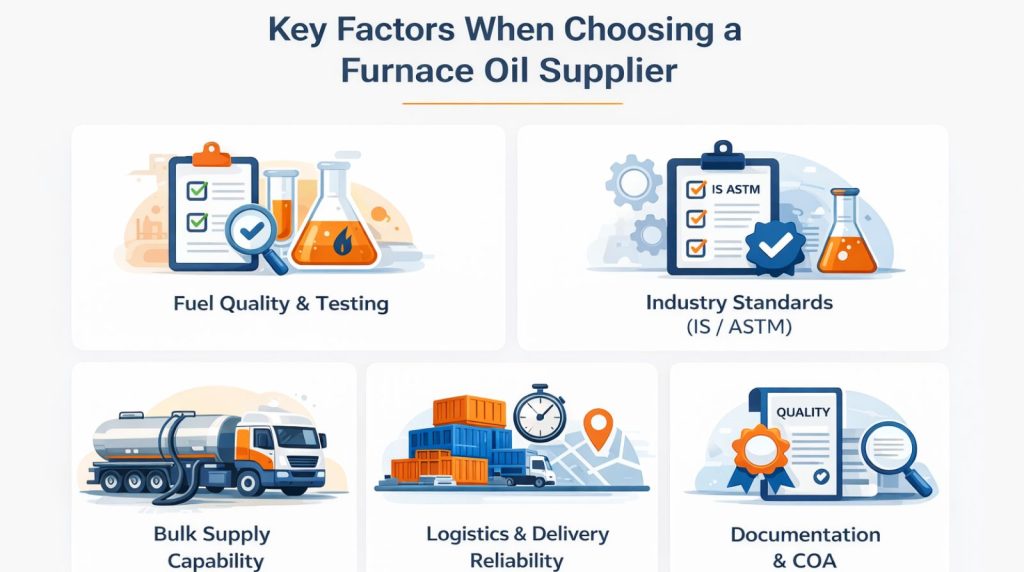
Product Quality and Consistency
Fuel quality directly affects combustion efficiency and equipment performance. A reliable supplier should maintain consistent batch quality and proper testing procedures.
Key indicators of quality include:
- Stable calorific value for efficient heat generation
- Controlled viscosity for smooth pumping and atomization
- Low impurity levels to prevent burner damage
- Batch-wise quality monitoring and testing
Compliance With Industry Standards
Reputable suppliers ensure their furnace oil complies with recognized testing standards.
Important standards include:
- IS 1593 and IS 1448 testing practices for furnace oil quality
- ASTM and IP testing methods for fuel analysis
- Verified laboratory testing and documented results
Supply Reliability
Industrial plants require consistent bulk fuel supply to avoid production interruptions. Reliable suppliers offer:
- Flexible delivery schedules
- Safe handling and transportation
- Timely dispatch to support continuous operations
Technical Support and Documentation
Professional suppliers provide proper documentation and technical assistance, including:
- Certificate of Analysis (COA) for each batch
- Fuel specification sheets
- Customer support for operational queries
Importance of Quality Testing and Industry Standards
Quality testing and adherence to industry standards are essential when selecting a reliable furnace oil supplier. Industrial fuels must meet specific technical parameters to ensure safe combustion, energy efficiency, and equipment protection. Without proper testing, inconsistent fuel quality can lead to operational issues such as poor burner performance, higher emissions, and increased maintenance costs. Organizations like the International Organization for Standardization and the ASTM International provide internationally recognized testing methods that help ensure fuel reliability and safety.
IS 1593 and IS 1448 Testing Methods
In India, furnace oil supplier quality is commonly evaluated using IS 1593 and IS 1448 testing practices. These standards define acceptable limits for critical fuel parameters.
Key parameters tested include:
- Viscosity – ensures proper fuel flow and atomization
- Flash point – indicates safe handling and storage conditions
- Sulfur content – affects emissions and environmental compliance
- Calorific value – determines the heat energy produced during combustion
These tests help industries confirm that the fuel meets operational requirements.
ASTM and IP Testing Standards
Globally, fuel testing often follows methods defined by ASTM International and the Energy Institute (IP standards). These standards ensure consistency in measuring fuel properties and quality.
Certificate of Analysis (COA)
A reputable furnace oil supplier provides a Certificate of Analysis (COA) with each batch. This document verifies that the fuel has been tested and meets required specifications, helping industries maintain transparency and operational reliability.
Evaluating Furnace Oil Specifications Before Purchase
Before finalizing a furnace oil supplier, industrial buyers should carefully review the technical specifications of the fuel. These specifications determine how efficiently the oil will burn, how safely it can be stored, and how well it will perform in boilers, furnaces, and thermic fluid heaters. Ignoring these parameters can lead to poor combustion, increased emissions, and higher maintenance costs. Industry guidelines from organizations like ASTM International emphasize standardized fuel testing to ensure reliable industrial performance.
Calorific Value
Calorific value indicates the amount of heat energy produced during combustion. Furnace oil with higher calorific value generates more heat per unit of fuel, improving energy efficiency.
For example:
- Typical furnace oil calorific value ranges around 9,500–10,500kcal/kg
- Higher calorific value reduces overall fuel consumption in boilers and furnaces
Viscosity Levels
Viscosity measures the flow characteristics of furnace oil. Proper viscosity ensures smooth pumping, atomization, and efficient combustion.
Industrial systems often use pre-heating to reduce viscosity and improve burner performance.
Sulfur Content
Sulfur content directly impacts emissions and equipment wear. High sulfur levels may lead to corrosion in boilers and furnaces.
Industries usually prefer fuel with controlled sulfur levels to meet environmental and operational requirements.
Flash Point
Flash point indicates the minimum temperature at which fuel vapors ignite. A higher flash point improves safety during storage, transportation, and handling of furnace oil in industrial environments.
Supply Chain and Logistics Considerations
When selecting a furnace oil supplier, supply chain reliability is just as important as fuel quality. Industrial facilities depend on a steady fuel supply to keep boilers, furnaces, and process heating systems running without interruption. Any delay in fuel delivery can halt production lines and increase operational costs. According to the International Energy Agency, consistent fuel availability is a key factor in maintaining stable industrial energy systems worldwide.
Bulk Supply Capability
Industrial operations often require large volumes of furnace oil supplier for continuous heating processes. A reliable supplier should have the capacity to handle bulk orders and maintain consistent inventory.
Key factors to check include:
- Availability of bulk storage facilities
- Capability to supply large industrial orders
- Efficient loading and dispatch infrastructure
- Ability to meet high-demand production schedules
Safe Handling and Transportation
Furnace oil must be transported and stored safely to prevent leaks, contamination, or safety hazards.
Reliable suppliers typically follow best practices such as:
- Use of certified tanker vehicles
- Proper fuel storage and containment systems
- Compliance with industrial safety regulations
- Trained personnel for handling and transport operations
Flexible Delivery Schedules
Industrial plants operate on strict production timelines, making delivery flexibility essential.
A dependable furnace oil supplier should offer:
- Scheduled deliveries based on consumption patterns
- Emergency fuel supply when required
- Timely dispatch to avoid production downtime
Common Mistakes When Selecting a Furnace Oil Supplier
Choosing the right furnace oil supplier is essential for maintaining efficient industrial operations. However, many procurement teams make avoidable mistakes that lead to higher operational costs, fuel inefficiency, or unexpected downtime. According to energy industry insights from the International Energy Agency, inefficient fuel management and poor-quality fuels can significantly impact industrial productivity and energy costs. Understanding these common mistakes helps industries make better supplier decisions.
Choosing Based Only on Price
One of the biggest mistakes is selecting a supplier solely based on the lowest price. While cost is important, cheaper furnace oil may have inconsistent quality or lower calorific value.
Common risks include:
- Higher fuel consumption due to poor combustion
- Increased maintenance costs for boilers and furnaces
- Reduced equipment lifespan
- Unstable heat output in industrial processes
Ignoring Fuel Testing Reports
Another common mistake is failing to review fuel testing documentation before purchasing. Reliable suppliers provide detailed testing reports based on standards like IS 1593, ASTM, and IP methods.
Buyers should always request:
- Certificate of Analysis (COA)
- Batch-wise quality reports
- Technical specification sheets
These documents confirm that the fuel meets industry standards.
Overlooking Logistics Reliability
Even if fuel quality is good, unreliable logistics can disrupt operations. Late deliveries or inconsistent supply can halt production.
Important logistics factors to verify include:
- Bulk supply capability
- Timely dispatch and delivery schedules
- Safe transportation practices for industrial fuel supply
Benefits of Partnering With a Reliable Furnace Oil Supplier
Partnering with a reliable furnace oil supplier provides significant long-term benefits for industrial operations. Industries that rely on boilers, furnaces, and thermic heating systems need consistent fuel performance to maintain productivity and control operational costs. According to the International Energy Agency, industrial energy efficiency improvements can reduce operating costs by 10–20% when fuel quality and combustion efficiency are properly managed. This highlights why choosing a dependable supplier is a strategic business decision.
Consistent Fuel Quality
A trusted supplier ensures stable fuel specifications across batches, which directly impacts combustion efficiency.
Benefits of consistent quality include:
- Stable calorific value for reliable heat output
- Reduced soot formation in boilers and furnaces
- Improved burner performance
- Lower risk of equipment damage
Consistent fuel quality also helps maintain predictable production processes.
Operational Cost Efficiency
Reliable furnace oil supply can improve overall cost efficiency by reducing fuel waste and maintenance requirements.
Examples include:
- Better combustion leading to lower fuel consumption
- Reduced equipment downtime
- Lower maintenance costs for burners and boilers
- Improved energy efficiency in industrial heating systems
Long-Term Industrial Partnerships
Working with a dependable furnace oil supplier builds long-term trust and operational stability.
Reliable suppliers typically offer:
- Transparent technical documentation
- Flexible bulk supply arrangements
- Responsive technical support for industrial customers
These partnerships help industries maintain consistent fuel availability, operational reliability, and long-term production efficiency.
Why Industries Choose Rerol Refinery for Furnace Oil Supply
Selecting the right furnace oil supplier is crucial for industries that depend on stable and efficient heating systems. Many manufacturing plants prioritize suppliers who can deliver consistent fuel quality, comply with recognized testing standards, and maintain reliable supply chains. Rerol Refinery focuses on these core requirements to support industrial operations that rely on dependable fuel performance.,
Consistent Quality Monitoring
Rerol Refinery maintains batch-wise quality monitoring to ensure furnace oil meets required performance standards for industrial applications.
Key quality practices include:
- Routine testing of fuel parameters such as viscosity, calorific value, and flash point
- Maintaining consistent product specifications across supply batches
- Quality verification through standard testing procedures
Consistent monitoring helps industries maintain stable combustion and efficient heat generation in boilers and furnaces.
Compliance With Industry Standards
Fuel supplied by Rerol Refinery follows commonly accepted IS and international testing methods used for industrial fuel analysis.
Examples of testing standards include:
- IS 1593 and IS 1448 testing practices used for furnace oil evaluation
- International testing procedures from ASTM International and IP methods
- Standardized fuel analysis to verify performance parameters
Following recognized standards improves fuel reliability and operational safety.
Reliable Bulk Supply for Industries
Industrial operations require consistent bulk fuel supply to maintain uninterrupted production.
Rerol Refinery supports industrial customers through:
- Bulk supply capability for manufacturing plants
- Flexible delivery schedules based on operational needs
- Safe handling and transportation practices
This reliable supply approach helps industries maintain continuous operations, efficient heating performance, and long-term fuel availability.
How to Get Reliable Furnace Oil Supply for Your Industry
Securing a dependable furnace oil supplier is essential for maintaining uninterrupted industrial operations. Boilers, furnaces, and thermic heating systems rely on consistent fuel quality to deliver stable heat output and energy efficiency. According to the International Energy Agency, improving fuel efficiency in industrial heating systems can significantly reduce operational costs and improve production reliability. To ensure a stable supply, industries should follow a structured evaluation process when selecting a supplier.
Steps to Evaluate Suppliers
Before finalizing a supplier, industrial buyers should assess several critical factors.
Important evaluation steps include:
- Checking the supplier’s industry experience and reputation
- Reviewing fuel quality testing procedures
- Confirming bulk supply capability for industrial demand
- Assessing logistics infrastructure and delivery reliability
These steps help ensure the supplier can meet both quality and supply requirements.
Documentation and Quality Checks
Reliable suppliers provide transparent documentation that verifies fuel quality.
Industries should request:
- Certificate of Analysis (COA) for each batch
- Detailed fuel specification sheets
- Compliance documentation for IS and ASTM testing standards
These documents confirm that the furnace oil meets industry performance and safety parameters.
Contacting Trusted Suppliers
Once evaluation and documentation checks are complete, industries should partner with suppliers capable of maintaining long-term fuel supply agreements.
Working with a trusted furnace oil supplier ensures consistent fuel quality, reliable delivery schedules, and technical support for industrial heating operations.
Conclusion
Selecting the right furnace oil supplier is a critical decision for industries that rely on efficient heating systems for production. From steam boilers to thermic fluid heaters, consistent fuel quality directly impacts energy efficiency, equipment life, and operational reliability. Poor-quality fuel or unreliable supply can lead to unstable combustion, higher fuel consumption, and costly downtime. According to the International Energy Agency, improving fuel efficiency in industrial heating systems can significantly reduce operational costs while enhancing overall energy performance.
When evaluating a supplier, industries should focus on key factors such as:
- Fuel quality and consistent specifications
- Compliance with testing standards like IS 1593, IS 1448, ASTM, and IP methods
- Reliable bulk supply and logistics support
- Transparent documentation such as Certificate of Analysis (COA)
Partnering with a trusted furnace oil supplier helps industries maintain stable combustion, protect equipment, and ensure uninterrupted production.
If your industry requires reliable and high-quality furnace oil supply, explore the solutions offered by Rerol Refinery. Visit their official website to learn more about industrial fuel products and supply capabilities.
Working with an experienced supplier ensures long-term operational stability and efficient industrial performance.
Frequently Asked Questions (FAQ)
What industries use furnace oil?
Furnace oil is widely used in industries that require consistent thermal energy for production processes. Common sectors include:
- Textile manufacturing for steam generation in boilers
- Cement and steel industries for high-temperature furnaces and kilns
- Chemical and pharmaceutical plants for process heating
- Food processing units for drying and heating applications
According to the International Energy Agency, industrial heating systems account for a large share of global energy consumption, making fuels like furnace oil essential for many manufacturing operations.
What standards apply to furnace oil quality?
Furnace oil quality is evaluated using recognized testing standards such as:
- IS 1593 and IS 1448 testing practices used in India
- Testing procedures developed by ASTM International
- IP (Institute of Petroleum) testing methods for fuel analysis
These standards help ensure the fuel meets specific parameters like viscosity, flash point, sulfur content, and calorific value.
What is the calorific value of furnace oil?
The calorific value of furnace oil generally ranges between 9,500 and 10,500 kcal/kg, depending on its composition. Higher calorific value means better heat generation and improved fuel efficiency in industrial heating systems.
How do industries choose a reliable furnace oil supplier?
Industries typically evaluate suppliers based on:
- Fuel quality testing and certification
- Compliance with recognized industry standards
- Reliable bulk supply capability
- Transparent documentation such as Certificate of Analysis (COA)
Can furnace oil be used in thermic fluid heaters?
Yes, furnace oil is commonly used in thermic fluid heaters to generate controlled and uniform heat. These systems circulate heated thermal oil through industrial equipment, making furnace oil an efficient fuel choice for process heating applications.