

How High Quality Furnace Oil Improves Industrial Efficiency & Reduces Costs
Introduction:
Rising fuel costs and inefficient combustion remain major challenges for industries relying on thermal energy. In India alone, furnace oil consumption reached over 7,045 thousand tonnes annually, highlighting its critical role in industrial operations. At the same time, poor fuel quality leads to incomplete combustion, higher emissions, and increased maintenance costs directly impacting profitability.
High quality furnace oil offers a practical solution. With a calorific value of around 10,000 cal/g, it delivers more energy per unit, improving combustion efficiency and reducing fuel wastage. By optimizing energy output and minimizing operational losses, industries can significantly lower costs while enhancing performance.
This blog explores how choosing the right furnace oil can transform efficiency, cut expenses, and drive sustainable industrial growth.
What is High Quality Furnace Oil?
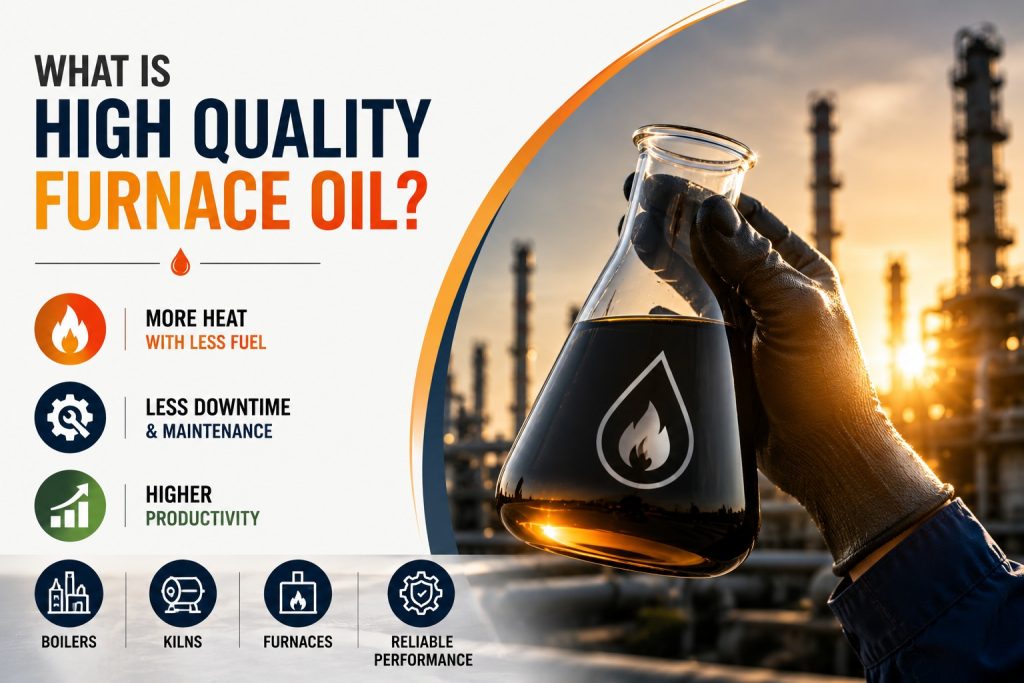
High quality furnace oil is a refined residual fuel that delivers consistent heat, cleaner combustion, and better energy efficiency for industrial use. Industries such as cement, textiles, and steel rely heavily on it for boilers, kilns, and furnaces because it provides stable and high thermal output.
Unlike low-grade fuel, high quality furnace oil undergoes better refining and quality control. This process reduces impurities and improves performance. It typically offers a calorific value of around 9,500-10,500 kcal/kg, which means more energy per unit and less fuel consumption.
You can think of it as a performance upgrade for your heating systems. When you use better fuel, your equipment burns cleaner, runs smoother, and requires less maintenance. This directly impacts operational efficiency and cost savings.
In simple terms, high quality furnace oil helps industries:
- Generate more heat with less fuel
- Reduce downtime and maintenance issues
- Improve overall productivity
Definition and Composition
High quality furnace oil is a heavy residual fuel derived from crude oil refining. Refineries extract lighter fuels like petrol and diesel first, then process the remaining fractions into furnace oil. Advanced refining techniques improve its purity and performance.
Its composition mainly includes:
- Long-chain hydrocarbons
- Controlled sulfur content
- Minimal water and sediment
Refiners design high quality furnace oil to meet strict industrial requirements. For example, good-grade fuel contains less than 1-4% sulfur, depending on regulatory norms. Lower sulfur improves combustion and reduces emissions.[Transport policy]
You’ll also notice better stability in its structure. This prevents sludge formation and ensures smooth flow during storage and use.
In short, composition plays a key role. Cleaner and well-balanced fuel burns more efficiently, protects equipment, and supports consistent industrial output.
Characteristics of High Quality Furnace Oil
High quality furnace oil stands out because of its performance-focused properties. These characteristics directly influence efficiency, cost, and environmental impact.
Key features include:
- High Calorific Value: Delivers more heat output (typically 9,500-10,500 kcal/kg), reducing fuel consumption
- Optimal Viscosity: Flows easily when heated, ensuring proper atomization and efficient burning
- Low Sulfur Content: Reduces harmful emissions and corrosion inside equipment
- Minimal Ash Content: Prevents residue buildup in burners and boilers
- Low Sludge Formation: Keeps systems clean and reduces maintenance frequency
- Good Storage Stability: Maintains quality over time without degradation
These properties work together to improve combustion efficiency. When fuel burns cleanly, industries save money on fuel and maintenance.
Simply put, better characteristics lead to better performance. You get higher output, fewer breakdowns, and smoother operations.
Industry Standards and Specifications
Industries follow strict standards to ensure furnace oil delivers consistent performance and meets environmental regulations. These specifications help buyers choose reliable fuel and avoid operational risks.
Common standards include:
- Bureau of Indian Standards (BIS) specifications for furnace oil in India
- ASTM (American Society for Testing and Materials) guidelines for fuel properties
- ISO standards for quality and safety compliance
Typical specifications cover:
- Viscosity levels for proper flow
- Flash point for safe handling (usually above 66°C)
- Sulfur content limits to control emissions
- Calorific value for energy efficiency
For example, BIS-grade furnace oil ensures controlled viscosity and sulfur levels, making it suitable for industrial boilers. Similarly, ASTM standards define precise testing methods to maintain consistency.
Following these standards ensures:
- Safe storage and handling
- Efficient combustion
- Regulatory compliance
In practice, choosing fuel that meets these benchmarks protects your equipment and keeps your operations efficient and compliant.
How to Choose the Right High Quality Furnace Oil
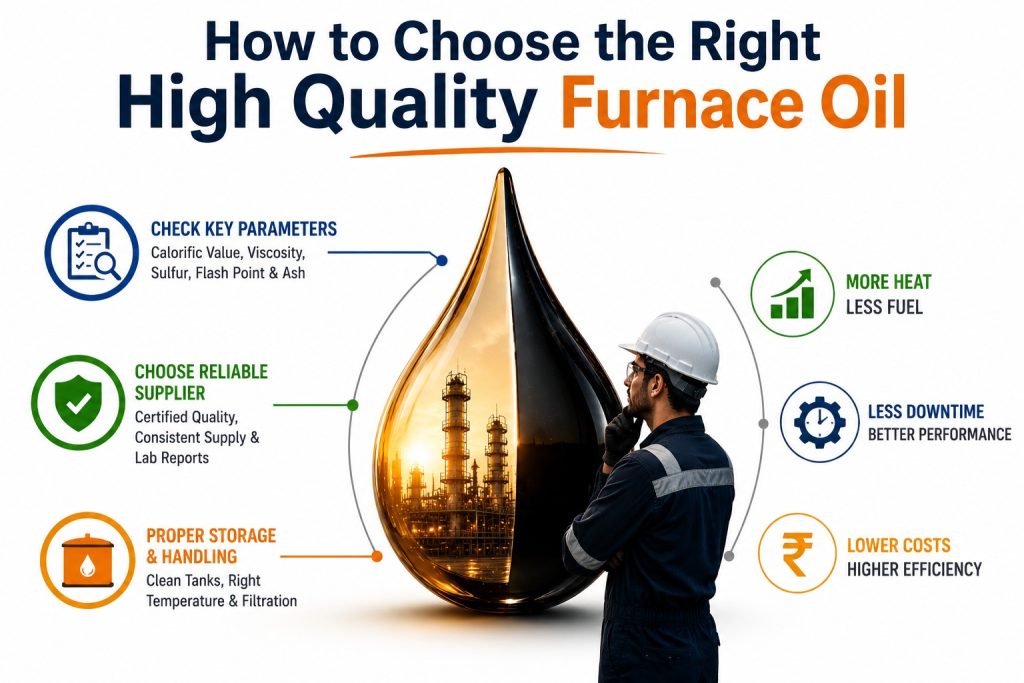
Choosing the right high quality furnace oil directly impacts your efficiency, fuel costs, and equipment life. Many industries lose 5-10% efficiency simply by using substandard fuel, so making the right choice matters.[RMI]
Start by matching fuel specifications with your equipment requirements. Boilers, furnaces, and kilns need specific viscosity and calorific values to perform at their best. If the fuel doesn’t align, you waste energy and increase wear.
Next, evaluate fuel consistency. A good supplier delivers uniform quality across batches, which ensures stable combustion and predictable performance. Inconsistent fuel often leads to fluctuating temperatures and production issues.
You should also consider environmental compliance. Low sulfur furnace oil helps meet emission norms and reduces long-term regulatory risks.
To simplify your decision:
- Compare technical specifications
- Verify supplier credentials
- Test samples before bulk purchase
When you choose the right fuel, you improve combustion efficiency, reduce downtime, and control operational costs more effectively.
Key Parameters to Check
You need to focus on a few critical parameters before selecting furnace oil. These factors directly affect combustion efficiency and operating costs.
Here are the key ones:
- Calorific Value: Aim for 9,500-10,500 kcal/kg. Higher values deliver more heat and reduce fuel consumption.
- Viscosity: Proper viscosity ensures smooth pumping and atomization. High viscosity can disrupt combustion.
- Sulfur Content: Lower sulfur (typically below 1-4%) reduces emissions and prevents corrosion.
- Flash Point: A higher flash point (above 66°C) improves storage and handling safety.
- Ash Content: Low ash prevents deposits inside burners and boilers.
If you use fuel with poor viscosity control, your burner may fail to atomize it properly. This leads to incomplete combustion and higher fuel usage.
When you check these parameters carefully, you avoid performance issues and get consistent thermal output.
Supplier Reliability
Your supplier plays a huge role in fuel quality and operational stability. Even high-grade specifications won’t help if the supplier delivers inconsistent or contaminated fuel.
Look for these signs of a reliable supplier:
- Certified Quality Standards: Compliance with BIS, ISO, or ASTM specifications
- Consistent Supply Chain: Timely delivery without quality variation
- Transparent Testing Reports: Lab reports for each batch
- Industry Experience: Proven track record in industrial fuel supply
- Technical Support: Guidance on fuel usage and optimization
Reliable suppliers often help industries improve efficiency by up to 8-12% through consistent fuel quality.
For example, a textile plant that switched to a certified supplier reduced burner clogging and maintenance downtime significantly.
In short, a trustworthy supplier ensures you get the performance you pay for every single time.
Storage and Handling Considerations
Proper storage and handling protect fuel quality and maintain efficiency. Even high quality furnace oil can degrade if you store or handle it incorrectly.
You should follow these best practices:
- Store fuel in clean, dry tanks to avoid contamination
- Maintain temperature (usually 50-70°C) to keep viscosity optimal
- Prevent water ingress, which can disrupt combustion
- Use proper filtration systems before fuel reaches burners
If moisture enters storage tanks, it can cause sputtering during combustion and reduce heat output. Similarly, poor temperature control can thicken the oil, making pumping and atomization difficult.
Industries that follow proper storage practices often reduce fuel losses by 3-5% and extend equipment life.
When you manage storage and handling carefully, you preserve fuel quality, improve efficiency, and avoid unnecessary operational issues.
Key Benefits of High Quality Furnace Oil

High quality furnace oil delivers measurable improvements in industrial performance. Many plants report 5-15% better combustion efficiency when they switch from low-grade fuel. That translates directly into lower fuel consumption and stable heat output.
You also gain better control over operations. High quality fuel burns uniformly, so your boilers and furnaces maintain consistent temperatures. This consistency improves product quality, especially in industries like textiles, cement, and food processing.
Another major benefit involves maintenance reduction. Cleaner combustion produces fewer deposits, which means less fouling in burners and heat exchangers. As a result, you reduce shutdown frequency and extend equipment life.
Environmental performance also improves. Low sulfur content reduces emissions and helps industries meet regulatory standards without additional investment.
In short, high quality furnace oil helps you:
- Improve thermal efficiency
- Reduce fuel wastage
- Lower maintenance costs
- Extend equipment lifespan
Direct Cost Savings
High quality furnace oil helps industries cut immediate operational expenses. Since it offers higher calorific value, you generate more heat using less fuel. Many industries achieve 8-12% fuel savings after upgrading fuel quality.
Here’s how direct savings occur:
- Lower fuel consumption due to better energy output
- Reduced burner cleaning and maintenance costs
- Fewer equipment breakdowns
- Lower sludge disposal expenses
Cost Comparison Example
| Factor | Low Quality Fuel | High Quality Furnace Oil |
| Fuel Consumption | High | 8-12% lower |
| Maintenance Cost | Frequent | Reduced |
| Burner Efficiency | Inconsistent | Stable |
| Overall Fuel Cost | Higher | Lower over time |
A manufacturing unit that improves combustion efficiency by just 10% can save thousands annually in fuel expenses alone.
Indirect Cost Benefits
Indirect savings often exceed direct cost reductions over time. High quality furnace oil improves operational stability, which leads to better productivity and fewer disruptions.
When your equipment runs smoothly, you avoid unplanned shutdowns. This increases production uptime and ensures consistent output. Many industries experience 5-8% productivity improvement due to stable fuel performance.
You also reduce wear and tear on critical components. Clean combustion minimizes corrosion and scaling, which lowers replacement frequency for parts like burners and pipelines.
Another advantage comes from improved product quality. Stable heating conditions help maintain uniform processing, reducing rejection rates in industries like textiles and food processing.
In addition, you strengthen compliance with environmental norms. This helps you avoid penalties and reduces the need for costly emission control upgrades.
Overall, indirect benefits support long-term profitability and operational reliability.
ROI Analysis Example
Let’s look at a simple example to understand return on investment. Assume a factory consumes 1,000 tonnes of furnace oil annually. If low-grade fuel costs less initially but leads to inefficiencies, the total cost increases over time.
When the factory switches to high quality furnace oil:
- Fuel consumption drops by 10%
- Maintenance costs reduce by 15-20%
- Equipment downtime decreases significantly
Even if high quality fuel costs 5-8% more per tonne, the savings outweigh the difference.
For instance, if the plant saves 100 tonnes of fuel annually, it offsets the higher purchase cost quickly. Add maintenance and downtime savings, and the ROI becomes clear within months.
This example shows that focusing only on purchase price can mislead decision-making. Long-term efficiency and savings define real value.
Ready to reduce fuel costs and boost efficiency? Partner with Rerol Refinery for high quality furnace oil that delivers consistent performance and long-term savings.
Best Practices for Maximizing Furnace Oil Efficiency
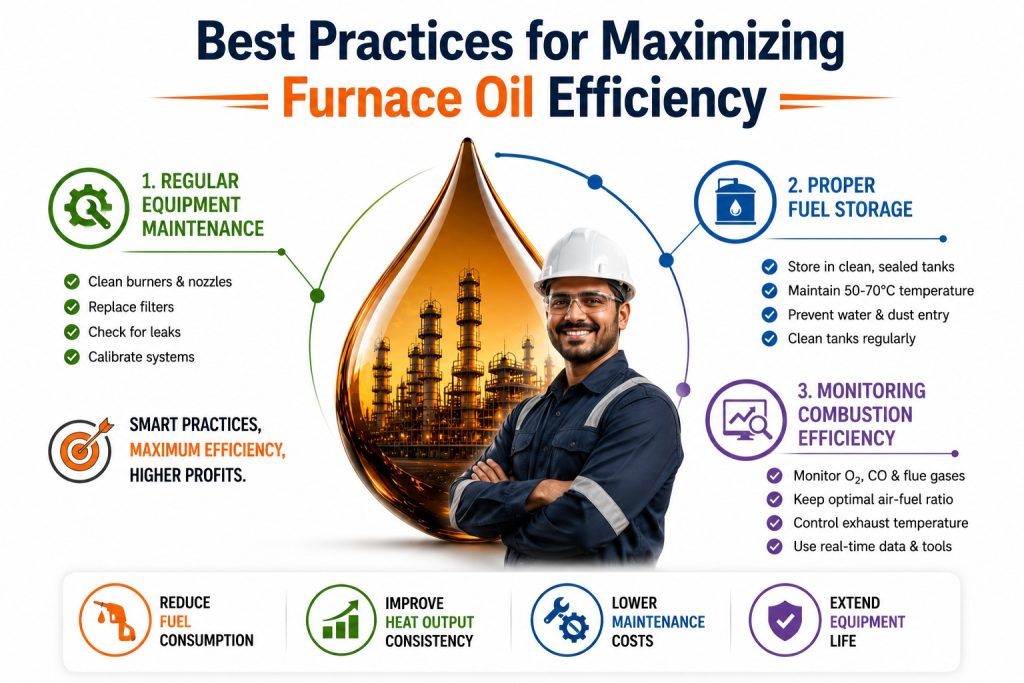
Maximizing furnace oil efficiency requires a combination of proper fuel selection, equipment care, and operational control. Many industries lose 5-10% efficiency due to poor practices, even when they use good quality fuel.
Start by maintaining your combustion systems regularly. Clean burners and filters ensure proper atomization and complete fuel burning. Next, focus on fuel storage. Contaminated or improperly stored oil can reduce calorific performance and increase sludge formation.
You should also monitor operating parameters closely. Track temperature, pressure, and fuel flow to ensure optimal combustion conditions. Small adjustments can significantly improve efficiency and reduce fuel waste.
Another key factor involves staff training. Operators who understand fuel behavior can quickly identify inefficiencies and correct them.
When you follow these best practices, you:
- Reduce fuel consumption
- Improve heat output consistency
- Lower maintenance costs
- Extend equipment life
Efficient fuel use not only saves money but also enhances overall industrial productivity.
Regular Equipment Maintenance
Regular maintenance keeps your system efficient and prevents costly breakdowns. Poorly maintained burners can reduce efficiency by up to 15%, which directly increases fuel consumption.
You should focus on the following maintenance activities:
- Burner Cleaning: Remove carbon deposits to ensure proper combustion
- Filter Replacement: Prevent impurities from entering the system
- Nozzle Inspection: Ensure correct spray pattern for atomization
- Leak Checks: Avoid fuel loss and safety risks
- Calibration: Maintain optimal air-fuel ratio
Maintenance Impact Comparison
| Maintenance Activity | Without Maintenance | With Regular Maintenance |
| Combustion Efficiency | Low | High |
| Fuel Consumption | Increased | Optimized |
| Equipment Downtime | Frequent | Minimal |
| Repair Costs | High | Controlled |
A plant that cleans burners weekly often sees immediate improvement in flame stability and fuel efficiency. Regular upkeep ensures smooth operations and long-term savings.
Proper Fuel Storage
Proper fuel storage plays a critical role in maintaining furnace oil quality. Even high quality fuel can lose efficiency if you store it incorrectly. Contamination and temperature fluctuations often lead to performance issues.
You should always store furnace oil in clean, sealed tanks to prevent dust and moisture entry. Water contamination can disrupt combustion and reduce heat output. Maintaining temperature also matters. Keep fuel between 50-70°C to maintain optimal viscosity and ensure smooth flow.
Good storage practices also reduce sludge formation. Sludge buildup can clog pipelines and burners, leading to inefficiencies and maintenance issues. Regular tank cleaning helps avoid this problem.
Industries that control storage conditions properly often reduce fuel losses by 3-5%. They also experience fewer operational disruptions.
When you manage storage carefully, you protect fuel quality, improve combustion, and maintain consistent performance across operations.
Monitoring Combustion Efficiency
Monitoring combustion efficiency helps you identify losses and optimize performance in real time. Many industries improve efficiency by 5-8% simply by tracking key parameters and making adjustments.
You should regularly measure oxygen (O₂) and carbon monoxide (CO) levels in flue gases. High CO levels indicate incomplete combustion, which wastes fuel. Adjusting the air-fuel ratio can fix this quickly.
Temperature monitoring also plays a key role. If exhaust temperatures run too high, heat escapes instead of contributing to production. Lowering excess air or improving insulation can recover this lost energy.
For example, a manufacturing unit that installed flue gas analyzers identified excess air in combustion. After adjustment, the plant reduced fuel consumption significantly within weeks.
Digital tools and sensors now make monitoring easier. Real-time data allows operators to respond quickly and maintain optimal efficiency. Continuous monitoring ensures consistent performance and long-term cost savings.
Digital tools and sensors now make monitoring easier. Real-time data allows operators to respond quickly and maintain optimal efficiency. Continuous monitoring ensures consistent performance and long-term cost savings.
Digital tools and sensors now make monitoring easier. Real-time data allows operators to respond quickly and maintain optimal efficiency. Continuous monitoring ensures consistent performance and long-term cost savings.
Digital tools and sensors now make monitoring easier. Real-time data allows operators to respond quickly and maintain optimal efficiency. Continuous monitoring ensures consistent performance and long-term cost savings.
Conclusion:
High quality furnace oil plays a crucial role in improving industrial efficiency and controlling operational costs. When you choose the right fuel, you don’t just improve combustion you enhance productivity, reduce downtime, and extend equipment life. From better calorific value to lower emissions, every advantage adds up to stronger performance and long-term savings.
Many industries focus only on upfront fuel prices, but real value comes from efficiency, consistency, and reliability. High quality furnace oil helps you achieve all three while supporting compliance and sustainability goals.
If you want to stay competitive in today’s cost-driven environment, optimizing your fuel strategy is no longer optional; it’s essential.
Ready to take the next step? Partner with Rerol Refinery and switch to high quality furnace oil that delivers measurable efficiency and cost savings.
FAQs
1. What is high quality furnace oil?
High quality furnace oil is a refined industrial fuel with high calorific value, low sulfur content, and better combustion properties that improve efficiency and reduce operational costs.
2. How does high quality furnace oil improve industrial efficiency?
It burns more efficiently, generates higher heat output, and reduces fuel wastage. This helps industries lower energy consumption and maintain stable operations.
3. What industries commonly use furnace oil?
Industries such as cement, textiles, steel, manufacturing, chemicals, and food processing widely use furnace oil for boilers, furnaces, and kilns.
4. What is the ideal calorific value of furnace oil?
High quality furnace oil typically offers a calorific value between 9,500-10,500 kcal/kg, ensuring better thermal efficiency.
5. Why is low sulfur content important in furnace oil?
Low sulfur content reduces harmful emissions, minimizes corrosion inside equipment, and helps industries comply with environmental regulations.
6. Can high quality furnace oil reduce maintenance costs?
Yes. Cleaner combustion creates fewer deposits and less sludge, which reduces burner clogging, equipment wear, and maintenance frequency.
7. How should furnace oil be stored properly?
Store furnace oil in clean, dry tanks and maintain proper temperature control to prevent contamination, sludge formation, and viscosity issues.
8. What factors should I check before buying furnace oil?
You should check:
- Calorific value
- Viscosity
- Sulfur content
- Flash point
- Ash content
- Supplier certifications
9. Is high quality furnace oil more cost-effective in the long run?
Yes. Although it may have a slightly higher upfront cost, it reduces fuel consumption, maintenance expenses, and downtime, leading to better long-term savings.
10. How can I choose a reliable furnace oil supplier?
Look for with:
- BIS/ISO/ASTM compliance
- Consistent fuel quality
- Transparent testing reports
- Strong industry experience
- Reliable delivery support