

Furnace Oil vs Diesel: Which Fuel is Better for Industrial Heating?
Introduction:
Industrial fuel choice isn’t just about burning heat it directly impacts operating cost, efficiency, and emissions. In India, industries consumed around 2,492 thousand tonnes of Furnace Oil vs Diesel and over 1,033 thousand tonnes of diesel (HSD) for industrial use, showing how critical these fuels are in manufacturing operations.
But the real challenge? Choosing the right one. Diesel offers higher usable energy (about 10,200 kcal/kg) and cleaner combustion, while furnace oil emits ~3.12 kg CO₂ per litre, increasing environmental burden.
So, industries are stuck between cost savings vs efficiency vs compliance. This guide breaks down furnace oil vs diesel in a practical way helping you choose the fuel that reduces cost, improves performance, and meets regulatory norms.
What is Furnace Oil?
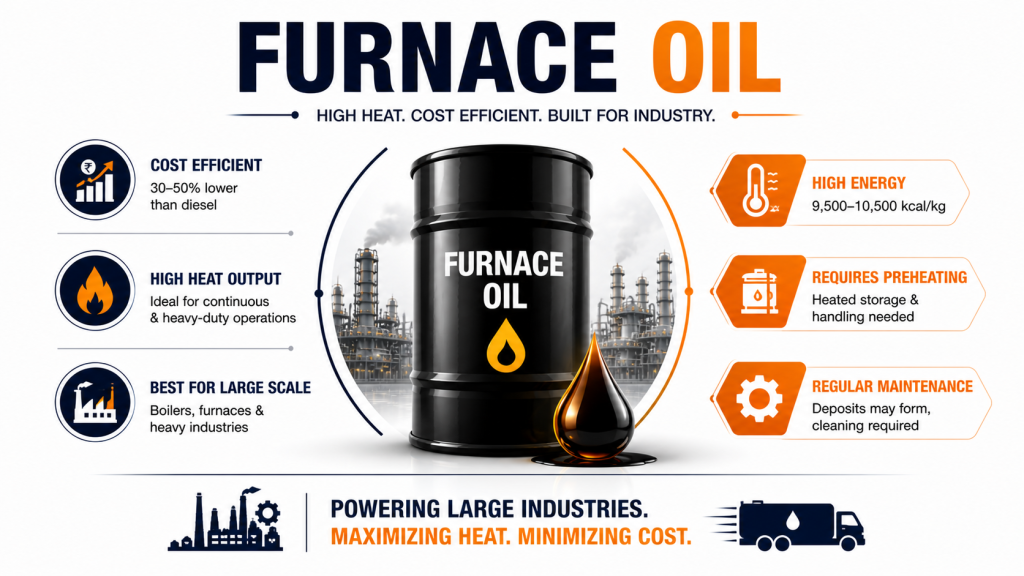
Furnace oil is a heavy, residual fuel that industries use for large-scale heating. Refineries produce it as a by-product after extracting lighter fuels like petrol and diesel from crude oil. You’ll usually see it as a thick, dark liquid with high viscosity, which means it doesn’t flow easily at room temperature.
Industries prefer Furnace Oil vs Diesel because it delivers high heat output at a lower cost. In India, it remains a widely used industrial fuel, especially in sectors where continuous heating matters. On average, furnace oil offers a calorific value of around 9,500-10,500 kcal/kg, making it efficient for boilers and furnaces.
However, it comes with trade-offs. It requires preheating before use, and it produces higher emissions compared to cleaner fuels. So, businesses often balance cost savings vs maintenance and environmental impact when choosing furnace oil.
Definition and Composition
Furnace oil comes from the bottom fraction of crude oil refining. After refineries separate lighter fuels, they collect the remaining heavy residue that becomes furnace oil. It contains a mix of long-chain hydrocarbons, sulfur, and impurities.
Here’s what makes up furnace oil:
- Hydrocarbons (major component): Provide energy during combustion
- Sulfur content: Typically ranges from 1% to 4%, which affects emissions
- Ash and sediments: Small amounts that impact burner performance
- Water traces: Can reduce combustion efficiency
Because of this composition, furnace oil feels dense and sticky. It doesn’t burn efficiently unless you heat it to reduce viscosity. Compared to diesel, it contains more impurities, which leads to higher maintenance needs.
Still, industries choose it because the energy-to-cost ratio remains attractive, especially for bulk consumption.
Key Characteristics
Furnace oil stands out because of its physical and performance properties. These characteristics directly affect how industries store, handle, and use it.
- High Calorific Value: Around 9,500-10,500 kcal/kg, suitable for heavy heating
- High Viscosity: Thick consistency; needs preheating (60-120°C) for smooth flow
- Lower Cost: Cheaper than diesel, making it ideal for large-scale operations
- High Sulfur Content: Leads to higher SOx emissions and pollution concerns
- Storage Requirements: Needs heated tanks and pipelines
- Combustion Efficiency: Depends on proper atomization and burner setup
- Maintenance Impact: Leaves deposits, so regular cleaning becomes necessary
These traits make furnace oil cost-effective but operationally demanding. If you manage it well, you can reduce fuel expenses significantly. But if you ignore maintenance, efficiency drops and emissions rise.
Common Industrial Applications
Industries use furnace oil mainly where continuous and high-temperature heating is required. Its affordability makes it a go-to option for large-scale operations.
Here’s where it fits best:
- Boilers: Used in textile, chemical, and food processing industries for steam generation
- Furnaces: Found in steel plants, foundries, and glass manufacturing units
- Power Plants: Used in thermal power generation (especially older plants)
- Kilns: Cement and ceramic industries rely on it for consistent heat
- Marine Applications: Ships use furnace oil as bunker fuel
For Example: A textile factory uses furnace oil in boilers to generate steam for dyeing and processing fabrics. This setup reduces fuel cost compared to diesel.
Because industries run these systems continuously, furnace oil helps cut operational expenses. However, companies must manage emissions and maintenance to keep performance stable.
What is Diesel Fuel?
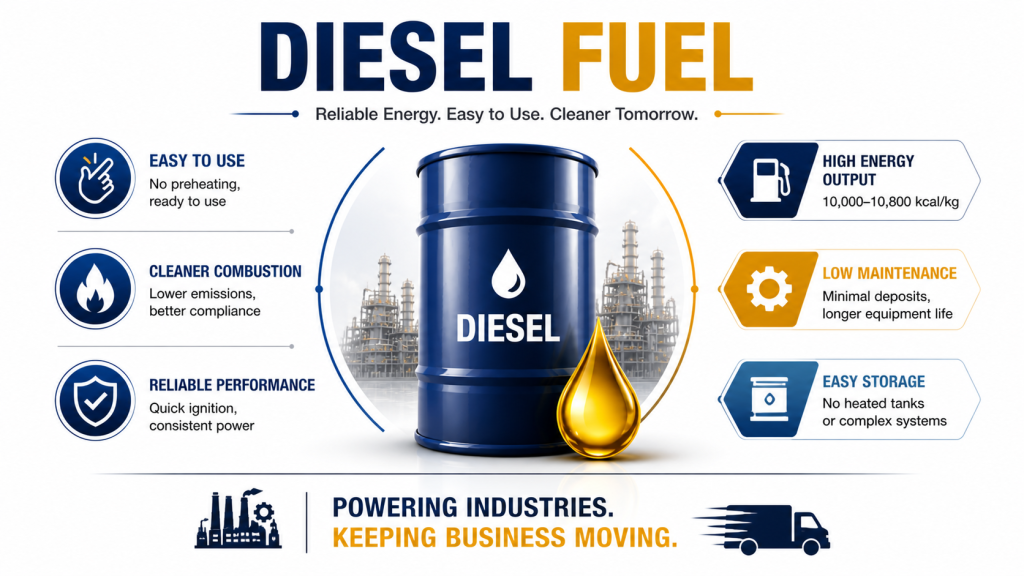
Diesel fuel is a light petroleum product widely used in industries for power generation and heating. Refineries produce diesel oil through fractional distillation of crude oil, giving it a cleaner and more refined structure compared to heavy fuels like furnace oil.
Industries prefer diesel oil because it offers easy handling, quick ignition, and cleaner combustion. It delivers a calorific value of around 10,000-10,800 kcal/kg, slightly higher than furnace oil. That means better energy output per unit, especially in controlled systems.
In India, diesel (HSD) plays a major role in industrial operations, particularly for backup systems and small-scale heating. However, cost becomes a key challenge. Diesel often costs 30-50% more than furnace oil, which directly increases operational expenses.
So, businesses usually choose diesel when they want reliability, flexibility, and lower emissions, even if it means paying a higher fuel price.
Definition and Composition
Diesel fuel comes from the middle distillate fraction of crude oil refining. Refineries separate it after petrol but before heavier fuels like furnace oil. This process gives diesel a balanced mix of energy-rich hydrocarbons and fewer impurities.
Here’s what diesel typically contains:
- Hydrocarbons (C10-C20 range): Provide stable and efficient combustion
- Low sulfur content: Modern diesel (BS6 in India) contains ≤10 ppm sulfur, reducing emissions
- Additives: Improve ignition quality, lubrication, and storage stability
- Minimal impurities: Cleaner than heavy fuels, reducing engine wear
Because of this composition, diesel flows easily and burns efficiently without preheating. It also produces less soot and residue, which helps maintain equipment performance.
This cleaner profile makes diesel ideal for industries that focus on efficiency, compliance, and low maintenance.
Key Characteristics
Diesel fuel offers a strong mix of performance, convenience, and cleaner combustion. These features make it suitable for flexible industrial use.
- High Calorific Value: Around 10,000-10,800 kcal/kg, ensures efficient energy output
- Low Viscosity: Flows easily at room temperature; no preheating required
- Clean Combustion: Produces fewer particulates and lower SOx emissions
- Quick Ignition: Supports fast startup in generators and burners
- Higher Cost: More expensive than furnace oil, impacts long-term operations
- Easy Storage: Does not require heated tanks or complex systems
- Low Maintenance: Leaves minimal deposits, reducing servicing frequency
These characteristics make diesel a convenient and reliable fuel, especially when operations demand quick response and consistent performance.
Common Industrial Applications
Industries use diesel mainly where flexibility, portability, and reliability matter more than cost. It works best for intermittent or backup operations.
Here’s where diesel fits perfectly:
- Generators (DG Sets): Used for backup power in factories, hospitals, and IT parks
- Small Boilers: Ideal for units with limited heating demand
- Construction Equipment: Powers machinery like excavators and loaders
- Industrial Burners: Used in small heating systems
- Transportation & Logistics: Fuels trucks and material handling vehicles
For Example: A manufacturing unit uses diesel generators during power cuts to maintain production without downtime.
Diesel helps industries avoid disruptions and maintain operational continuity. However, companies must balance its convenience with higher fuel costs, especially for long-term usage
Furnace Oil vs Diesel: Key Differences
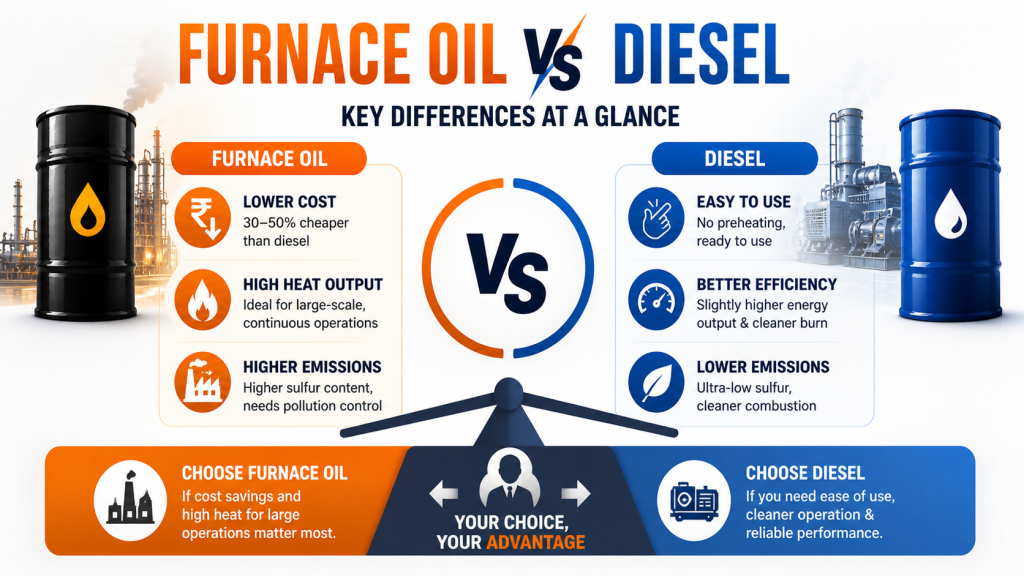
Choosing between Furnace Oil vs Diesel depends on cost, efficiency, and operational needs. Both fuels serve industrial heating, but they perform very differently in real-world use.
Furnace oil works best for large-scale, continuous operations. It costs less and delivers strong heat output, but it needs preheating systems and regular maintenance. On the other hand, diesel offers cleaner combustion and easy handling. You can use it instantly without extra infrastructure.
From a numbers perspective, diesel provides slightly higher energy output (~10,200 kcal/kg) compared to furnace oil (~9,800 kcal/kg). However, furnace oil often costs 30-50% less, making it more economical for bulk usage.
Cost Comparison
Fuel cost directly impacts industrial profitability, especially in continuous operations. Furnace oil clearly wins in terms of price advantage, while diesel increases operational expenses.
Key Cost Insights:
- Furnace oil costs 30-50% less than diesel in most Indian markets
- Bulk purchase reduces furnace oil cost further
- Diesel prices fluctuate frequently due to taxation and global crude trends
- Storage and handling cost is higher for furnace oil (due to heating systems)
Average Price Comparison (India 2026):
| Fuel Type | Price (Approx.) | Cost Efficiency |
| Furnace Oil | ₹45-₹60 / litre | High (for bulk use) |
| Diesel | ₹90-₹100 / litre | Moderate (higher cost) |
If you run large boilers daily, furnace oil reduces total fuel expense significantly.
Efficiency & Calorific Value
Efficiency depends on how effectively a fuel converts into usable heat. Diesel delivers slightly better combustion because of its cleaner composition and lower viscosity. It burns more completely, which improves heat transfer in smaller systems.
Furnace Oil vs Diesel, however, still performs well in large industrial setups. When you use proper preheating and atomization, it produces consistent heat output. Its calorific value ranges between 9,500-10,500 kcal/kg, while diesel ranges from 10,000-10,800 kcal/kg.
In real operations, efficiency also depends on equipment. Diesel suits small burners and generators, where precision matters. Furnace oil suits large boilers and furnaces, where continuous heat matters more than slight efficiency differences.
So, while diesel wins in combustion quality, furnace oil wins in cost-to-heat ratio for large-scale use.
Environmental Impact
Environmental impact plays a major role in fuel selection in Furnace Oil vs Diesel, especially with strict pollution norms in India. Diesel burns cleaner because it contains ultra-low sulfur (≤10 ppm in BS6), which reduces harmful emissions.
Furnace oil produces higher emissions due to its high sulfur content (up to 3-4%). This leads to increased release of:
- Sulfur oxides (SOx)
- Nitrogen oxides (NOx)
- Particulate matter
For example : a factory using furnace oil in boilers may face higher pollution control costs, including scrubbers and emission monitoring systems. In contrast, a unit using diesel generators produces less visible smoke and fewer residues, making compliance easier.
However, diesel still emits CO₂ and NOx, so it doesn’t qualify as a clean fuel completely.
Industries in pollution-sensitive zones often shift to diesel or cleaner alternatives to meet CPCB regulations and emission limits.
Which Fuel is Better for Your Industry?
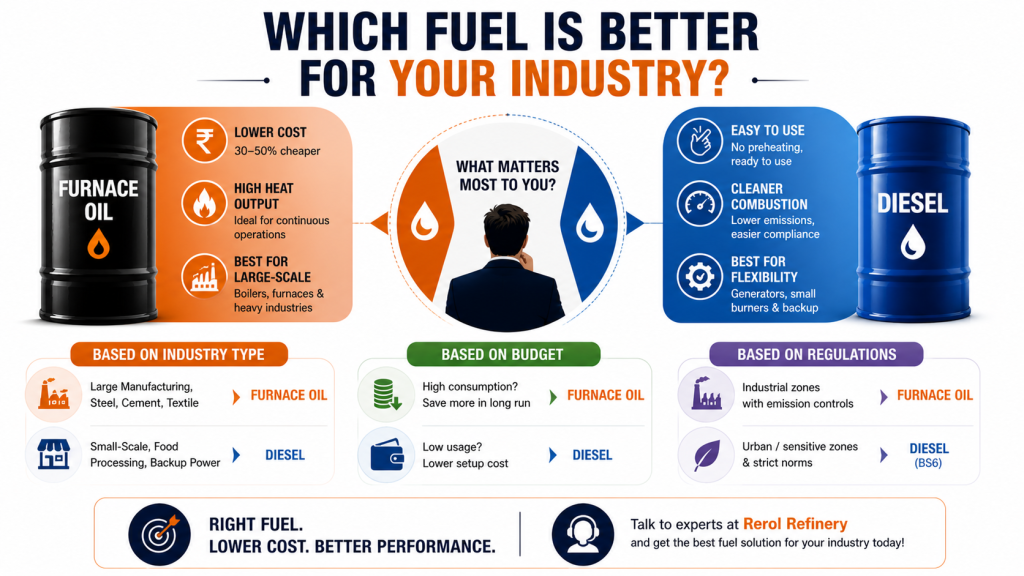
You can’t pick one fuel for every industry. The right choice depends on scale, budget, and compliance needs. Furnace oil works best when you run continuous, high-load operations and want to cut fuel cost. Diesel fits better when you need flexibility, quick startup, and cleaner combustion.
In India, many large industries still rely on furnace oil because it can reduce fuel expenses by 30-50% compared to diesel. But stricter emission norms push smaller and urban units toward diesel or cleaner fuels.
Think of it this way:
- Furnace oil = Cost efficiency + large-scale heating
- Diesel = Convenience + cleaner operations
You should also consider your equipment. Boilers and furnaces handle furnace oil well, while generators and small burners perform better with diesel. So, the best fuel is not universal; it depends on how your industry operates daily.
Choosing the right fuel can save you lakhs in operational cost. Talk to experts at Rerol Refinery and get the best fuel solution for your industry today.
Based on Industry Type
Different industries demand different fuel performance in Furnace Oil vs Diesel. You should match the fuel with your operational scale and usage pattern.
Best Fit by Industry:
- Large manufacturing (steel, cement, textile) → Furnace oil
- Small-scale industries → Diesel
- Backup power systems → Diesel
- Continuous process industries → Furnace oil
Industry vs Fuel Suitability:
| Industry Type | Recommended Fuel | Reason |
| Textile & Chemical | Furnace Oil | Continuous steam demand |
| Steel & Foundry | Furnace Oil | High-temperature heating |
| Small Food Processing | Diesel | Low-scale operations |
| Hospitals / IT Parks | Diesel | Reliable backup power |
A textile mill running 24/7 reduces cost significantly with furnace oil. A small food unit prefers diesel for easy handling and lower setup cost.
Based on Budget
Budget plays a major role in fuel selection. If you focus on long-term savings, furnace oil gives you a clear advantage. It costs much less per litre, which makes a big difference in industries that run daily operations.
However, you should also look beyond fuel price. Furnace oil needs preheating systems, storage tanks, and maintenance, which adds to initial investment. Diesel avoids these extra costs, so it works better for businesses with limited capital or short operating hours.
A factory running 20 hours a day will save significantly with furnace oil despite higher setup cost. But a unit running only a few hours daily may spend more on infrastructure than it saves on fuel.
So, choose furnace oil for high consumption and long-term savings, and diesel for low usage and quick setup.
Based on Environmental Regulations
Environmental rules now influence fuel decisions more than ever in Furnace Oil vs Diesel. Authorities like the Central Pollution Control Board set strict emission limits for industries, especially in urban and sensitive zones.
Furnace oil produces higher emissions due to sulfur content, so industries must install pollution control equipment like scrubbers. This increases compliance cost and complexity.
Diesel, especially BS6 grade, burns cleaner and helps industries meet emission standards more easily.
- Industries in cities or near residential areas often prefer diesel
- Industries in industrial zones may still use furnace oil with proper controls
For Example: A factory in Delhi NCR may avoid furnace oil due to strict air quality rules.A plant in a designated industrial zone in Tamil Nadu may still use furnace oil with emission systems in place.
So, if compliance and sustainability matter, diesel or cleaner fuels become the safer choice.
Conclusion:
Choosing between Furnace Oil vs Diesel isn’t about picking the “better” fuel, it’s about choosing what works best for your operation. Furnace oil gives you a clear advantage in cost savings and large-scale heating, while diesel delivers cleaner combustion, flexibility, and ease of use. The right decision depends on how you balance budget, efficiency, and environmental compliance.
If your industry runs continuous, high-load processes, furnace oil can significantly reduce your fuel expenses. If you need quick startup, lower maintenance, and easier compliance, diesel becomes the smarter option. As regulations tighten and fuel costs fluctuate, making an informed choice becomes even more critical for long-term profitability.
Instead of guessing, take a strategic approach. Connect with experts at Rerol Refinery to identify the most efficient and cost-effective fuel solution tailored to your business needs.
FAQS
1. Which is cheaper, furnace oil vs diesel?
Furnace oil costs 30-50% less than diesel, making it more economical for large-scale industrial use.
2. Which fuel gives better efficiency for industrial heating?
Diesel burns more efficiently due to cleaner combustion, but furnace oil offers better cost-to-heat value in bulk operations.
3. Why do industries prefer furnace oil?
Industries choose furnace oil because it reduces fuel costs significantly in continuous operations like boilers and furnaces.
4. Is diesel better than furnace oil for small industries?
Yes, diesel suits small industries because it requires no preheating, less infrastructure, and lower maintenance.
5. What is the calorific value of furnace oil vs diesel?
Furnace oil provides around 9,500-10,500 kcal/kg, while diesel delivers 10,000-10,800 kcal/kg.
6. Which fuel is more environmentally friendly?
Diesel is cleaner as it contains low sulfur (BS6 standards), while furnace oil produces higher emissions.
7. Can furnace oil be replaced with diesel?
Yes, you can replace furnace oil with diesel, but it will increase fuel costs significantly.
8. Does furnace oil require special equipment?
Yes, furnace oil needs preheating systems, heated storage tanks, and proper burners for efficient use.
9. Where is diesel commonly used in industries?
Industries use diesel in generators, small boilers, construction equipment, and backup systems.
10. How do I choose the right fuel for my industry in Furnace Oil vs Diesel?
You should evaluate fuel cost, usage scale, equipment compatibility, and environmental regulations before deciding. For expert guidance, consult Rerol Refinery.