

Base Oil (RRBO) vs Used Oil Collection: Understanding the Real Difference
Introduction
Industrial lubricants play a critical role in keeping machinery, generators, hydraulic systems, and manufacturing equipment running efficiently. However, when comparing Base Oil (RRBO) vs Used Oil Collection, many businesses still misunderstand the distinction between these two processes, even though they serve completely different purposes. focuses on safely gathering contaminated waste oil for disposal or recycling, while RRBO is a high-value refined product created through advanced re-refining processes.This distinction matters more than ever. India generates nearly 3 million tons of used oil annually, yet collection and recycling rates in several regions remain below 20%, causing serious environmental and compliance concerns.
What Is Base Oil (RRBO)?
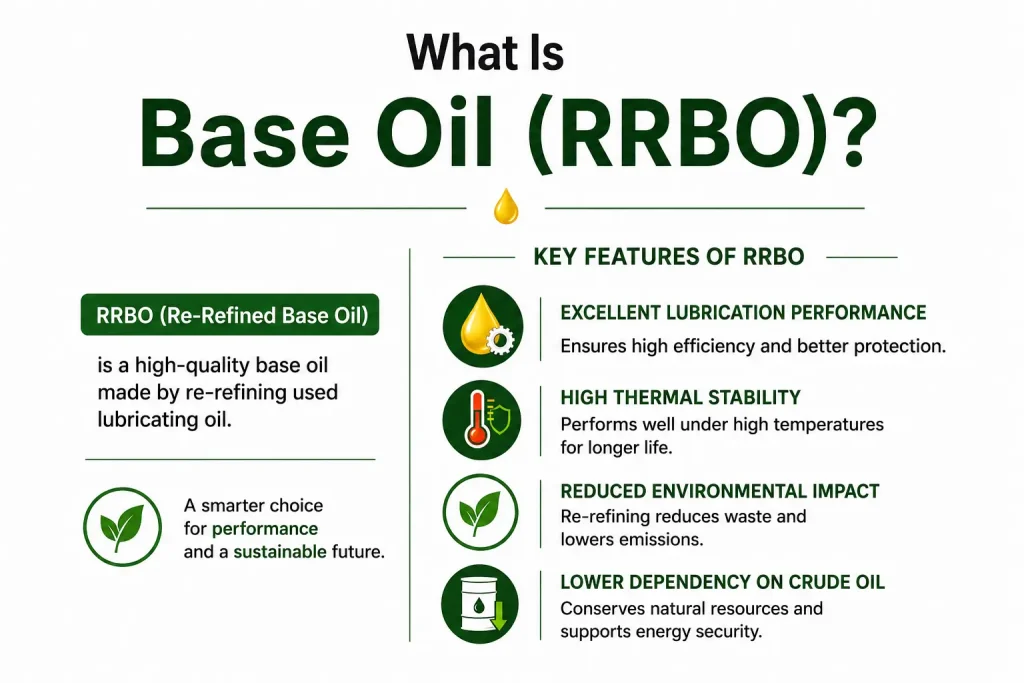
Re-Refined Base Oil (RRBO) is a high-quality lubricant base oil produced by recycling and refining used lubricating oils. Industries use RRBO to manufacture engine oils, hydraulic oils, gear oils, industrial lubricants, and greases. Instead of discarding waste oil, re-refining converts it into a reusable and environmentally responsible product.
Key features of RRBO include:
- Excellent lubrication performance
- High thermal stability
- Reduced environmental impact
- Lower dependency on crude oil
For example:
- Manufacturing plants use RRBO-based hydraulic oils in heavy machinery
- Transport companies use RRBO in commercial engine lubricants
- Power plants use re-refined oils in turbines and generators
Modern re-refining technologies now produce RRBO with quality levels comparable to virgin base oils. As environmental regulations grow stricter in India, industries increasingly choose RRBO to improve sustainability while controlling operational costs.
Definition of RRBO (Re-Refined Base Oil)
RRBO, or Re-Refined Base Oil, refers to lubricating base oil recovered from used or waste lubricants through advanced refining and purification processes. Instead of treating used oil as waste, recyclers clean, process, and restore it into usable industrial-grade base oil.
Industries generate large quantities of waste lubricants from:
- Automotive engines
- Hydraulic machinery
- Industrial compressors
- Turbines and generators
Re-refining removes contaminants such as:
- Dirt and metal particles
- Water and sludge
- Oxidation residues
- Carbon deposits
The final product performs similarly to virgin base oil and supports lubricant manufacturing across multiple industries.
RRBO vs Virgin Base Oil
| Factor | RRBO | Virgin Base Oil |
| Source | Recycled used oil | Crude oil refining |
| Environmental Impact | Lower carbon footprint | Higher environmental impact |
| Production Method | Re-refining process | Petroleum refining |
| Sustainability | Supports circular economy | Depends on fossil fuel extraction |
| Cost Efficiency | Often more affordable | Usually more expensive |
For example, many lubricant manufacturers blend RRBO into hydraulic oils and industrial lubricants without compromising performance. Modern hydro-treatment technology significantly improves RRBO purity, viscosity stability, and oxidation resistance.
Growing environmental regulations and rising crude oil prices continue to increase RRBO demand across India’s industrial sector.
How RRBO Is Manufactured
RRBO manufacturing involves several advanced refining stages that transform contaminated waste oil into high-quality reusable base oil. Modern re-refining plants use specialized purification technologies to restore lubricant performance and remove harmful impurities. This process helps industries reduce waste while supporting sustainable lubricant production.
1. Collection of Waste Oil
The process begins with collecting used lubricants from multiple industrial sources, including manufacturing plants, automotive workshops, marine industries, and power generation units. Authorized recyclers transport the oil safely to prevent contamination and maintain recycling quality.
For example, automotive garages regularly send used engine oil to re-refining facilities for processing.
2. Dehydration and Filtration
Collected oil usually contains water, sludge, dirt, carbon particles, and metal residues. Filtration systems remove solid contaminants, while dehydration eliminates moisture that can damage refining equipment and reduce oil quality.
This stage improves oil cleanliness before advanced refining begins.
3. Vacuum Distillation
Refiners heat the filtered oil under vacuum pressure to separate usable oil fractions from unwanted residues and contaminants. Vacuum distillation allows efficient separation at lower temperatures, which prevents thermal damage to the oil and improves recovery rates.
This process helps recover valuable lubricant components from waste oil.
Hydro-treatment significantly enhances RRBO quality and performance. The finished oil can then support applications such as engine oils, hydraulic lubricants, gear oils, and industrial greases.
Bright Stock
Bright Stock contains very high viscosity and excellent film strength. Manufacturers use it in:
- Marine lubricants
- Industrial greases
- Thick lubricant blends
Marine industries often rely on Bright Stock to improve wear protection in heavy engine systems.
Modern hydro-treatment technologies now help RRBO grades achieve performance standards close to virgin base oils while supporting cost savings and environmental sustainability.
What Is Used Oil Collection?
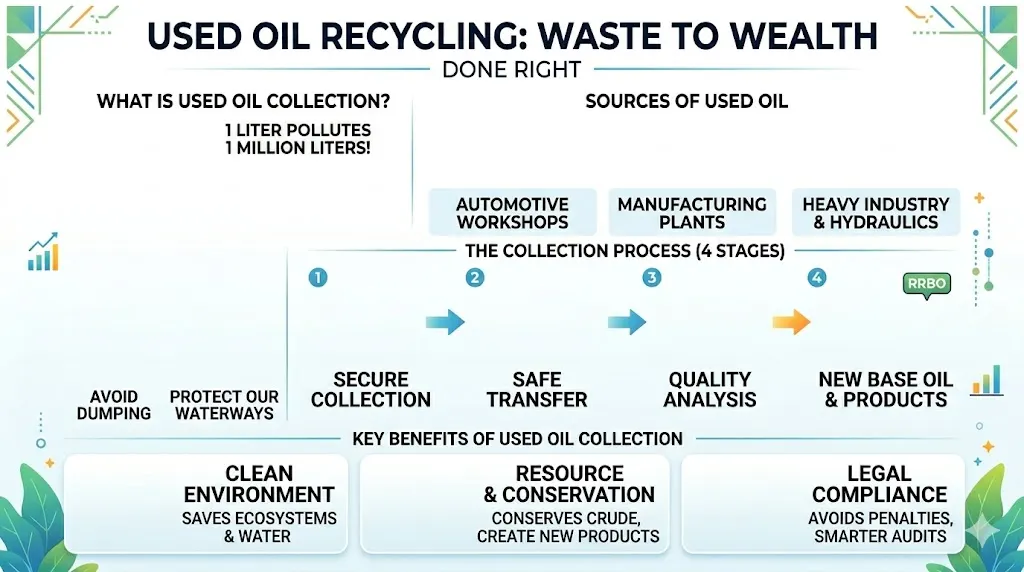
Used oil collection refers to the process of gathering, storing, transporting, and sending waste lubricating oil for recycling or safe disposal. Industries generate used oil after lubricants lose their effectiveness due to heat, contamination, oxidation, and heavy equipment usage. Instead of dumping this waste oil, authorized collectors channel it into recycling and re-refining systems.
Used oil typically contains harmful contaminants such as:
- Metal particles
- Sludge and dirt
- Water
- Chemical residues
Improper disposal can severely damage soil, groundwater, and aquatic ecosystems. According to environmental studies, just one liter of used oil can contaminate nearly one million liters of water if disposed of irresponsibly.
Industries commonly collect used oil from:
- Automotive workshops
- Manufacturing plants
- Hydraulic systems
- Generators
For example, large factories often store waste lubricants in sealed containers before authorized recyclers transport them to re-refining facilities.
Used oil collection plays a major role in environmental protection, industrial sustainability, and regulatory compliance. With India strengthening hazardous waste management rules and recycling regulations, industries now prioritize professional oil collection systems to reduce environmental risks and support circular economy initiatives.
Sources of Used Oil
Used oil collection refers to the process of gathering, storing, transporting, and sending waste lubricating oil for recycling or safe disposal. Industries generate used oil after lubricants lose their effectiveness due to heat, contamination, oxidation, and heavy equipment usage. Instead of dumping this waste oil, authorized collectors channel it into recycling and re-refining systems.
Used oil typically contains harmful contaminants such as:
- Metal particles
- Sludge and dirt
- Water
- Chemical residues
Improper disposal can severely damage soil, groundwater, and aquatic ecosystems. According to environmental studies, just one liter of used oil can contaminate nearly one million liters of water if disposed of irresponsibly.
Industries commonly collect used oil from:
- Automotive workshops
- Manufacturing plants
- Hydraulic systems
- Generators
For example, large factories often store waste lubricants in sealed containers before authorized recyclers transport them to re-refining facilities.
Used oil collection plays a major role in environmental protection, industrial sustainability, and regulatory compliance. With India strengthening hazardous waste management rules and recycling regulations, industries now prioritize professional oil collection systems to reduce environmental risks and support circular economy initiatives.
How Used Oil Collection Works
Oil collection follows a structured process that ensures safe handling, transportation, recycling, and environmental compliance. Industries must manage waste oil carefully because contaminated lubricants can create serious environmental and safety hazards.
Used Oil Collection Process
| Stage | Purpose | Example |
| Storage | Safely contain used oil | Sealed industrial drums |
| Transportation | Move waste oil securely | Authorized tanker vehicles |
| Waste Management | Prevent contamination and leakage | Hazardous waste handling |
| Recycling Channels | Send oil for re-refining | RRBO production plants |
1. Storage
Industries store used oil in:
- Leak-proof containers
- Steel drums
- Dedicated storage tanks
Companies often separate different oil types to avoid contamination and improve recycling quality.
2. Transportation
Authorized waste oil collectors transport used oil using specialized vehicles designed for hazardous materials. Proper labeling and documentation help industries comply with pollution control regulations.
3. Waste Management Procedures
Waste management teams inspect oil quality, contamination levels, and storage conditions before processing. They also follow strict spill prevention and fire safety measures.
4. Authorized Recycling Channels
Collectors deliver used oil to licensed recycling or re-refining facilities where advanced treatment processes recover usable base oil.
For example:
- Automotive waste oil often becomes RRBO for industrial lubricants
- Hydraulic waste oil enters filtration and refining systems
Efficient oil collection reduces environmental pollution while supporting sustainable lubricant recycling industries across India.
Importance of Used Oil Collection
Used oil collection plays a critical role in environmental protection, industrial sustainability, and legal compliance. Improper disposal of waste lubricants can contaminate soil, rivers, groundwater, and agricultural land. Industries that follow structured collection practices reduce pollution risks while supporting recycling and resource recovery.
Key Benefits of Used Oil Collection
Environmental Protection
Used oil contains hazardous contaminants such as:
- Heavy metals
- Toxic chemicals
- Sludge and carbon particles
Proper collection prevents these pollutants from entering ecosystems. Environmental agencies estimate that one gallon of improperly disposed oil can contaminate up to one million gallons of water.
Preventing Illegal Disposal
Unauthorized dumping, burning, or discharge of waste oil creates severe environmental and legal consequences. Professional collection systems help industries avoid penalties and environmental damage.
Example:
Factories that partner with authorized recyclers reduce the risk of groundwater contamination and pollution board violations.
Supporting Recycling Industries
Collected used oil supports RRBO production and lubricant recycling industries. Re-refining conserves crude oil resources and reduces industrial waste generation.
Regulatory Compliance
India’s hazardous waste management regulations require industries to maintain proper documentation, storage, and disposal procedures for used oil.
Companies that follow compliant collection practices benefit from:
- Better environmental audits
- Improved sustainability reporting
- Reduced legal risks
- Safer workplace operations
As environmental regulations continue to tighten, proper oil collection has become essential for responsible industrial operations and long-term sustainability goals.
Base Oil (RRBO) vs Used Oil Collection
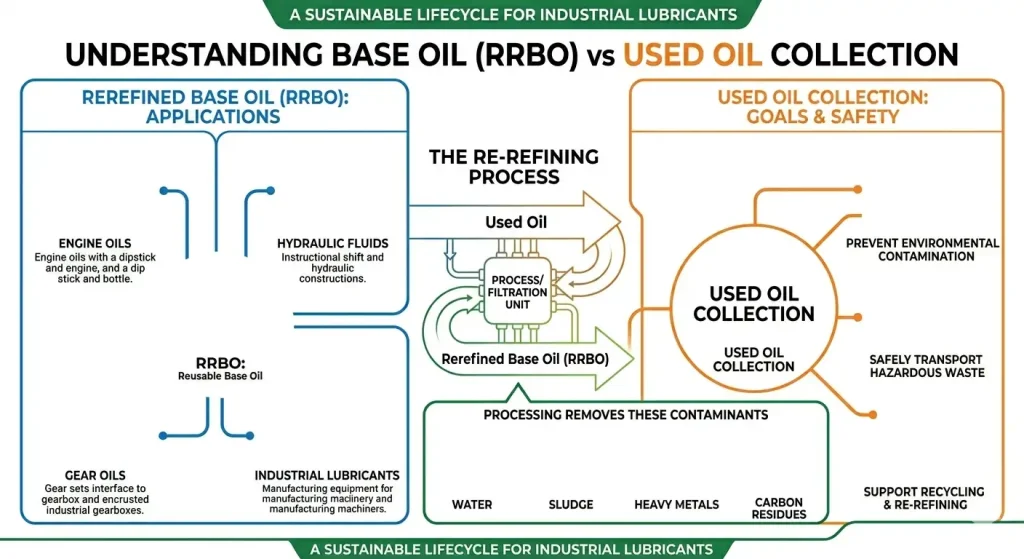
Many industries mistakenly treat RRBO and oil collection as the same process, but they serve completely different purposes in the lubricant recycling chain. Used oil collection focuses on gathering and managing waste lubricants safely, while RRBO represents the refined end product created after advanced recycling and purification.
The key differences include:
- RRBO functions as a reusable industrial lubricant base oil
- Oil collection functions as a waste management activity
- RRBO undergoes complex refining and hydro-treatment
- Used oil collection mainly involves storage, transport, and safe handling
For example:
- A manufacturing plant may collect contaminated hydraulic oil through authorized waste handlers
- A re-refining facility then converts that waste oil into usable RRBO for new lubricant production
Understanding these differences helps industries improve compliance, reduce disposal risks, support sustainability goals, and make better operational decisions in waste oil management and lubricant procurement
Difference in Purpose
The biggest difference between RRBO and used oil collection lies in their purpose. RRBO serves as a refined industrial product used in lubricant manufacturing, while used oil collection focuses on safely managing hazardous waste oil before recycling or disposal.
Purpose of RRBO
RRBO acts as a reusable base oil that industries use to produce:
- Engine oils
- Hydraulic fluids
- Gear oils
- Industrial lubricants
Re-refining transforms waste lubricants into valuable industrial resources. Many manufacturers now use RRBO to reduce production costs and improve sustainability.
Example:
A lubricant manufacturer may use SN500 RRBO to produce heavy-duty industrial gear oil for mining equipment.
Purpose of Used Oil Collection
Oil collection aims to:
- Prevent environmental contamination
- Safely transport hazardous waste
- Support recycling and re-refining
Collectors gather contaminated lubricants from industries, workshops, generators, and marine systems before sending them to authorized recycling facilities.
Example:
An automotive service center stores waste engine oil in sealed drums until licensed collectors transport it for recycling.
Key Functional Difference
- RRBO creates economic and industrial value
- Used oil collection reduces environmental and regulatory risks
This distinction forms the foundation of the entire lubricant recycling ecosystem and circular economy model.
Difference in Processing
RRBO production and Oil collection involve completely different operational processes.Oil collection focuses on safe handling and transportation, while RRBO manufacturing involves advanced refining and purification technologies that restore lubricant quality.
Used oil collection includes activities such as:
- Gathering waste lubricants
- Storing oil safely
- Preventing leakage and contamination
In contrast, RRBO production uses sophisticated industrial refining methods to recover usable base oil. The process typically includes:
- Filtration
- Dehydration
- Vacuum distillation
These processes remove:
- Water
- Sludge
- Heavy metals
- Carbon residues
Industry reports show that modern re-refining technologies can recover nearly 70–80% usable base oil from waste lubricants. This makes RRBO production one of the most resource-efficient recycling methods in the petroleum industry.
For example:
- A waste oil collector may transport contaminated hydraulic oil from a factory
- A re-refining plant then converts that oil into high-quality RRBO suitable for industrial lubricant manufacturing
Collection manages waste. Refining creates value. That represents the core processing difference between the two systems.
Difference in Quality Standards
RRBO and used oil collection follow very different quality and compliance standards because they serve different industrial purposes. RRBO must meet lubricant performance specifications, while used oil collection must comply with environmental and hazardous waste management regulations.
RRBO Quality Standards
Manufacturers test RRBO for critical performance factors such as:
- Viscosity stability
- Flash point
- Sulfur content
- Oxidation resistance
- Purity levels
Advanced hydro-treatment technology helps RRBO achieve performance levels close to virgin base oil. Many lubricant manufacturers now use re-refined oils in industrial applications without compromising efficiency.
Example:
Hydraulic oil manufacturers often test SN300 RRBO for viscosity consistency before blending industrial lubricants.
Used Oil Collection Standards
Used oil collection follows strict environmental safety rules designed to prevent contamination and illegal disposal. Pollution control authorities require industries to maintain:
- Leak-proof storage systems
- Hazardous waste documentation
- Authorized transportation procedures
- Spill prevention measures
In India, CPCB and hazardous waste management rules regulate used oil handling and recycling activities.
Example:
Industrial facilities must label used oil containers correctly and maintain disposal records during environmental audits.
Core Difference
- RRBO standards focus on product performance and usability
- Used oil collection standards focus on environmental protection and legal compliance
Both systems remain essential for sustainable industrial waste management and lubricant recycling.
Conclusion
Understanding the difference between RRBO and used oil collection is essential for industries that want to improve operational efficiency, reduce environmental risks, and stay compliant with modern waste management regulations. Used oil collection focuses on safely handling and transporting contaminated lubricants, while RRBO represents the valuable refined product created through advanced recycling and re-refining processes. Together, both systems support a sustainable industrial ecosystem. Proper used oil collection prevents illegal disposal, protects soil and water resources, and ensures compliance with hazardous waste regulations. At the same time, RRBO helps industries reduce dependence on crude oil, lower lubrication costs, and support circular economy initiatives.
FAQs
Q1. What is RRBO?
A: RRBO (Re-Refined Base Oil) is a purified base oil made from used lubricants and reused in lubricant manufacturing.
Q2. Where is RRBO used?
A: RRBO is used to produce engine oils, hydraulic fluids, industrial lubricants, and greases.
Q3. Is used oil collection the same as recycling?
A: No. Collection involves gathering and transporting used oil, while recycling converts it into reusable products.
Q4. How is RRBO made from waste oil?
A: Waste oil is filtered, dehydrated, distilled, and treated to remove contaminants and restore quality.
Q5.Can RRBO replace virgin base oil?
A:Yes, RRBO can replace virgin base oil in many industrial applications.
Q6. Why is used oil considered hazardous?
A: It contains harmful contaminants that can pollute soil and water if disposed of improperly.
Q7. What are the environmental benefits of used oil collection?
A: It prevents pollution, supports recycling, and reduces waste sent to landfills.
Q8. Can RRBO replace virgin base oil?
A: High-quality RRBO can achieve performance levels close to virgin base oil in many applications.