

Diesel Oil (LDO) vs Used Oil Collection: Which Is Better for Industrial Use?
Introduction
Industrial operations depend heavily on efficient fuel usage and responsible waste oil management. Choosing the wrong energy source or ignoring proper oil disposal can increase operating costs, reduce equipment life, and create serious environmental risks. Light Diesel Oil (LDO) is widely used in boilers, furnaces, and generators because of its stable combustion and operational efficiency, while used oil collection focuses on safely managing and recycling waste lubricants generated by industrial machinery.
When evaluating Diesel Oil (LDO) vs Used Oil management strategies, industries must balance fuel efficiency, operational costs, environmental compliance, and sustainability goals simultaneously. According to the U.S. EPA, nearly 200 million gallons of used oil are improperly disposed of every year, causing major soil and water contamination risks. Additionally, recycling used oil requires significantly less energy than refining crude oil. This comparison explores the key differences in the Diesel Oil (LDO) vs Used Oil ecosystem to help industries choose smarter, safer, and more sustainable operational strategies.
What Is Diesel Oil (LDO)?
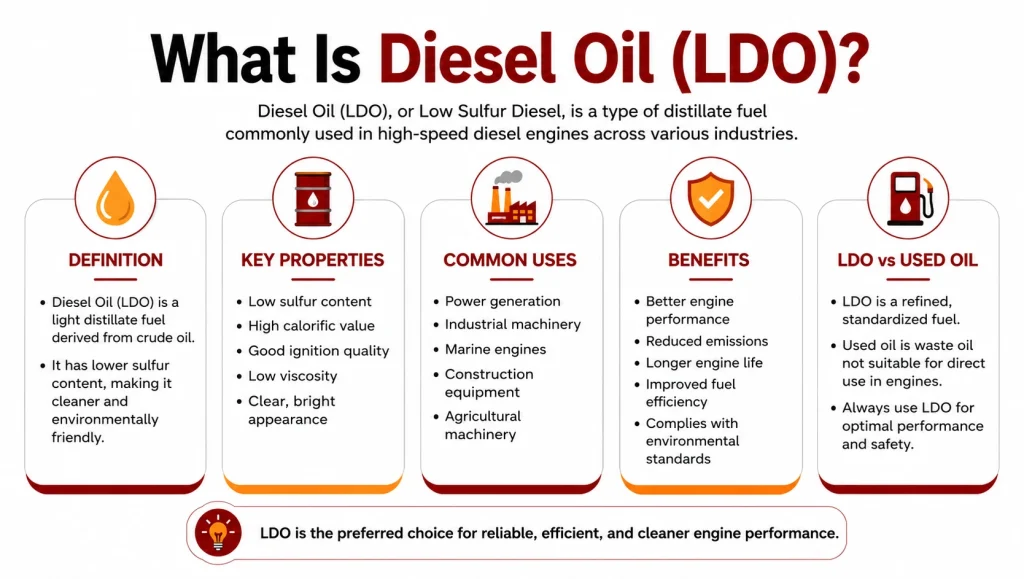
Light Diesel Oil (LDO) is a popular industrial fuel used in boilers, furnaces, generators, and heating equipment. Industries prefer LDO because it delivers stable combustion, reliable thermal performance, and easier handling compared to heavier fuels. Many manufacturing plants use LDO to maintain uninterrupted production and reduce operational downtime.
Key reasons industries choose LDO include:
- Better combustion efficiency
- Lower maintenance requirements
- Cleaner fuel handling
- Reliable ignition performance
For example, textile factories often use LDO in thermic fluid heaters because it provides steady heat output without excessive carbon deposits. Similarly, small manufacturing units prefer LDO-powered generators during power interruptions. As industries focus more on cost control and fuel efficiency, LDO continues to remain an important fuel option for industrial heating and energy applications.
Definition of Light Diesel Oil
Light Diesel Oil (LDO) is a low-viscosity industrial fuel produced during the petroleum refining process. Refineries create LDO by blending different hydrocarbon fractions obtained from crude oil distillation. Industries mainly use it in boilers, furnaces, thermic fluid heaters, and diesel engines that operate under medium-load conditions.
LDO offers a balance between performance and affordability. It burns cleaner than heavier fuels like furnace oil while costing less than premium-grade High-Speed Diesel (HSD) in many industrial applications.
Composition and Refining Process
LDO contains a mixture of:
- Hydrocarbons
- Middle distillate fractions
- Controlled sulfur compounds
- Additives for combustion stability
This process improves fuel stability and combustion performance before industrial distribution.
How LDO Differs From HSD and Furnace Oil
| Fuel Type | Main Use | Viscosity | Cost | Combustion Efficiency |
| LDO | Industrial heating & boilers | Medium | Moderate | High |
| HSD | Vehicles & high-speed engines | Low | Higher | Very High |
| Furnace Oil | Heavy industrial heating | High | Lower | Moderate |
- Example 1: A textile plant may use LDO for thermic fluid heaters because it ignites quickly and produces stable heat.
- Example 2: Heavy steel industries often prefer furnace oil for large-scale heating due to lower fuel cost.
LDO acts as a practical middle-ground fuel for industries that need both efficiency and cost control.
Key Properties of LDO
The performance of Light Diesel Oil (LDO) depends heavily on its physical and chemical properties. These characteristics directly affect combustion quality, fuel efficiency, maintenance costs, and equipment lifespan. Industries prefer LDO because it delivers reliable heating performance without the operational complications associated with heavier fuels.
Important Properties of LDO:
- High calorific value for strong heat generation
- Lower viscosity for smooth fuel flow
- Controlled sulfur content for cleaner combustion
- Better combustion efficiency for reduced maintenance
Calorific Value
LDO usually offers a calorific value ranging between 10,200 and 10,800 kcal/kg. This high energy output helps industries generate strong and stable heat during industrial operations. Boilers and furnaces perform more efficiently when fuels produce consistent thermal energy. Higher calorific value also helps reduce overall fuel consumption in continuous heating processes.
Sulfur Content
Modern industries pay close attention to sulfur emissions because environmental regulations continue to become stricter. LDO contains lower sulfur levels compared to many heavy industrial fuels, helping companies reduce:
- Equipment corrosion
- Smoke generation
- Harmful emissions
- Burner maintenance issues
Cleaner fuel combustion also supports better workplace conditions and improved equipment lifespan.
Combustion Efficiency
Efficient combustion remains one of the biggest advantages of LDO. It ignites quickly and burns more uniformly, resulting in:
- Lower carbon deposits
- Reduced maintenance frequency
- Improved boiler performance
- Better fuel economy
For example, food processing industries often choose LDO because cleaner combustion helps maintain consistent heating without excessive soot buildup inside boilers and thermic fluid heaters.
Common Industrial Applications of LDO
Light Diesel Oil (LDO) supports several industrial operations that require dependable and efficient heat generation. Industries prefer LDO because it offers stable combustion, easy storage, and lower maintenance compared to heavier industrial fuels.
- Boilers: Many industries use LDO in industrial boilers to generate steam for production processes. Textile, food processing, and chemical plants rely on boiler systems for continuous heating operations.
- Furnaces: Industrial furnaces use LDO for metal heating, drying, and thermal processing. LDO burns efficiently and produces stable flame temperatures, making it suitable for medium-scale furnace applications.
- Manufacturing Industries: Several sectors depend on LDO daily, including textile manufacturing, ceramic industries, rubber processing, food production, and engineering factories.
Application Example: A ceramic manufacturing plant may use LDO-fired furnaces to maintain precise heating temperatures during tile production. Similarly, textile mills often depend on LDO boilers for steam generation in dyeing and processing operations.
What Is Used Oil Collection?
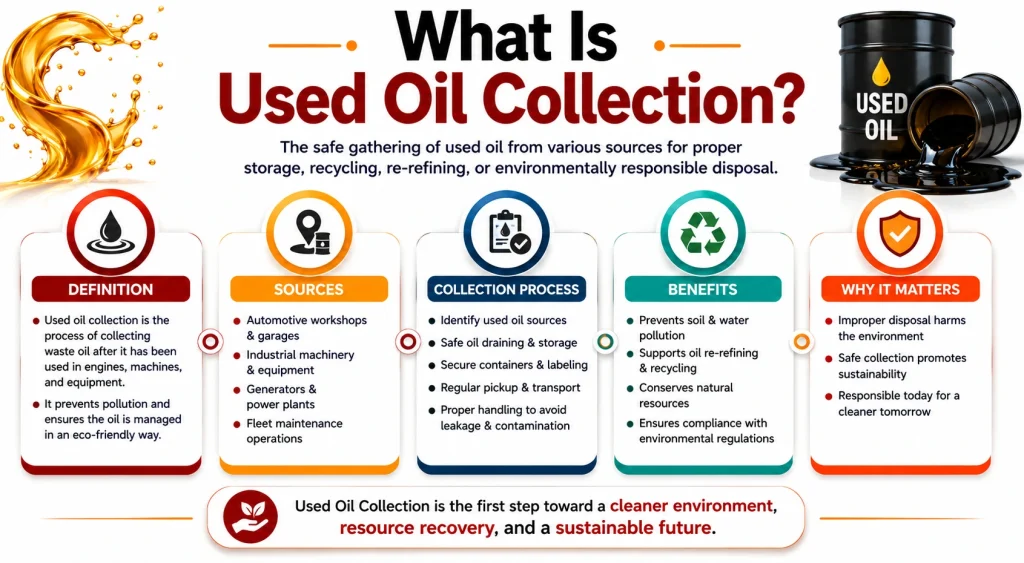
Used oil collection refers to the process of gathering, transporting, recycling, or safely disposing of waste oils generated by industries, vehicles, and machinery. Industrial equipment such as generators, hydraulic systems, compressors, and engines produce large volumes of used lubricants after continuous operation.
If industries dump this waste oil improperly, it can seriously damage soil, groundwater, and ecosystems. Analyzing the environmental impacts of Diesel Oil (LDO) vs Used Oil handling shows that according to the U.S. EPA, one gallon of improperly disposed used oil can contaminate up to one million gallons of water.
Industries use used oil collection services to manage waste responsibly and comply with environmental regulations. Authorized collectors transport waste oil to recycling or re-refining facilities, where technicians remove contaminants such as sludge, water, and metal particles.
Common sources of used oil include:
- Engine lubricants
- Hydraulic fluids
- Transformer oils
- Gear oils
- Industrial machine lubricants
For example, automotive workshops generate used engine oil daily, while manufacturing plants produce hydraulic and compressor oils during machinery operations. Modern industries now focus heavily on oil recycling because re-refined oil reduces waste generation, conserves crude oil resources, and supports sustainable industrial practices. Proper used oil collection also helps companies avoid environmental penalties and maintain safer industrial operations.
Definition of Used Oil Collection
Used oil collection forms the baseline for waste safety in automotive workshops, power plants, and heavy machinery operations. These oils lose their performance quality after prolonged use due to contamination from dirt, metal particles, chemicals, and high operating temperatures.
Industries cannot simply discard used oil because it contains hazardous contaminants that may pollute soil and water sources. Instead, certified collection companies transport the waste oil to recycling or re-refining facilities for treatment and recovery.
Common Waste Oils Collected
- Used engine oil
- Hydraulic oil
- Gear oil
- Transformer oil
- Compressor lubricants
Recycling and Re-Refining Process
Recycling facilities clean and process used oil through several stages:
- Filtration
- Water removal
- Sludge separation
- Vacuum distillation
- Re-refining and additive treatment
This process restores oil quality and allows industries to reuse the recovered base oil in lubricants and industrial applications.
Used oil recycling also saves energy. Studies show re-refining used oil requires significantly less energy than refining crude oil into fresh lubricants. Because of this advantage, many industries now include used oil collection as part of their sustainability and waste management programs.
Types of Used Oil Collected
Industries generate different types of used oil depending on the machinery, equipment, and operational processes involved. Each oil type serves a specific function during operation and requires proper collection and recycling after contamination or performance degradation.
| Type of Used Oil | Main Source | Common Industrial Use |
| Engine Oil | Vehicles and generators | Lubricates engine components |
| Hydraulic Oil | Hydraulic systems | Transfers pressure in machinery |
| Transformer Oil | Electrical transformers | Provides insulation and cooling |
| Gear Oil | Gearboxes and transmissions | Reduces friction between gears |
| Industrial Lubricants | Manufacturing equipment | Protects moving machine parts |
- Engine Oil: Automotive workshops, transport fleets, and generator systems produce large amounts of used engine oil. Continuous exposure to heat and combustion contaminants reduces its effectiveness over time.
- Hydraulic Oil: Factories using hydraulic presses, lifts, and heavy machinery generate used hydraulic oil regularly. Contamination from moisture and metal particles affects system performance.
- Transformer Oil: Power plants and electrical industries collect used transformer oil after prolonged thermal and electrical stress. Proper recycling helps recover valuable insulating oil.
- Gear Oil: Heavy industries use gear oil in industrial gearboxes and transmission systems. Friction and wear gradually degrade the lubricant quality.
- Industrial Lubricants: Manufacturing plants use lubricants for compressors, turbines, pumps, and production machinery. These oils require periodic replacement to maintain operational efficiency.
Industrial Context: A steel manufacturing unit may simultaneously generate hydraulic oil, gear oil, and industrial lubricants from different machinery systems during daily production operations.
How Used Oil Collection Works
Used oil collection follows a structured process that helps industries manage waste safely, reduce environmental risks, and support oil recycling efforts. Authorized collection companies handle the transportation, treatment, and disposal of waste oil according to environmental regulations.
- Collection From Industries: Industries store used oil in designated leak-proof containers or tanks after machinery servicing or oil replacement. Common collection points include manufacturing plants, automotive workshops, power generation facilities, and shipping or marine industries.
- Transportation: Certified waste management companies transport the collected oil using specialized tanker vehicles. Proper transportation prevents leaks, spills, and environmental contamination during transit.
- Testing and Filtration: At recycling facilities, technicians test the oil for water contamination, metal particles, sludge content, and chemical impurities. Filtration systems then remove solid contaminants and moisture before further processing.
- Recycling or Re-Refining: Recyclers process usable oil through vacuum distillation and re-refining methods to recover valuable base oil. Industries can reuse this recovered oil in lubricants and industrial applications.
- Safe Disposal: If oil cannot undergo recycling, disposal facilities treat it according to hazardous waste management standards. This step prevents pollution and protects surrounding ecosystems.
Diesel Oil (LDO) vs Used Oil: Core Difference
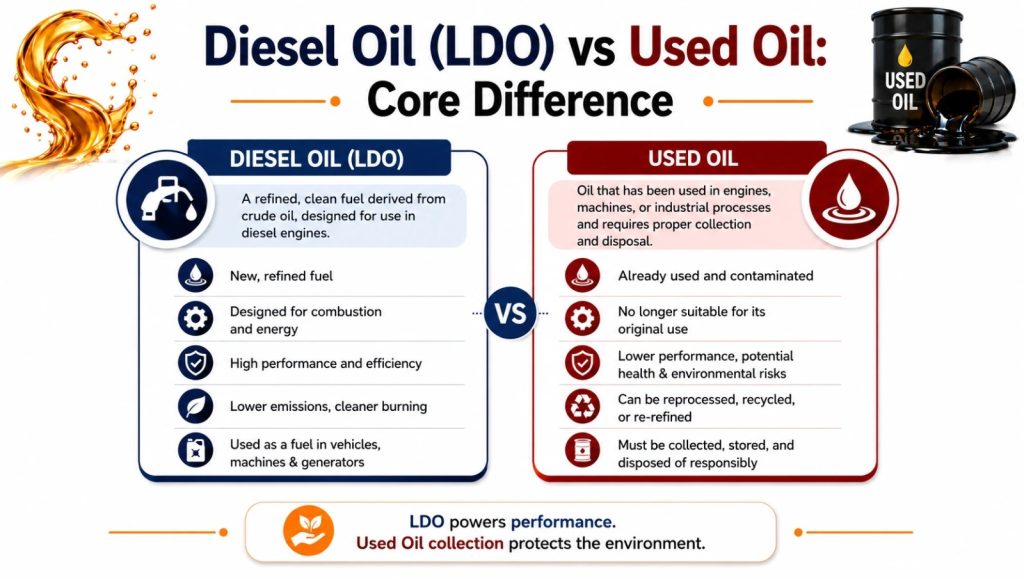
When looking directly at Diesel Oil (LDO) vs Used Oil parameters, they serve completely different industrial purposes, even though both play important roles in industrial setups. LDO works as an energy source for boilers, furnaces, generators, and heating systems, while used oil collection focuses on managing and recycling waste lubricants safely.
Industries use LDO to improve operational efficiency and maintain uninterrupted production. In contrast, used oil collection helps companies reduce environmental damage and comply with waste management regulations.
Core Differences in Diesel Oil (LDO) vs Used Oil management:
- LDO supports energy generation and industrial heating.
- Used oil collection supports waste management and recycling.
- LDO involves fuel consumption during operations.
- Used oil collection focuses on recovering waste oil after use.
- LDO contributes directly to operational productivity.
For example, a textile factory may use LDO to run thermic fluid heaters, while the same factory may hire used oil collectors to recycle waste hydraulic oil from machinery maintenance.
Purpose and Function
The primary purpose of Light Diesel Oil (LDO) involves industrial energy generation, while used oil collection focuses on waste management and oil recycling. Both systems support industrial operations, but they solve entirely different operational challenges.
LDO as an Industrial Fuel
Industries use LDO to generate heat and power for manufacturing processes. Boilers, furnaces, generators, and thermic fluid heaters depend on LDO for stable combustion and reliable performance.
Common Functions of LDO:
- Steam generation
- Industrial heating
- Backup power generation
- Continuous manufacturing support
For example, food processing plants often use LDO-fired boilers for steam production during cooking and sterilization processes.
Used Oil Collection as a Waste Management Solution
Used oil collection helps industries safely remove contaminated lubricants and waste oils from machinery systems. Recycling companies collect, filter, and re-refine these oils to reduce pollution and recover reusable resources.
Main Functions of Used Oil Collection:
- Waste oil removal
- Environmental protection
- Oil recycling and recovery
- Hazardous waste management
For example, automobile workshops generate large quantities of used engine oil every month. Authorized collectors transport the waste oil for recycling instead of allowing unsafe disposal.
According to environmental studies, re-refining used oil consumes significantly less energy than producing fresh lubricants from crude oil. Because of this advantage, industries increasingly integrate used oil collection into their sustainability strategies alongside efficient fuel management systems.
Operational Role in Industries
In the framework of Diesel Oil (LDO) vs Used Oil dynamics, both contribute to industrial operations in very different ways. LDO directly supports production by generating heat and energy, while used oil collection manages the waste generated after machinery operation and maintenance.
Manufacturing plants often depend on LDO because stable combustion improves operational consistency and reduces downtime. For example, textile industries use LDO boilers to generate steam for dyeing and fabric processing. Ceramic factories rely on LDO-fired furnaces to maintain high-temperature heating during tile manufacturing.
Used oil collection, on the other hand, supports industrial maintenance and environmental safety. Industrial machinery continuously generates waste lubricants, hydraulic fluids, and contaminated oils during operation. Without proper collection systems, industries face:
- Equipment contamination risks
- Environmental penalties
- Unsafe working conditions
- Regulatory violations
Authorized collectors remove the waste oil, transport it safely, and send it for recycling or disposal.
Environmental Impact Comparison
The environmental comparison of Diesel Oil (LDO) vs Used Oil handling reveals two distinct aspects of industrial footprints. LDO supports productivity but releases emissions during combustion, whereas used oil collection actively reduces pollution by promoting recycling.
Emissions From LDO
When industries burn LDO in boilers or furnaces, combustion generates:
- Carbon dioxide ($CO_2$)
- Sulfur oxides ($SO_x$)
- Nitrogen oxides ($NO_x$)
- Particulate matter
For example, older industrial boilers using poorly maintained burners may produce excessive smoke and carbon deposits, increasing both emissions and maintenance costs.
Pollution Prevention Through Oil Recycling
Used oil collection significantly reduces environmental contamination. Improperly discarded lubricants can pollute soil, rivers, and groundwater systems. Environmental agencies estimate that even one gallon of waste oil can contaminate up to one million gallons of water.
Recycling and re-refining used oil help industries:
- Reduce hazardous waste
- Conserve crude oil resources
- Lower landfill pollution
- Support circular economy practices
For example, manufacturing plants that recycle hydraulic oil reduce both disposal costs and environmental risk.
Conclusion
In closing, Diesel Oil (LDO) vs Used Oil management shouldn’t be viewed as competing options. They play completely different yet equally important roles in industrial operations. LDO supports energy generation, industrial heating, and uninterrupted production, while used oil collection focuses on safe waste management, oil recycling, and environmental protection. Industries cannot treat them as competing solutions because both contribute to operational stability in different ways.
LDO helps industries maintain reliable thermal performance and production efficiency, especially in boilers, furnaces, and generators. At the same time, responsible used oil collection prevents environmental contamination, supports recycling efforts, and reduces hazardous waste risks.
FAQs
What is the main difference when looking at Diesel Oil (LDO) vs Used Oil?
LDO is an industrial fuel for energy generation, while used oil is waste oil collected for recycling or safe disposal.
Is LDO better than recycled oil for industrial boilers?
LDO generally provides more consistent combustion and reliable boiler performance.
Why is used oil collection important for industries?
It helps prevent pollution, ensures regulatory compliance, and supports environmental sustainability.
Can used oil be converted into usable industrial fuel?
Yes, used oil can be processed and re-refined into reusable industrial fuel and base oil products.
Which industries commonly use Light Diesel Oil?
Textile, food processing, ceramic, chemical, and manufacturing industries commonly use LDO.
Is used oil considered hazardous waste?
Yes, used oil is often classified as hazardous waste due to the contaminants it contains.
How does used oil recycling help the environment?
It reduces pollution, conserves resources, and minimizes hazardous waste generation.
What are the disadvantages of using LDO?
LDO can be more expensive and produces emissions associated with fossil fuel combustion.
Are industries legally required to dispose of used oil properly?
Yes, industries must follow environmental regulations for the proper handling and disposal of used oil.
How can industries reduce fuel and waste management costs?
They can improve efficiency, perform regular maintenance, and recycle used oil responsibly.