
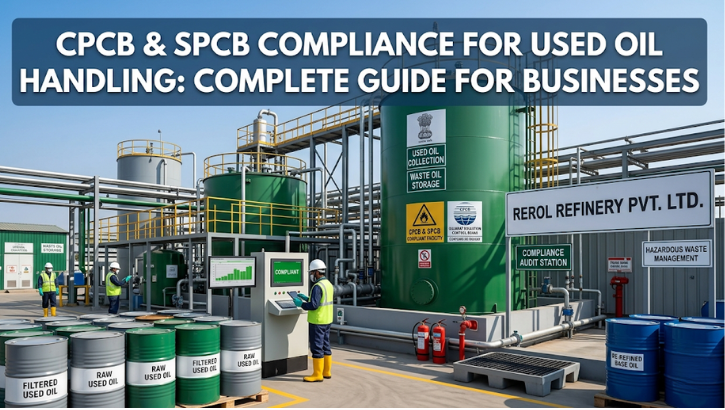
CPCB & SPCB Compliance for Used Oil Handling: Complete Guide for Businesses
INTRODUCTION
Every day, industries and automotive sectors generate large volumes of used oil, often without fully understanding the compliance risks tied to its handling. Improper storage or disposal doesn’t just harm the environment—it can also lead to heavy penalties and operational disruptions. According to the Central Pollution Control Board, millions of tonnes of hazardous waste, including used lubricants, are produced annually in India, yet a significant portion remains improperly managed. Globally, the United States Environmental Protection Agency reports that a single litre of waste oil can contaminate up to one million litres of water.
For businesses, this creates a clear challenge: how to manage waste responsibly while staying compliant. This guide breaks down practical steps to help you handle oil safely, meet regulations, and avoid costly mistakes.
What is Used Oil? Definition & Classification
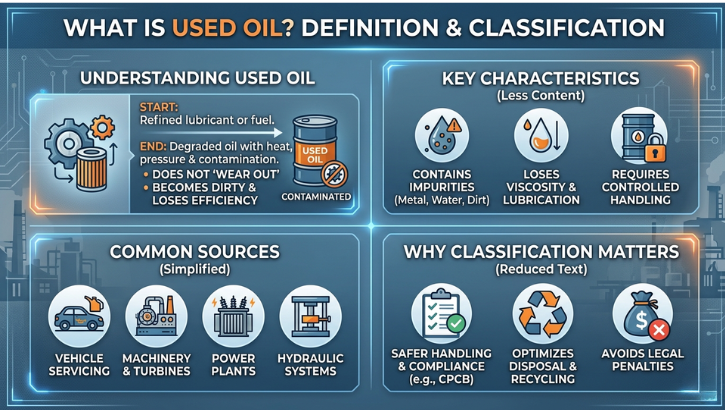
Businesses across automotive, manufacturing, and power sectors generate used oil during daily operations. This oil starts as a refined lubricant or fuel, but heat, pressure, and contamination change its properties over time. It doesn’t “wear out”—it gets dirty and loses efficiency.
Understanding classification helps companies handle it safely and stay compliant with regulations from the Central Pollution Control Board.
Key characteristics:
- Contains impurities like metal particles, water, and dirt
- Loses viscosity and lubrication efficiency
- Requires controlled storage and disposal
Common sources:
- Vehicle servicing stations
- Industrial machinery and turbines
- Power plants and transformers
Why classification matters:
- Determines handling and storage requirements
- Impacts disposal and recycling options
- Helps avoid legal penalties
Example: A factory using hydraulic systems must identify contaminated oil separately to ensure proper recycling.
When businesses understand classification clearly, they reduce environmental risks and improve operational efficiency.
Official Definition of Used Oil
Regulatory bodies define used oil based on how it gets contaminated during use. According to guidelines from the Central Pollution Control Board, it refers to any petroleum-based or synthetic oil that has been used and contaminated by physical or chemical impurities.
Simple explanation:
When oil circulates through engines or machinery, it picks up:
- Metal shavings
- Dust and dirt
- Water or coolant
- Chemical residues
These contaminants reduce performance and make the oil unsuitable for its original purpose.
Key criteria for classification:
| Criteria | Description | Example |
| Source of use | Origin of the oil | Engine oil from trucks |
| Contamination level | Presence of impurities | Oil mixed with metal particles |
| Intended purpose | Original function | Lubrication in machinery |
| Reusability | Can it be re-refined? | Oil suitable for recycling |
Important insight:
- The United States Environmental Protection Agency states that improper handling of waste lubricants contributes significantly to soil and water pollution worldwide.
Example: A transport company collecting engine oil after servicing vehicles must treat it as regulated material and store it in labeled containers.
Types of Used Oil
Not all used oil comes from the same source. Different industries generate different types based on machinery, application, and operating conditions. Identifying the type helps in proper handling and recycling.
Common types include:
- Engine Oil
- Comes from cars, trucks, and generators
- Contains carbon deposits and metal particles
- Hydraulic Oil
- Used in heavy machinery and construction equipment
- Often contaminated with water and dirt
- Transformer Oil
- Found in electrical transformers
- May contain thermal degradation products
- Gear Oil
- Used in industrial gear systems
- Contains high levels of metal wear particles
- Compressor Oil
- Used in air compressors
- Can mix with moisture and sludge
Industry-wise examples:
- Automotive workshops generate engine lubricants
- Manufacturing units produce hydraulic and gear lubricants
- Power plants handle transformer fluids
Why this matters:
- Each type requires different storage and recycling methods
- Mixing different categories can increase disposal costs
Example: A construction company separating hydraulic oil from engine oil can improve recycling efficiency and reduce compliance risks.
Difference Between Used Oil vs Waste Oil
Many businesses confuse used oil with waste oil, but regulators treat them differently. Understanding this difference helps avoid compliance errors and penalties.
Key differences:
- Used Oil
- Originally refined from crude or synthetic sources
- Gets contaminated during normal use
- Can often be recycled or re-refined
- Waste Oil
- May include contaminated or mixed oil
- Often contains hazardous substances
- May not be suitable for recycling
Practical comparison:
Example 1
A car service center collects engine lubricant after use. This falls under used oil because it comes from standard operation and remains recyclable.
Why businesses must differentiate:
- Regulations vary for handling and disposal
- Recycling eligibility depends on classification
- Costs increase when oil gets wrongly categorized
Key takeaway:
Proper segregation ensures:
- Lower disposal costs
- Easier compliance
- Better environmental outcomes
When companies clearly identify the type, they reduce risks and improve sustainability practices.
CPCB & SPCB Compliance Requirements for Used Oil Handling
Businesses that generate used oil must follow strict rules set by the Central Pollution Control Board and State Pollution Control Board. These regulations ensure safe handling, reduce environmental damage, and prevent illegal disposal. Ignoring them can lead to heavy fines, shutdowns, or legal action.
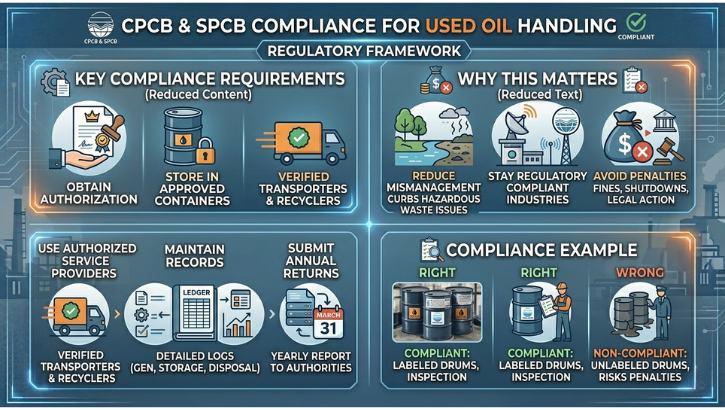
Key compliance requirements:
- Obtain proper authorization before handling hazardous materials
- Store oil in approved, labeled containers
- Use only authorized transporters and recyclers
- Maintain records of generation, storage, and disposal
- Submit annual returns to authorities
Why this matters:
- India generates millions of tonnes of hazardous waste annually, and mismanagement remains a major concern
- Regulatory bodies actively monitor industries for violations
Example: A manufacturing unit that stores oil in unlabelled drums risks penalties during inspections.
What businesses should focus on:
- Clear documentation
- Proper segregation
- Timely disposal through approved channels
When companies follow these requirements carefully, they avoid risks and build a responsible, compliant operation.
Authorization & Registration
Every business handling used oil must secure authorization from the State Pollution Control Board. This step confirms that the company follows environmental norms and operates legally.
Why authorization matters:
- It proves compliance with environmental laws
- It allows legal storage and disposal
- It helps during inspections and audits
Who needs registration:
- Manufacturing industries
- Automotive service centers
- Power plants and heavy equipment operators
Key requirements:
| Requirement | Description | Example |
| Application Form | Submit details of operations | Factory applying for approval |
| Quantity Details | Declare oil generated monthly | 500 litres per month |
| Storage Plan | Show storage methods | Sealed drums with labels |
| Disposal Plan | Mention authorized recycler | Tie-up with certified vendor |
| Documentation | Maintain records | Logbooks and manifests |
Process overview:
- Apply through SPCB portal or office
- Submit required documents
- Undergo inspection if required
- Receive authorization certificate
Example: A transport company that services fleets must register before storing oil collected from vehicles.
Storage Guidelines
Safe storage plays a critical role in managing used oil. Poor storage can lead to leaks, contamination, and serious environmental damage.
Best practices for storage:
- Use leak-proof, corrosion-resistant containers
- Label containers clearly as hazardous material
- Keep storage areas covered and away from rain
- Place containers on impermeable surfaces
- Install spill control systems
What to avoid:
- Mixing oil with other waste
- Using damaged or open containers
- Storing near drains or water sources
Safety measures:
- Train staff on handling procedures
- Conduct regular inspections
- Keep emergency spill kits ready
Example: A factory storing oil in open barrels risks contamination during rain, which increases disposal costs and compliance issues.
Why proper storage matters:
- Prevents soil and groundwater pollution
- Reduces fire and safety hazards
- Ensures smooth transportation and recycling
Businesses that follow structured storage practices not only stay compliant but also reduce operational risks significantly.
Transportation Rules
Transporting used oil requires strict adherence to guidelines set by the Central Pollution Control Board. Improper transport can lead to spills, legal penalties, and environmental harm.
Key transportation rules:
- Use only authorized transporters
- Follow the manifest system for tracking
- Ensure proper labeling during transit
- Prevent leakage using sealed containers
Documentation required:
- Transport manifest
- Authorization copies
- Quantity details
- Destination details
Important precautions:
- Avoid overfilling containers
- Secure containers properly during transit
- Train drivers on emergency handling
Why this matters:
- Ensures traceability from source to recycler
- Prevents illegal dumping
- Builds accountability in the supply chain
By following these rules carefully, businesses can transport materials safely while meeting all regulatory requirements.
Penalties for Non-Compliance
Ignoring regulations for handling used oil can create serious legal and financial trouble for businesses. Authorities such as the Central Pollution Control Board and State Pollution Control Board actively monitor industries and take strict action against violations.
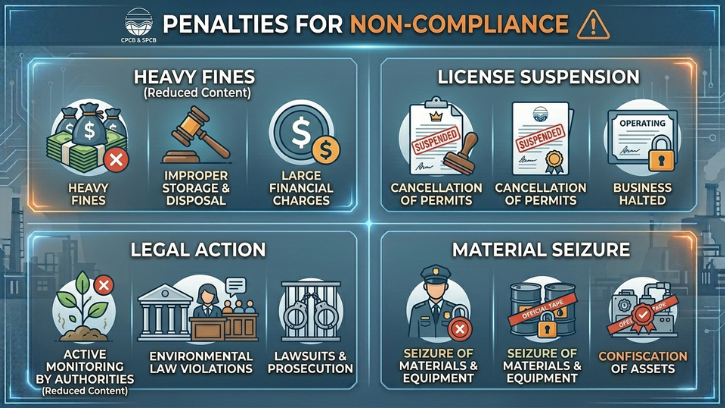
Common penalties businesses face:
- Heavy fines for improper storage or disposal
- Suspension or cancellation of operating licenses
- Legal action under environmental protection laws
- Seizure of materials and equipment
Why penalties are increasing:
- India generates large volumes of hazardous waste every year
- Regulators focus more on environmental protection and compliance
Example: A factory that dumps oil into open land can face fines, closure notices, and legal proceedings.
What triggers penalties:
- Using unauthorized transporters
- Mixing oil with other hazardous waste
- Failing to maintain records
- Skipping authorization or renewal
Key takeaway:
- Compliance reduces risks and protects business continuity
- Proper handling builds credibility with regulators
Businesses that follow rules carefully avoid disruptions and operate with confidence.
Legal Consequences
When companies mishandle used oil, authorities enforce strict legal actions under environmental laws. These actions go beyond simple fines and can affect long-term operations.
Key legal provisions:
- Environmental Protection Act, 1986
- Hazardous Waste Management Rules
- State-level enforcement regulations
Types of legal consequences:
| Violation | Consequence | Example |
| No authorization | Legal notice or closure | Small workshop operating without approval |
| Illegal disposal | Heavy fines and prosecution | Dumping oil in open land |
| Improper storage | Penalties during inspection | Leaking containers in factory |
| Missing records | Compliance failure charges | No documentation during audit |
What authorities may do:
- Issue show-cause notices
- Conduct surprise inspections
- Order temporary or permanent shutdown
Example: A manufacturing unit that fails to maintain disposal records may face penalties during an audit and risk losing its license.
Important insight:
- The Central Pollution Control Board emphasizes strict documentation and traceability for hazardous materials
Businesses that stay legally compliant avoid costly disruptions and maintain smooth operations.
Environmental Impact
Improper handling of used oil directly harms the environment. Even small quantities can cause long-term damage to soil, water, and ecosystems.
Key environmental risks:
- Soil contamination affecting agriculture
- Groundwater pollution impacting drinking water
- Air pollution from burning or unsafe disposal
Critical facts:
- The United States Environmental Protection Agency states that one litre of oil can contaminate up to one million litres of water
- Contaminated land takes years to recover
Major impacts include:
- Damage to plant and crop health
- Harm to aquatic life
- Increased toxicity in ecosystems
Example: A workshop that dumps oil into drains can contaminate nearby water bodies, affecting local communities.
Prevention measures:
- Use proper storage containers
- Partner with authorized recyclers
- Avoid mixing with other waste
Why it matters:
- Environmental damage leads to stricter regulations
- Businesses face higher compliance pressure
Responsible handling protects both the environment and business reputation.
Business Risks
Non-compliance in handling used oil doesn’t just create legal trouble—it directly impacts business performance and growth.
Key business risks:
- Operational shutdowns during inspections
- Loss of licenses and approvals
- Increased costs due to penalties and rework
Reputation-related risks:
- Loss of client trust
- Negative public image
- Reduced investor confidence
Example 1:
A company caught using unauthorized disposal methods may lose contracts with environmentally conscious clients.
Example 2:
A factory facing repeated compliance issues may struggle to secure approvals for expansion.
Financial impact:
- Fines increase operational expenses
- Poor practices raise disposal and cleanup costs
- Delays affect production timelines
Long-term consequences:
- Difficulty in scaling operations
- Increased scrutiny from regulators
- Lower competitive advantage
Key takeaway:
Businesses that manage oil responsibly:
- Build trust with stakeholders
- Reduce operational risks
- Improve long-term sustainability
Staying compliant is not just about avoiding penalties—it’s a strategic move for stable and responsible growth.
Conclusion
Managing used oil the right way is no longer optional—it’s a legal and environmental responsibility that every business must take seriously. From understanding classification to following guidelines set by the Central Pollution Control Board and State Pollution Control Board, each step plays a crucial role in ensuring compliance and sustainability.
Businesses that adopt proper handling, storage, and disposal practices can:
- Avoid heavy penalties and legal issues
- Reduce environmental impact
- Improve operational efficiency
- Build trust with clients and regulators
On the other hand, ignoring compliance can lead to costly disruptions, reputational damage, and long-term risks.
The smart approach is simple: stay informed, maintain proper documentation, and work with authorized recyclers.
FAQs
1. What is used oil under CPCB guidelines?
Used oil refers to any petroleum-based or synthetic oil that becomes contaminated during use in engines, machinery, or equipment, as defined by the Central Pollution Control Board.
2. Is used oil classified as hazardous waste in India?
Yes, regulators classify it under hazardous waste due to contamination and potential environmental risks.
3. Who regulates used oil handling in India?
The Central Pollution Control Board sets national rules, while the State Pollution Control Board enforces them at the state level.
4. Do businesses need authorization to handle used oil?
Yes, industries must obtain authorization from the State Pollution Control Board before storing, transporting, or disposing of it.
5. How should used oil be stored safely?
Store it in sealed, leak-proof containers with proper labels, away from water sources and direct exposure to weather.
6. Can used oil be recycled or reused?
Yes, authorized recyclers can re-refine it into usable products, making it both cost-effective and environmentally friendly.
7. What happens if a business disposes of used oil improperly?
Authorities may impose heavy fines, cancel licenses, or take legal action for non-compliance.
8. Can businesses sell used oil?
Yes, but only to authorized recyclers or re-refiners approved by pollution control authorities.
9. What documents are required for compliance?
Businesses must maintain:
- Authorization certificates
- Storage and disposal records
- Transport manifests
- Annual returns
10. Why is proper used oil management important?
It prevents environmental pollution, ensures legal compliance, reduces risks, and supports sustainable business practices.