
Used Oil Collection in India: Complete Guide to Safe Disposal, Recycling & Compliance.
INTRODUCTION:
India generates a massive volume of Used Oil Collection in India every year, making proper handling and recycling critical for industries., yet a significant portion is still improperly handled posing serious environmental and legal risks. According to the Central Pollution Control Board (CPCB), the country produces over 1.1 million tonnes of used oil annually, but only a fraction is collected and recycled through authorized channels. The rest often ends up in informal markets or is dumped, contaminating soil and water.
For industries, this isn’t just an environmental issue it’s a compliance and cost problem. Improper disposal can lead to heavy penalties under hazardous waste regulations. The solution lies in structured, authorized used oil collection in India collection systems that ensure safe handling, regulatory compliance, and resource recovery. This guide explores how used oil collection in India works and why getting it right is critical for sustainable operations. Effective Used Oil Collection in India plays a crucial role in reducing environmental risks and ensuring compliance with hazardous waste regulations.
What is Used Oil and Why Proper Collection Matters:
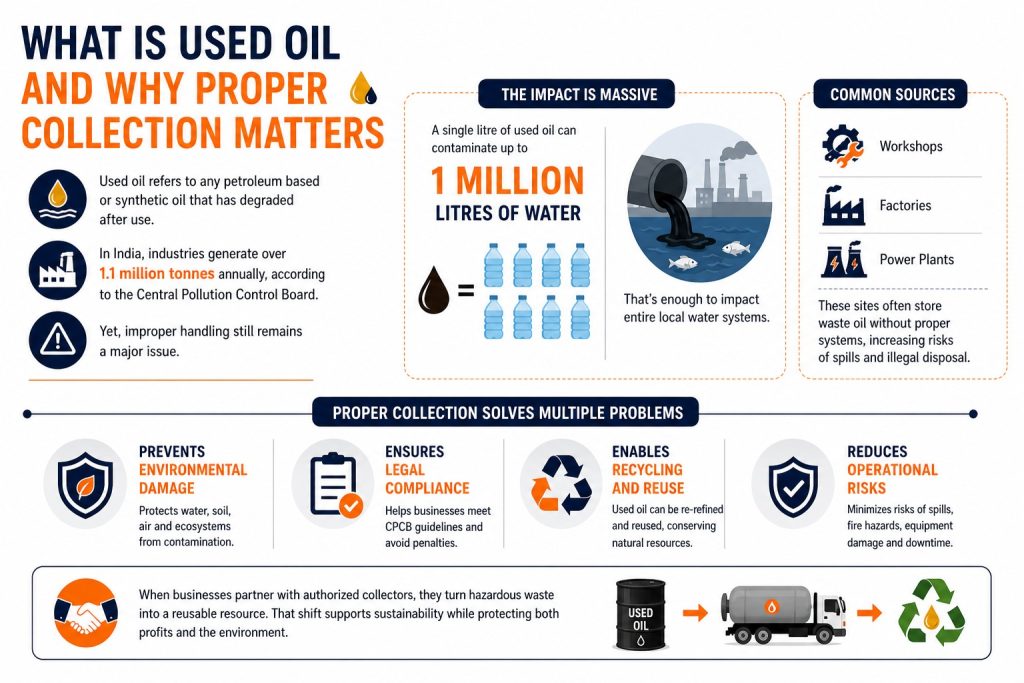
In the context of Used Oil Collection in India, used oil refers to any petroleum-based or synthetic oil that has degraded after use. In India, industries generate over 1.1 million tonnes annually, according to the Central Pollution Control Board. Yet, improper handling in Used Oil Collection in India still remains a major issue.Poor Used Oil Collection in India directly contributes to large-scale environmental pollution and health hazards.
Think about this: a single litre of used oil can contaminate up to 1 million litres of water. That’s enough to impact entire local water systems. Workshops, factories, and power plants often store waste oil without proper systems, increasing risks of spills and illegal disposal.
Proper collection solves multiple problems at once:
- Prevents environmental damage
- Ensures legal compliance
- Enables recycling and reuse
- Reduces operational risks
When businesses partner with authorized collectors, they turn hazardous waste into a reusable resource. That shift supports sustainability while protecting both profits and the environment.
Definition of Used Oil
Used oil includes any oil that has lost its original properties due to contamination or prolonged use. It doesn’t matter whether the oil comes from vehicles, machinery, or industrial processes once it degrades, it becomes “used oil.”Collection
In simple terms, if oil can no longer perform efficiently, it falls into this category.
Common Sources of Used Oil
- Automotive engines (cars, trucks, bikes)
- Industrial machinery and equipment
- Power plants and turbines
- Hydraulic systems
- Transformers and compressors
What Makes Oil “Used”?
Used oil contains:
- Dirt and metal particles
- Water and sludge
- Chemical impurities
- Oxidation by products
Types of Used Oil (with Examples)
| Type of Used Oil | Source Example | Key Contaminants | Recyclable? |
| Engine Oil | Cars, trucks | Carbon, metal particles | Yes |
| Hydraulic Oil | Industrial machinery | Water, additives breakdown | Yes |
| Transformer Oil | Electrical equipment | Moisture, oxidation | Yes |
| Turbine Oil | Power plants | Heat degradation products | Yes |
Environmental and Health Risks
Improper disposal of used oil creates serious environmental and health hazards. Many businesses underestimate the impact, but the damage spreads quickly.
Environmental Risks
- Water contamination: Just 1 litre of used oil can pollute up to 1 million litres of water
- Soil degradation: Oil blocks nutrients in soil, affecting agriculture
- Air pollution: Burning used oil releases toxic fumes
In many regions, informal recycling practices worsen the situation. Small operators often dump or burn oil without safeguards.
Health Risks
Used oil contains harmful substances such as:
- Polycyclic aromatic hydrocarbons (PAHs)
- Heavy metals like lead and cadmium
Exposure can lead to:
- Skin irritation and burns
- Respiratory issues
- Long-term risks like cancer
Real-World Example
In industrial zones, illegal dumping often contaminates groundwater. Local communities then face unsafe drinking water and increased health problems.
Proper collection and authorized recycling eliminate these risks. Businesses not only protect the environment but also safeguard workers and nearby communities.
Economic Value of Used Oil Recycling
In Used Oil Collection in India, used oil isn’t just waste it’s a valuable resource.
Why Recycling Makes Financial Sense
- Re-refining used oil consumes less energy than producing new oil
- Businesses save on disposal costs
- Recycled oil re-enters the supply chain
What Happens During Recycling?
Recyclers:
- Remove impurities
- Distill the oil
- Restore it to near original quality
This process allows industries to reuse oil instead of buying fresh stock.
Practical Examples
- Automotive sector: Recycled engine oil gets reused as lubricants
- Manufacturing plants: Reprocessed hydraulic oil reduces procurement costs
- Power plants: Reclaimed turbine oil supports continuous operations
Economic + Environmental Win
- Reduces dependence on crude oil imports
- Supports circular economy initiatives
- Creates jobs in recycling and logistics
In India, where industrial growth continues rapidly, efficient used oil recycling offers both profitability and sustainability. Businesses that adopt it gain a competitive advantage while meeting compliance standards.Struggling with safe disposal of used oil?
Rerol Refinery offers hassle-free collection, secure transport, and certified recycling—so you can focus on your operations.Improving Used Oil Collection in India can significantly boost both economic returns and sustainability efforts.
Legal Framework for Used Oil Collection in India:
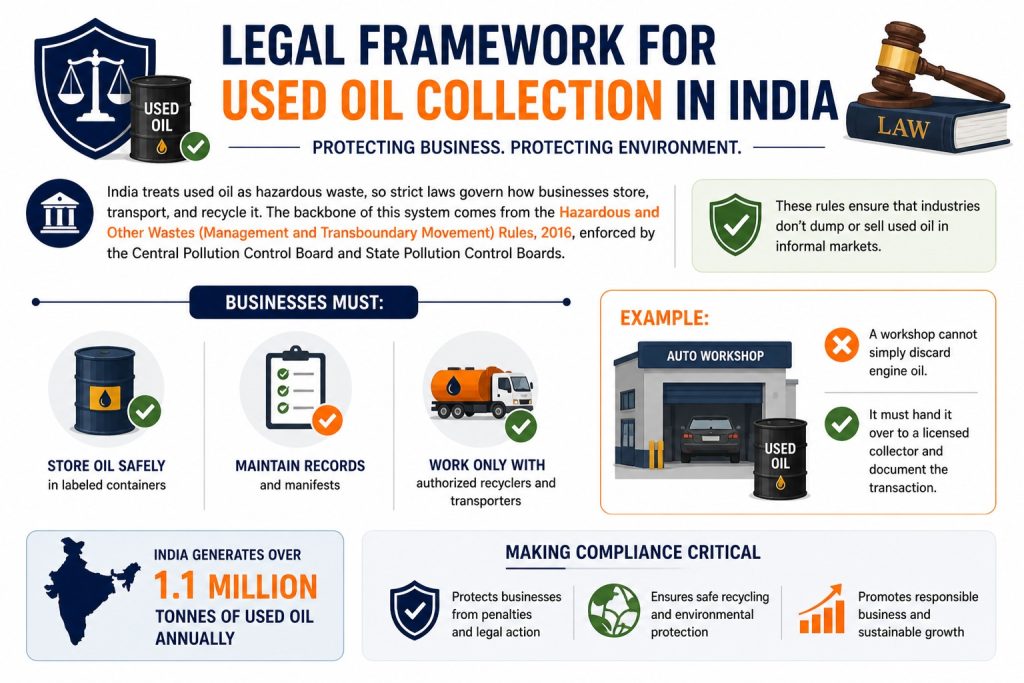
Used Oil Collection in India is strictly regulated, as the country treats used oil as hazardous waste requiring proper storage, transport, and recycling. The backbone of this system comes from the Hazardous and Other Wastes (Management and Transboundary Movement) Rules, 2016, enforced by the Central Pollution Control Board and State Pollution Control Boards.Compliance in Used Oil Collection in India is essential to avoid penalties and ensure safe disposal practices.
These rules ensure that industries don’t dump or sell used oil in informal markets. Instead, they must:
- Store oil safely in labeled containers
- Maintain records and manifests
- Work only with authorized recyclers and transporters
For example, an automobile workshop cannot simply discard engine oil. It must hand it over to a licensed collector and document the transaction.
India generates over 1.1 million tonnes of used oil annually, making compliance critical. Following the legal framework protects businesses from penalties while ensuring safe recycling and environmental protection.
Hazardous Waste Management Rules
The Hazardous and Other Wastes (Management and Transboundary Movement) Rules, 2016 clearly define how businesses must handle used oil. These rules classify used oil as hazardous due to its toxic contaminants.
Key Requirements for Businesses
- Store used oil in leak-proof, labeled containers
- Avoid mixing with other waste streams
- Maintain records using Form 10 and manifests
- Hand over waste only to authorized recyclers
- Ensure safe transportation through licensed operators
What Businesses Must NOT Do
- Dump oil on land or drains
- Burn oil without authorization
- Sell to unregistered vendors
| Requirement | Description | Responsible Party |
| Storage | Secure, labeled containers | Waste generator |
| Documentation | Maintain records (Form 10, manifests) | Waste generator |
| Transportation | Use licensed transporters | Authorized operators |
| Disposal/Recycling | Send to approved recyclers | Both generator & recycler |
Role of Central Pollution Control Board (CPCB)
The Central Pollution Control Board (CPCB) acts as the central authority that designs and monitors environmental regulations in India. It plays a key role in managing used oil collection and recycling.
What CPCB Does
- Sets national guidelines for hazardous waste management
- Registers and authorizes recyclers
- Monitors compliance across states
- Publishes data on waste generation and recycling
CPCB estimates that India generates over 1.1 million tonnes of used oil annually, but only a portion flows through authorized channels. To improve this, CPCB pushes stricter enforcement and awareness.
Key Responsibilities
- Define standards for storage and handling
- Approve re-refining technologies
- Audit recycling facilities
- Issue environmental guidelines
State Pollution Control Boards (SPCBs)
State Pollution Control Boards (SPCBs) enforce environmental laws at the state level. While CPCB sets the rules, SPCBs ensure that businesses actually follow them.
What SPCBs Do
- Issue licenses and authorizations
- Inspect industrial facilities
- Monitor waste storage and disposal practices
- Take action against violations
Key Responsibilities
- Approve used oil storage and handling systems
- Track waste movement within the state
- Conduct site inspections
- Impose penalties for non-compliance
Examples in Action
- In Tamil Nadu, the pollution board regularly inspects automobile workshops to ensure proper oil disposal
- In Maharashtra, authorities have fined industries for illegal dumping of used oil
- In Gujarat, SPCBs actively monitor large industrial clusters for hazardous waste compliance
Step-by-Step Process of Used Oil Collection:
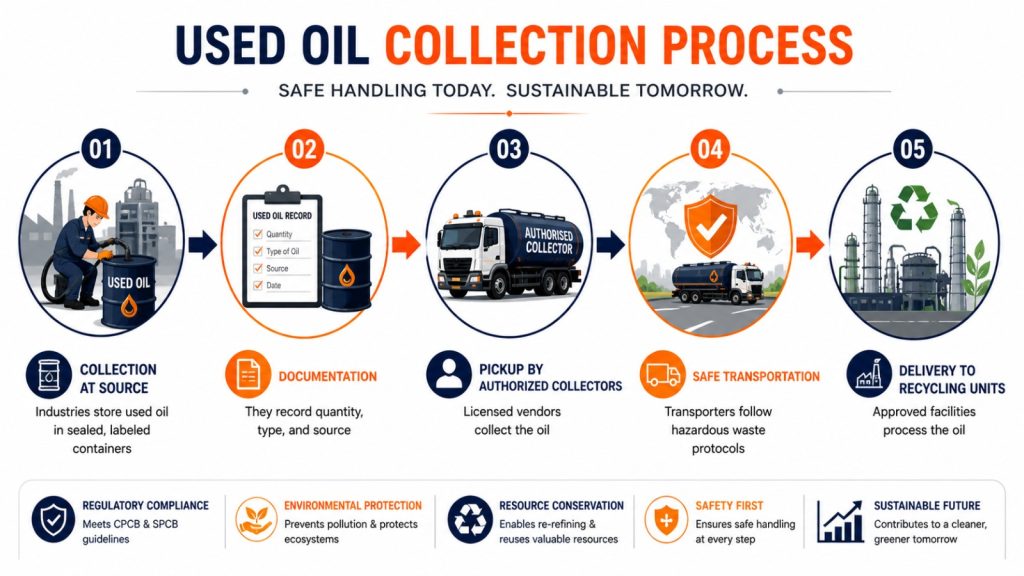
Used Oil Collection in India follows a structured process to ensure safety, compliance, and recyclability. In India, industries generate over 1.1 million tonnes annually (as per the Central Pollution Control Board), so every step matters.
Here’s how Used Oil Collection in India typically works:
- Collection at source – Industries store used oil in sealed, labeled containers
- Documentation – They record quantity, type, and source
- Pickup by authorized collectors – Licensed vendors collect the oil
- Safe transportation – Transporters follow hazardous waste protocols
- Delivery to recycling units – Approved facilities process the oil
For example, an automobile workshop stores engine oil in drums, logs it, and schedules pickup with a certified recycler. This structured flow prevents leaks, illegal resale, and environmental damage while ensuring compliance.
Collection at Source:
Collection at source forms the most critical step in the entire process. If businesses handle this stage correctly, they reduce risks across the chain.Collection at source is the foundation of effective Used Oil Collection in India
Industries like manufacturing plants, workshops, and power stations generate used oil daily. They must store it safely before handing it over to authorized collectors.
Best Practices for Collection at Source
- Use leak-proof, corrosion-resistant containers
- Label containers clearly (type of oil, hazard category)
- Store oil in designated areas away from drains
- Avoid mixing with water or other waste
- Maintain daily logs of generated oil
Why This Step Matters
Poor storage often leads to:
- Oil spills and soil contamination
- Fire hazards
- Loss of recyclable value
| Parameter | Recommended Practice | Risk if Ignored |
| Container Type | Sealed metal/plastic drums | Leakage, contamination |
| Labeling | Clear hazard labels | Mismanagement, legal issues |
| Storage Area | Covered, spill-proof flooring | Soil and water pollution |
| Segregation | Separate from other wastes | Reduced recycling quality |
Transportation and Handling
In Used Oil Collection in India, once collected, used oil must travel safely from the source to recycling facilities. This step requires strict control because even small leaks can cause major damage.
Authorized transporters handle this process under guidelines from the Central Pollution Control Board.
Key Transportation Practices
- Use licensed vehicles designed for hazardous waste
- Seal containers properly before loading
- Follow manifest system for tracking
- Train drivers in emergency response
Risks During Transportation
- Spills due to poor sealing
- Accidents leading to environmental contamination
- Illegal diversion to informal markets
Why Proper Handling Matters
- Ensures traceability
- Prevents illegal resale
- Protects public health
Businesses that skip compliance during transport often face fines and legal action. Proper handling keeps operations smooth and risk-free:Recycling and Re-Refining Process
Recycling is a key stage in Used Oil Collection in India, transforming used oil into a valuable resource.. Instead of treating it as waste, industries can recover high-quality base oil through re-refining.
Key Steps in Recycling
- Pre-treatment –Remove water and solid impurities
- Distillation – Separate oil fractions at different temperatures
- Hydrotreatment – Remove sulfur and contaminants
- Final polishing – Restore oil quality
What You Get After Recycling
- Base oil for lubricants
- Industrial fuel
- Raw material for other products
For Example A recycling plant processes used engine oil from automotive workshops. After refining, it produces base oil that lubricant companies reuse in new products. This reduces dependence on crude oil.
Types of Used Oil Commonly Collected in India
Used Oil Collection in India involves handling a wide range of used oils generated by industries., each with different properties and recycling potential. According to the Central Pollution Control Board, the country produces over 1.1 million tonnes of used oil annually, with major contributions from automotive and industrial sectors.
The most commonly collected types include:
- Automotive engine oil from vehicles
- Industrial lubricants from machinery
- Transformer oil from electrical equipment
- Hydraulic and turbine oils from heavy industries
Each type contains different contaminants such as metal particles, sludge, or moisture. For example, engine oil carries carbon deposits, while transformer oil often contains oxidation compounds.
Understanding these categories helps businesses store, handle, and recycle oil correctly. Proper classification also improves recycling efficiency and ensures compliance with hazardous waste regulations.
Automotive Used Oil
Automotive used oil comes from vehicles like cars, trucks, buses, and two-wheelers. Every oil change generates waste oil, making this one of the largest sources in India.Automotive waste is one of the largest contributors to Used Oil Collection in India.
Where It Comes From
- Engine oil from cars and bikes
- Gear oil from transmissions
- Brake and coolant-related lubricants
Why It Becomes “Used”
During operation, oil collects:
- Carbon deposits from fuel combustion
- Metal particles from engine wear
- Dirt and sludge
Key Characteristics
- Dark, thick consistency
- High contamination levels
- Strong odor due to combustion by-products
| Source | Typical Contaminants | Collection Frequency | Recycling Potential |
| Cars | Carbon, metal particles | Every 5,000–10,000 km | High |
| Trucks/Buses | Heavy sludge, soot | Frequent | High |
| Two-wheelers | Dirt, combustion residue | Moderate | Medium–High |
Industrial Lubricants
Industrial lubricants support machinery across manufacturing, construction, and power sectors. These oils reduce friction, control heat, and improve efficiency. Over time, they degrade and turn into hazardous waste.
Common Types
- Hydraulic oil used in heavy machinery
- Compressor oil in manufacturing units
- Turbine oil in power plants
- Gear oil in industrial equipment
How They Get Contaminated
Industrial operations expose lubricants to:
- High temperatures
- Water ingress
- Metal wear particles
- Chemical breakdown
Transformer Oil
Transformer oil plays a critical role in electrical equipment. It acts as both an insulator and coolant in transformers, circuit breakers, and switchgear systems. Transformer oil is a critical component within Used Oil Collection in India due to its hazardous nature.
Where It Is Used
- Power transmission systems
- Electrical substations
- Industrial power units
Why It Becomes Used Oil
Over time, transformer oil degrades due to:
- Heat exposure
- Oxidation
- Moisture absorption
This reduces its insulating properties and makes it unsafe for continued use.
For Example: A power substation replaces transformer oil after periodic testing shows reduced dielectric strength. Instead of discarding it, the facility sends the oil to a recycling unit for reprocessing.
Conclusion:
Used Oil Collection in India is no longer optional it’s a business, environmental, and legal necessity. With over 1.1 million tonnes generated annually (as reported by the Central Pollution Control Board), improper handling can lead to serious consequences, from pollution to heavy penalties.
- Reduce environmental impact
- Avoid legal risks
- Recover value through recycling
- Improve operational efficiency
The shift is simple: treat used oil not as waste, but as a resource. Adopting proper Used Oil Collection in India practices helps businesses stay compliant while contributing to a cleaner environment. Instead of guessing, take a strategic approach. Connect with experts at Rerol Refinery to identify the most efficient and cost-effective fuel solution tailored to your business needs.
FAQ:
1. What is considered used oil in Used Oil Collection in India?
Used oil includes any petroleum-based or synthetic oil that has become contaminated or degraded after use. This includes engine oil, hydraulic oil, and transformer oil.
2. Is used oil classified as hazardous waste?
Yes. Under the Hazardous and Other Wastes (Management and Transboundary Movement) Rules, 2016, used oil falls under hazardous waste due to toxic contaminants.
3. Who can legally manage Used Oil Collection in India?
Only authorized collectors and recyclers approved by the Central Pollution Control Board and respective State Pollution Control Boards can handle used oil legally.
4. How should businesses store used oil?
Businesses should:
- Use sealed, leak-proof containers
- Label clearly
- Store in designated areas away from drains
5. What happens if used oil is disposed of improperly?
Improper disposal can lead to:
- Heavy fines and legal action
- Environmental damage
- Suspension of operations
6. Can used oil be fully recycled?
Used oil can be re-refined to recover up to 70 to 80% usable oil, depending on quality and contamination levels.
7. How often should used oil be collected?
Collection frequency depends on volume. High use industries may require weekly pickups, while smaller operations can schedule monthly collections.
8. Why should businesses choose authorized recyclers?
Authorized recyclers ensure:
- Legal compliance
- Safe handling
- Proper documentation
- Maximum resource recovery
9. How can businesses verify if a used oil collector is authorized?
Businesses should check for valid licenses and approvals from the Central Pollution Control Board and the respective State Pollution Control Board. Ask for:
- Authorization certificates
- GST and company registration details
- Proper documentation (manifests, records)
You can also verify credentials through official CPCB or SPCB portals. Working with unauthorized collectors can lead to compliance issues and penalties.
10. What documents are required for used oil disposal in India?
Proper documentation ensures traceability and legal compliance. Businesses typically need:
- Waste transfer manifests
- Invoices from authorized recyclers
- Annual returns filed with pollution control authorities
Maintaining these records helps during inspections and proves that your business follows environmental regulations.