
Top 7 Applications of Light Diesel Oil in Manufacturing Industries
Introduction
Rising fuel costs and inconsistent energy efficiency are major challenges for industries relying on thermal and power generation systems. Many businesses struggle to find a balance between performance, affordability, and cleaner combustion. This is where Light Diesel Oil (LDO) emerges as a practical solution. Positioned between diesel and furnace oil, LDO offers better combustion efficiency with lower maintenance needs. According to industry estimates, fuel expenses can account for up to 30-40% of total operational costs in manufacturing, making fuel choice critical. Additionally, cleaner-burning fuels like LDO can reduce equipment downtime and improve productivity. As industries seek cost-effective and reliable energy alternatives, understanding how LDO works and where it fits can help businesses optimize operations while staying competitive in an energy-driven market.
What is Light Diesel Oil?
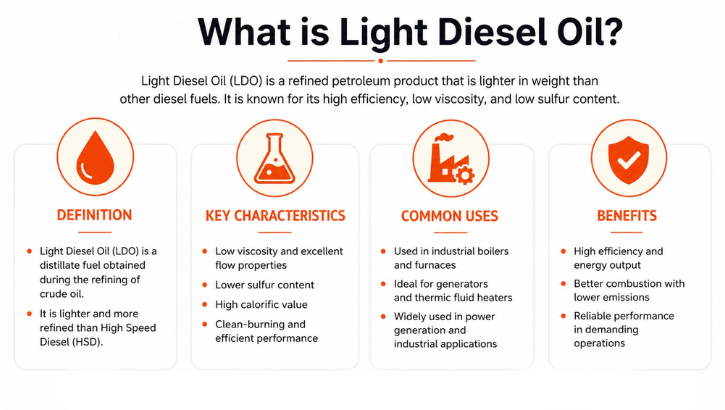
Light Diesel Oil (LDO) is a mid-range industrial fuel that bridges the gap between diesel and heavier fuels like furnace oil. Industries choose LDO when they need a balance between cost, efficiency, and cleaner combustion. Unlike standard diesel, LDO costs less and still delivers reliable thermal output, which makes it ideal for boilers, furnaces, and generators.
In many manufacturing sectors, energy expenses contribute 30-40% of total operating costs, so fuel selection directly impacts profitability. LDO helps reduce this burden by offering stable combustion and lower maintenance needs. It also produces fewer residues compared to heavier fuels, which keeps equipment cleaner and reduces downtime.
Definition and Composition
Light Diesel Oil (LDO) is a petroleum-based fuel created during the refining of crude oil. Refineries position it between high-speed diesel (HSD) and furnace oil in terms of weight and viscosity. This balanced composition gives LDO its unique advantage-better flow than heavy oils and more affordability than diesel.
What makes up LDO?
LDO typically contains a blend of:
- Distillates from crude oil refining
- Residual fuel fractions
- Controlled sulfur content (lower than furnace oil)
Where this matters
For example, a food processing unit that needs steady heat cannot risk heavy soot buildup. LDO provides a cleaner alternative without increasing fuel costs dramatically.
In short, LDO’s composition allows industries to achieve efficient combustion while controlling operational expenses.
How LDO is Produced
Refineries produce Light Diesel Oil through a controlled crude oil distillation and blending process. They separate crude oil into different fractions based on boiling points, then combine selected streams to create LDO.
Step-by-Step Production Process
- Crude Oil Distillation
Refineries heat crude oil in a distillation column. Lighter products like LPG and petrol rise to the top, while heavier fractions settle below. - Extraction of Middle Distillates
Technicians extract mid-range fractions that fall between diesel and heavy oils. These fractions form the base for LDO. - Blending Process
Refineries blend lighter distillates with small amounts of residual fuel. This step ensures the right viscosity and energy output. - Quality Control
Engineers test sulfur content, calorific value, and density to meet industrial standards.
Key Properties of LDO
Light Diesel Oil stands out because of its balanced physical and chemical properties. These characteristics make it suitable for a wide range of industrial applications.
Key Properties
- Moderate viscosity for smooth flow
- High calorific value for strong energy output
- Lower sulfur content than furnace oil
- Cleaner combustion with less residue
- Stable performance in boilers and generators
Property Table
| Property | Typical Range/Value | Why It Matters |
| Calorific Value | 10,000-10,500 kcal/kg | Ensures efficient heat generation |
| Viscosity | Medium | Allows easy pumping and atomization |
| Sulfur Content | < 1% | Reduces emissions and corrosion |
| Flash Point | ~66°C | Improves safety in storage and handling |
| Density | ~0.85–0.95 g/cm³ | Supports stable combustion |
Key Applications of Light Diesel Oil
Light Diesel Oil (LDO) plays a major role across multiple industries because it delivers stable combustion, cost efficiency, and flexible usage. Many industrial sectors depend on LDO to maintain continuous operations, especially where energy demand stays high throughout the day. In fact, energy costs often contribute 30-40% of total production expenses, so industries actively choose fuels like LDO to manage operational budgets.
You’ll commonly see LDO used in manufacturing units, power plants, heating systems, and small-scale industrial operations. Its ability to perform well in different equipment types makes it one of the most versatile industrial fuels available today.
Major Application Areas:
- Manufacturing industries (boilers, furnaces, kilns)
- Power generation (DG sets and backup systems)
- Industrial heating systems
- Food processing and chemical industries
- Small-scale marine and transport equipment (limited use)
For example, a textile factory uses LDO in boilers to maintain steady steam production, while a chemical plant uses it for controlled heating reactions. This flexibility helps industries reduce fuel switching costs and improve efficiency.
Manufacturing Industries Application
Manufacturing industries form the largest consumer base for Light Diesel Oil because they rely heavily on continuous heat and energy supply. LDO supports stable operations in sectors like textiles, cement, chemicals, and food processing.
Where LDO is used in manufacturing:
- Boilers for steam generation
- Industrial furnaces for heating raw materials
- Drying systems in textile and paper industries
- Kilns in cement and ceramic production
Key Benefits in Manufacturing:
- Reduces fuel switching downtime
- Improves production consistency
- Lowers maintenance frequency
- Supports 24/7 operations
Power Generation
Light Diesel Oil plays a critical role in power generation, especially in diesel generator (DG) sets used as backup or auxiliary power sources. Industries, hospitals, and commercial buildings depend on LDO to ensure uninterrupted electricity supply during outages.
Why LDO is used in power generation:
- Stable combustion in diesel engines
- Quick start-up during power failure
- Lower operational cost compared to diesel
- Reliable backup energy source
Key Advantages
- Quick ignition during emergencies
- Stable power output
- Cost-effective backup solution
- Reduced engine wear in industrial DG sets
LDO ensures industries maintain operational continuity without heavy fuel expenses.
Heating Applications
Light Diesel Oil is widely used in industrial heating systems where consistent temperature control is essential. Industries rely on LDO to generate heat for processes like drying, melting, and chemical reactions.
Common Heating Uses:
- Industrial boilers for steam production
- Food processing ovens and dryers
- Chemical reaction heating systems
- Textile drying and finishing units
Benefits in Heating Applications:
- Stable temperature control
- Reduced fuel wastage
- Cleaner combustion with less residue
- Improved process efficiency
Benefits of Using Light Diesel Oil
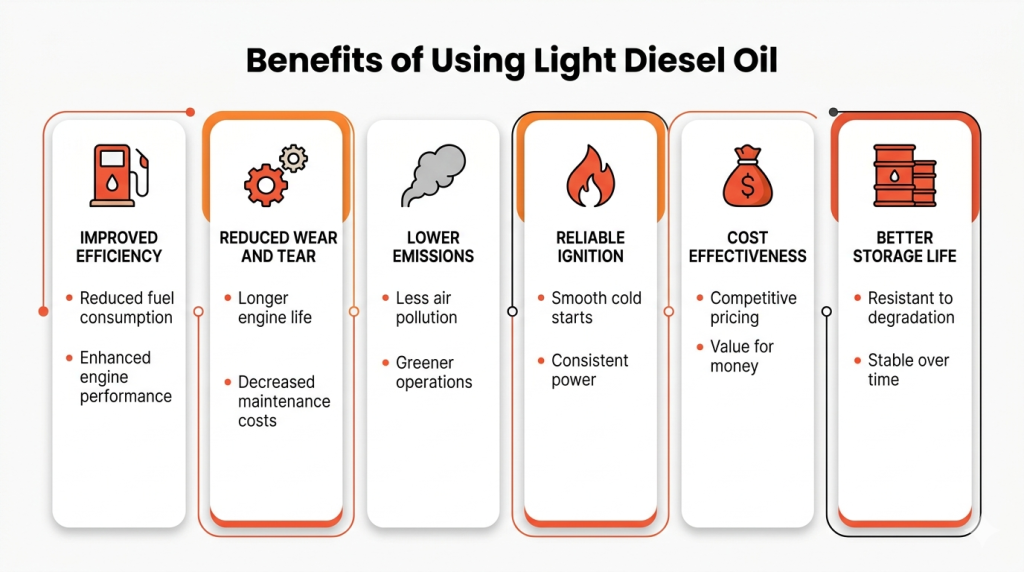
Light Diesel Oil (LDO) delivers a strong mix of affordability, efficiency, and operational stability, which makes it a preferred fuel across industries like manufacturing, textiles, and power generation. Many businesses choose LDO because energy expenses often consume 30-40% of total production costs, and even a small improvement in fuel efficiency can significantly improve profit margins.
LDO helps industries control costs while still maintaining consistent heat output. It burns cleaner than furnace oil and reduces equipment fouling, which directly improves productivity. Industries also appreciate its versatility because it works in boilers, furnaces, and generators without major system changes.
Cost-Effective Fuel Option
LDO stands out as a cost-effective fuel because it delivers industrial-grade energy output at a lower price than diesel. Industries actively switch to LDO when they want to reduce operational expenses without compromising performance.
Why LDO Saves Costs
- LDO costs 15–25% less than high-speed diesel in many markets
- It reduces fuel consumption due to steady combustion efficiency
- It lowers equipment cleaning and maintenance expenses
- It supports bulk industrial usage with stable pricing contracts
Cost Advantage Breakdown
| Factor | Diesel | LDO |
| Fuel Price | High | Lower |
| Maintenance Cost | Moderate | Lower |
| Industrial Usage | Limited | High |
| Overall Efficiency | High | Balanced |
LDO helps industries maintain production quality while keeping fuel budgets under control, which makes it a smart long-term choice.
Efficient Combustion
LDO provides efficient combustion because it burns steadily and produces a consistent flame, which is essential for industrial heating systems. Its balanced viscosity allows better atomization, which improves fuel-air mixing and energy output.
Key Combustion Advantages
- Stable flame in boilers and furnaces
- Better fuel-air mixing
- Reduced carbon buildup
- Higher thermal efficiency
- Lower unburnt fuel loss
Efficiency Comparison Table
| Parameter | Furnace Oil | LDO |
| Combustion Stability | Low | High |
| Residue Formation | High | Low |
| Heat Efficiency | Moderate | High |
| Maintenance Frequency | Frequent | Reduced |
Lower Maintenance
LDO significantly reduces maintenance needs because it burns cleaner and produces fewer residues compared to heavier fuels. This directly improves equipment life and reduces downtime in industrial operations.
Why Maintenance Costs Drop
- Less soot formation inside boilers and furnaces
- Reduced carbon deposits on burners
- Cleaner fuel injectors and fuel lines
- Fewer system shutdowns for cleaning
Maintenance Impact Overview
- Fewer breakdowns in combustion systems
- Increased machine uptime
- Lower servicing and labor costs
- Cleaner heat exchange surfaces
How to Choose the Right LDO Supplier

Choosing the right Light Diesel Oil (LDO) supplier directly impacts your production efficiency, fuel costs, and equipment performance. In industrial operations, even a 5-10% variation in fuel quality or pricing can significantly affect monthly operating expenses. That’s why businesses don’t just look for the cheapest supplier they look for consistency, reliability, and transparency.
A good supplier ensures steady fuel quality, on-time delivery, and fair pricing without hidden charges. On the other hand, an unreliable supplier can lead to combustion issues, downtime, and unexpected cost spikes. Industries like textiles, cement, and chemical manufacturing especially depend on stable LDO supply because their operations run continuously.
To make the right choice, you should focus on three key factors:
- Quality certifications and compliance
- Delivery reliability and logistics strength
- Transparent and stable pricing structure
Quality Certifications
Quality certifications help you verify that the LDO meets industrial and environmental standards. Certified fuel ensures consistent performance and reduces the risk of equipment damage or inefficient combustion.
Important Certifications to Check
- ISO quality management certifications
- BIS (Bureau of Indian Standards) compliance (in applicable regions)
- Environmental emission standards compliance
- Refinery-grade testing reports
Why Certifications Matter
Certified suppliers maintain strict fuel quality controls. For example, a certified refinery ensures sulfur content stays below 1%, which helps reduce emissions and prevents corrosion in boilers.
Reliability and Delivery
Reliable delivery ensures uninterrupted industrial operations. Even a short delay in LDO supply can stop production lines, especially in industries that depend on continuous heat or power generation.
What Makes a Supplier Reliable
- On-time delivery performance (above 95% is ideal)
- Strong logistics and storage network
- Ability to handle bulk orders
- Emergency supply support
Why Reliability Matters
Industries often run 24/7 operations. A single delay in fuel delivery can cause production losses worth thousands of dollars per hour in large-scale plants.
Pricing Transparency
Pricing transparency plays a major role in selecting the right LDO supplier. Hidden charges or fluctuating rates can increase operational costs unexpectedly, which directly affects profit margins.
What Transparent Pricing Looks Like
- Clear per-liter or per-ton pricing
- No hidden transportation or handling charges
- Regularly updated price structure linked to market rates
- Written contracts with fixed terms
Why Transparency Matters
Fuel costs can fluctuate based on crude oil prices, taxes, and demand. However, a transparent supplier clearly explains these changes instead of adding unexpected charges later.
Pricing Breakdown Table
| Cost Component | Transparent Supplier | Non-Transparent Supplier |
| Base Fuel Price | Clearly stated | Unclear |
| Transport Charges | Fixed/Declared | Hidden |
| Taxation Details | Included | Not clearly shown |
| Monthly Stability | High | Low |
Conclusion
Light Diesel Oil (LDO) continues to play a crucial role in modern industrial energy systems because it balances cost efficiency, reliable performance, and operational flexibility. From manufacturing plants and power backup systems to industrial heating applications, LDO supports continuous operations where even small disruptions can lead to significant financial losses. With fuel costs contributing up to 30-40% of total production expenses, choosing the right fuel directly impacts profitability and long-term sustainability.
What makes LDO valuable is its ability to deliver stable combustion while reducing maintenance needs and keeping operational costs under control. Industries benefit from cleaner burning, better equipment life, and fewer shutdowns, which together improve overall productivity. When sourced from a reliable supplier with proper quality certifications and transparent pricing, LDO becomes not just a fuel choice but a strategic business advantage.
FAQ
1. What is Light Diesel Oil used for?
Light Diesel Oil is mainly used in industrial boilers, furnaces, DG sets, and heating systems where consistent and cost-effective energy output is required.
2. Is Light Diesel Oil cheaper than diesel?
Yes, LDO generally costs 10–25% less than high-speed diesel, depending on market conditions and location.
3. Can LDO be used in vehicles?
No, LDO is not recommended for standard vehicles. It is designed for industrial equipment like boilers and generators, not automotive engines.
4. What industries use Light Diesel Oil the most?
Industries like textiles, cement, chemicals, food processing, and power generation use LDO extensively for heating and energy needs.
5. Is LDO environmentally friendly?
LDO burns cleaner than furnace oil but still produces emissions. It is not fully eco-friendly, but it is more efficient than heavier fuels.
6. What is the calorific value of LDO?
Light Diesel Oil typically has a calorific value of 10,000-10,500 kcal/kg, which ensures strong and stable energy output.
7. How is LDO different from furnace oil?
LDO is lighter, cleaner, and burns more efficiently, while furnace oil is heavier, cheaper, and produces more residue and emissions.
8. What is the shelf life of Light Diesel Oil?
If stored properly in sealed tanks, LDO can last 6-12 months without significant quality degradation.
9. How should LDO be stored safely?
It should be stored in clean, leak-proof tanks away from heat sources and direct sunlight to prevent contamination and fire risks.
10. What factors affect LDO price?
LDO prices depend on crude oil rates, taxes, transportation costs, and market demand fluctuations.