
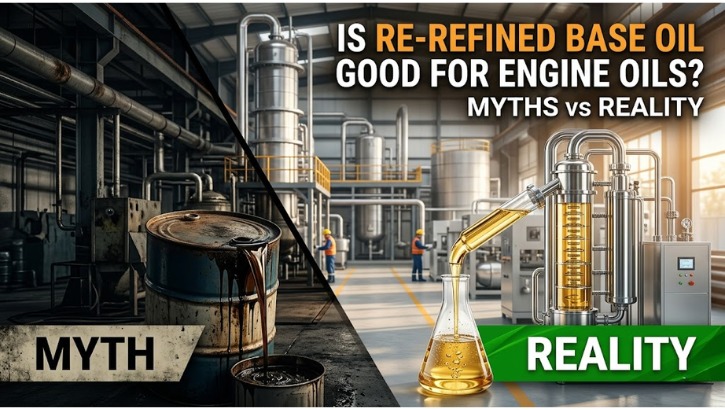
Is Re-Refined Base Oil Good for Engine Oils? Myths vs Reality
INTRODUCTION
Re-refined base oil is rapidly emerging as a sustainable alternative in the lubricant industry-but is it truly reliable or just a recycled compromise? With global demand for lubricants rising and nearly 69% of finished lubricants turning into used oil, managing waste efficiently has become critical . Re-refined base oil addresses this challenge by converting used oil into high-quality base stock through advanced refining processes. In fact, producing re-refined base oil requires only one-third of the energy compared to virgin oil, significantly reducing carbon emissions . Despite this, only a small percentage of used oil is re-refined globally, while the rest is often burned or discarded . As industries shift toward sustainability and cost efficiency, re refined base oil is no longer an alternative-it is becoming a necessity.
What is Re-Refined Base Oil?
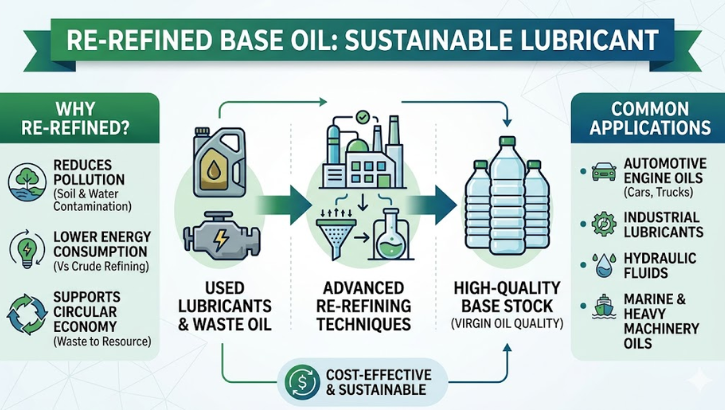
Re-refined base oil refers to a high-quality lubricant base stock produced by processing used or waste oil through advanced refining techniques. Instead of discarding used engine oil or burning it as low-grade fuel, industries now recover its valuable components and transform them into reusable base oil. This approach not only reduces environmental pollution but also supports a circular economy.
Globally, millions of liters of used oil get generated every year, and improper disposal contaminates soil and water. Re refined base oil offers a practical solution by converting this waste into a product that matches the performance of virgin base oil. According to industry reports, re-refining used oil consumes significantly less energy compared to refining crude oil, making it both cost-effective and sustainable.
You can find re refined base oil widely used in:
- Automotive engine oils
- Industrial lubricants
- Hydraulic fluids
- Marine and heavy machinery oils
Definition and Meaning
Re refined base oil means a purified lubricant base stock derived from previously used oil. Instead of treating used oil as waste, refiners process it using advanced chemical and physical methods to restore its original properties. This makes re refined base oil a sustainable and efficient alternative to traditional base oils.
To understand it better, think of used engine oil from vehicles. After prolonged use, this oil collects contaminants like dirt, metal particles, and oxidation by-products. Instead of discarding it, industries process this used oil and convert it into re refined base oil that performs like new.
Key Characteristics of Re-Refined Base Oil:
- Produced from recycled or used lubricating oil
- Undergoes deep refining processes like distillation and hydrotreatment
- Matches or exceeds the quality of virgin base oil
- Supports environmental sustainability
Why It Matters:
- Around 1 gallon of used oil can contaminate up to 1 million gallons of water if disposed improperly
- Re-refining helps recover valuable resources and reduces waste
- Industries save costs while maintaining performance standards
How Re-Refined Base Oil is Made
The production of re refined base oil involves a structured process that removes contaminants and restores the oil’s original properties. Modern refineries use advanced technologies to ensure consistent quality and performance.
Here’s how the process works:
| Stage | Process | Purpose |
| Collection | Gather used oil from industries, vehicles, and workshops | Ensures proper sourcing of raw material |
| Pre-treatment | Remove water, dirt, and solid impurities | Prepares oil for refining |
| Distillation | Heat oil to separate different fractions | Eliminates volatile contaminants |
| Hydrotreatment | Use hydrogen to remove sulfur, metals, and impurities | Improves purity and stability |
| Finishing | Add quality enhancements and testing | Ensures performance standards |
This process transforms waste oil into re refined base oil that meets industry specifications. Unlike simple filtration, re-refining involves chemical transformation, which significantly improves oil quality.
Example:
Studies show that re-refining saves up to 85% energy compared to producing base oil from crude, making it an efficient and eco-friendly solution.
Virgin Base Oil vs Re-Refined Base Oil
Understanding the difference between virgin base oil and re refined base oil helps industries make informed decisions. Both serve similar purposes, but they differ in source, cost, and environmental impact.
Key Differences:
- Source
- Virgin base oil comes directly from crude oil refining
- Re-refined base oil comes from processed used oil
- Cost
- Virgin oil costs more due to crude extraction and refining
- Re-refined base oil offers a cost-effective alternative
- Environmental Impact
- Virgin oil production generates higher carbon emissions
- Re-refined base oil reduces waste and supports sustainability
- Performance
- Both offer similar lubrication properties when processed correctly
Example:
A manufacturing unit using lubricants can switch from virgin oil to re refined base oil without affecting machine performance, while reducing operational costs and environmental impact.
Practical Insight:
Industries increasingly adopt re refined base oil because it balances performance with sustainability. Many modern lubricants now include re-refined content without compromising efficiency.
In short, re refined base oil stands as a smart alternative that meets both economic and environmental goals.
Myths vs Reality About Re-Refined Base Oil
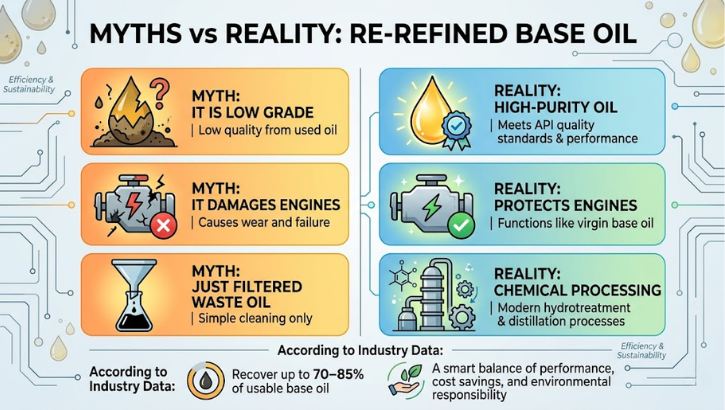
Re refined base oil often faces skepticism because many people still associate it with waste or inferior quality. However, this perception does not match current industry standards or technological advancements. Modern refining processes transform used oil into re refined base oil that meets strict quality benchmarks and performs on par with virgin base oil.
Let’s break down the most common myths and compare them with reality:
- Myth: Re-refined base oil is low grade
- Reality: Advanced refining produces high-purity oil that meets API standards
- Myth: It damages engines
- Reality: Properly refined oil protects engines just like virgin oil
- Myth: It is just filtered waste oil
- Reality: It undergoes chemical processing, not simple filtration
According to industry data, re-refining can recover up to 70–85% of usable base oil from used oil, making it both efficient and sustainable. Despite this, many industries still hesitate due to outdated assumptions.
In reality, re refined base oil offers a smart balance of performance, cost savings, and environmental responsibility. As awareness grows, these myths continue to fade, and industries increasingly adopt this sustainable alternative.
Myth 1: Re-refined oil is low quality
Many people assume that re refined base oil lacks quality because it comes from used oil. This assumption sounds logical at first, but it ignores how modern refining works. Today’s technology removes contaminants, restores molecular structure, and produces re refined base oil that meets or even exceeds industry standards.
Refineries use advanced processes like hydrotreatment and vacuum distillation. These steps eliminate impurities such as:
- Heavy metals
- Carbon residues
- Oxidation by-products
- Sulfur compounds
Why This Myth Exists:
- People confuse recycling with simple reuse
- Lack of awareness about refining technology
- Old practices created poor-quality outputs
Reality Check:
- Many re-refined base oil products meet API Group II and Group III standards
- Studies show that performance remains comparable to virgin oil
- Major lubricant manufacturers already use re-refined content
Example:
A fleet operator switching to lubricants made with re refined base oil can maintain engine performance while reducing costs. The oil delivers stable viscosity and thermal performance, just like conventional oil.
In short, re refined base oil does not mean low quality. It reflects advanced engineering and strict quality control. Industries now recognize it as a reliable and sustainable option.
Myth 2: It is just filtered waste oil
Some believe re refined base oil comes from simple filtration of used oil. This idea completely misunderstands the process. Filtration removes only visible impurities, but re refined base oil production involves deep chemical transformation.
Here’s a clear comparison:
| Aspect | Filtered Oil | Re-Refined Base Oil |
| Process | Basic filtration | Multi-stage refining |
| Impurity Removal | Removes large particles only | Removes metals, sulfur, and chemicals |
| Quality | Low and inconsistent | High and standardized |
| Application | Limited reuse | Suitable for engine oils and industrial use |
What Actually Happens:
Refiners heat, distill, and chemically treat used oil. These steps rebuild the oil structure and remove harmful compounds. This process creates re refined base oil that performs like new.
Example:
A workshop may filter used oil for temporary reuse, but industries rely on re refined base oil for long-term performance because it meets quality standards.
Key Insight:
- Filtration = cleaning
- Re-refining = complete transformation
This myth persists because people oversimplify the process. In reality, re-refined base oil results from advanced refining, not basic filtering.
Myth 3: It damages engines
The belief that re refined base oil damages engines often stops businesses from adopting it. However, this concern does not align with real-world performance or scientific data. High-quality re-refined base oil protects engines just as effectively as virgin base oil.
Modern refining removes harmful contaminants and restores essential properties like viscosity and thermal stability. As a result, engines run smoothly without additional wear or damage.
Why People Believe This:
- Fear of contamination from used oil
- Lack of awareness about refining standards
- Misconceptions from outdated recycling methods
Reality in Practice:
- Re refined base oil meets strict API and ISO standards
- It delivers consistent lubrication and heat resistance
- It reduces friction and wear in engine components
Example:
A logistics company using lubricants with re-refined base oil in its trucks can maintain engine efficiency while lowering costs. The engines show no difference in wear compared to using virgin oil.
Supporting Insight:
Research shows that properly refined oil performs at the same level as conventional oil in terms of:
- Engine protection
- Oxidation stability
- Deposit control
In conclusion, re refined base oil does not harm engines. When processed correctly, it ensures reliable performance and supports sustainable operations.
Benefits of Using Re-Refined Base Oil
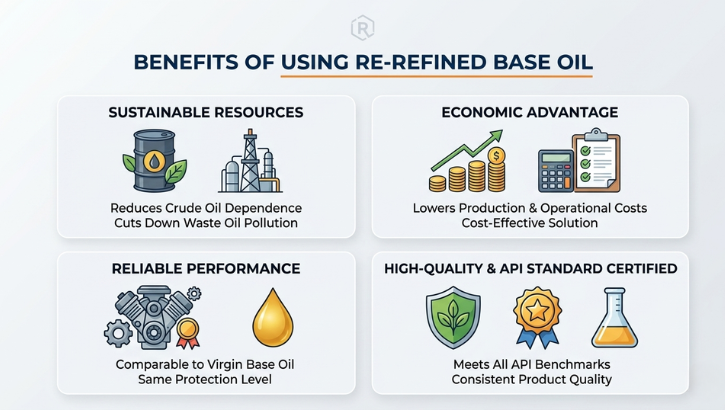
Re-refined base oil delivers a strong combination of sustainability, cost savings, and reliable performance. Industries no longer treat it as an alternative; they now use re-refined base oil as a smart, practical solution. With global lubricant demand increasing, businesses look for ways to reduce costs and environmental impact without compromising quality-and this is where re-refined base oil stands out.
You can see its benefits across multiple areas:
- Reduces dependence on crude oil resources
- Cuts down waste oil pollution
- Lowers production and operational costs
- Delivers performance comparable to virgin base oil
Studies show that re refining used oil saves significant energy compared to producing new base oil from crude. This makes re refined base oil both an eco-friendly and economically viable option. Industries such as automotive, manufacturing, and heavy engineering already use it to improve efficiency and meet sustainability goals.
In simple terms, re refined base oil helps businesses operate smarter-spending less while reducing environmental impact and maintaining high performance standards.
Environmental Benefits
Re-refined base oil plays a crucial role in reducing environmental damage caused by improper oil disposal. Used oil often contaminates soil and water when industries fail to manage it properly. By converting waste into re refined base oil, industries actively reduce pollution and support a circular economy.
Key Environmental Advantages:
- Prevents water contamination
- Just one litre of used oil can pollute large volumes of water
- Reduces landfill waste
- Re-refining keeps oil out of dumping sites
- Saves natural resources
- Reduces dependence on crude oil extraction
- Lowers carbon emissions
- Re-refining consumes less energy than crude refining
- Supports circular economy
- Converts waste into reusable resources
Example:
An automotive service network collects used engine oil and sends it for processing. Instead of polluting the environment, the oil becomes re refined base oil and returns to the market as a valuable product.
Real Impact:
- Industries can recover up to 70–85% usable oil through re-refining
- Energy consumption drops significantly compared to virgin oil production
By choosing re refined base oil, businesses not only reduce their environmental footprint but also align with global sustainability goals.
Cost Efficiency
Re refined base oil offers a clear financial advantage for industries that aim to reduce operational costs. Since it uses existing oil resources, production costs remain lower compared to refining crude oil. This makes re-refined base oil a cost-effective option without sacrificing quality.
Here’s a simple comparison:
| Factor | Re-Refined Base Oil | Virgin Base Oil |
| Raw Material Cost | Lower (used oil) | Higher (crude oil) |
| Production Cost | Reduced | High |
| Energy Consumption | Lower | Higher |
| Market Price | More affordable | Expensive |
| Availability | Increasing | Limited by crude supply |
Practical Example:
A manufacturing plant that switches to lubricants made with re-refined base oil can reduce lubrication costs while maintaining machine efficiency. Over time, this leads to significant savings.
Why It Matters:
- Businesses improve profit margins
- Industries reduce dependency on volatile crude oil prices
- Companies achieve cost stability
In short, re-refined base oil helps industries optimize expenses while maintaining reliable performance.
Performance & Quality
Many industries once questioned whether re refined base oil could match the performance of virgin oil. Today, modern refining technologies have eliminated those concerns. High-quality base oil delivers consistent performance, making it suitable for demanding applications.
Key Performance Factors:
- Stable viscosity for smooth lubrication
- High thermal resistance under extreme temperatures
- Reduced engine wear and friction
- Improved oxidation stability
Example:
A logistics company using engine oil blended with base oil in its fleet experiences consistent engine performance and reduced maintenance costs. The oil maintains lubrication even under heavy loads and long operating hours.
Industry Insight:
Refineries now produce base oil that meets strict API standards. This ensures:
- Reliable engine protection
- Consistent quality across batches
- Compatibility with modern engines
Another Example:
Industrial machinery operating continuously in factories benefits from base oil because it maintains lubrication stability and reduces downtime.
In reality, refined base oil performs just as effectively as virgin base oil when processed correctly. It delivers the right balance of durability, efficiency, and sustainability, making it a dependable choice for modern industries.
Conclusion
Re refined base oil has moved far beyond outdated perceptions and proven its value as a reliable, sustainable, and cost-effective solution for modern industries. What many once considered a low-quality alternative now stands as a high-performance base stock that meets strict industry standards. From debunking myths to understanding its advanced refining process, it’s clear that base oil delivers both quality and environmental benefits.
Industries today face rising costs, stricter environmental regulations, and growing sustainability demands. Re-refined base oil addresses all three by reducing dependence on crude oil, lowering operational expenses, and minimizing environmental impact. Whether used in automotive lubricants or industrial machinery, it consistently performs without compromising efficiency.
FAQs
1. What is re-refined base oil?
Re-refined base oil is a purified lubricant base stock derived from used oil through advanced refining processes.
2. Is re refined base oil safe for engines?
Yes, it is safe when it meets industry standards like API and ISO.
3. How is re refined oil different from recycled oil?
Re-refined oil undergoes chemical processing, unlike simple filtration in recycled oil.
4. Is re refined oil better than virgin oil?
It is comparable in performance and more environmentally friendly.
5. Why is re refined oil cheaper?
Because it uses existing oil resources, reducing raw material costs.
6. Is re refined base oil used in India?
Yes, it is widely used in industrial sectors and growing in demand.
7. How is re refined oil different from recycled oil?
Re-refined oil undergoes a thorough purification process to restore it to base oil quality, whereas recycled oil may only be filtered and reused without complete refinement.
8. Is re refined base oil environmentally friendly?
Yes, it significantly reduces waste, lowers carbon footprint, and minimizes the need for crude oil extraction, making it an eco-friendly choice.
9. Does using re refined oil void engine warranties?
No, as long as the oil meets the manufacturer’s recommended specifications and standards, it will not void warranties.
10. Why is there still a myth about re refined oil quality?
The myth persists due to outdated perceptions and lack of awareness. Earlier refining methods were less advanced, but modern technology has completely transformed quality standards.