
LDO vs Furnace Oil: Which Fuel is Better for Industrial Use?
INTRODUCTION :
LDO vs Furnace Oil Choosing between Light Diesel Oil (LDO) and Furnace Oil is not just about fuel price it directly impacts boiler efficiency, maintenance costs, emissions, and overall industrial productivity. Many manufacturers assume the cheaper fuel is always the better option, but poor fuel selection often leads to higher downtime and operational losses. In India, Furnace Oil remains a major industrial fuel, accounting for nearly 63% of petroleum fuel consumption in industry compared to High-Speed Diesel/LDO categories at around 34%, according to Reserve Bank of India industrial fuel data. Recent Ministry linked data also tracks significant sector-wise consumption of both Furnace Oil and LDO across industries from 2017 – 2023. Understanding the real difference between LDO vs Furnace Oil helps industries reduce fuel costs, improve compliance, and choose the right long-term energy strategy.
What is LDO (Light Diesel Oil)?
Light Diesel Oil (LDO) is a popular industrial fuel used in boilers, furnaces, generators, and heating systems where industries need clean and efficient combustion. It works as a middle-distillate fuel, lighter than furnace oil but heavier than regular diesel, making it a practical choice for many manufacturing units. Industries prefer LDO because it offers better ignition, smoother burner performance, and lower maintenance compared to heavier fuels. According to industrial fuel usage patterns in India, diesel-based fuels remain widely used across textile, food processing, and engineering sectors due to their operational reliability. LDO vs Furnace Oil also contains lower viscosity, which makes storage, pumping, and handling much easier. For industries that want better combustion efficiency and reduced downtime, LDO often becomes the preferred option. It balances performance, cost, and compliance, especially where cleaner fuel usage matters.
Definition of Light Diesel Oil
Light Diesel Oil (LDO) is a low-viscosity industrial fuel mainly used in boilers, furnaces, thermic fluid heaters, and diesel generators. It falls between High-Speed Diesel (HSD) and Furnace Oil in terms of weight, density, and performance. Industries choose LDO when they need reliable combustion without the handling challenges of heavier fuels like furnace oil.
Unlike regular diesel used in vehicles, LDO is specially designed for industrial heating and power generation. It burns more smoothly and produces better flame stability in industrial burners. This helps improve fuel efficiency and reduces burner maintenance.
You will commonly find LDO in:
- Textile mills
- Food processing units
- Chemical plants
- Small manufacturing industries
- Commercial boiler systems
- Backup power generators
For example, a textile dyeing unit often uses LDO in boilers because it provides steady heat and cleaner combustion, which supports production quality.
Key features of LDO include:
- Lower viscosity than Furnace Oil
- Easier storage and pumping
- Faster ignition performance
- Better combustion efficiency
- Lower maintenance requirements
- Reduced smoke and residue formation
Many industries prefer LDO when pollution control and equipment life matter. It may cost more than Furnace Oil per litre, but its operational benefits often make it a smarter long-term investment.
Composition and Properties of LDO
Light Diesel Oil contains hydrocarbon compounds produced during crude oil refining. It offers a balanced mix of performance, cleaner combustion, and easy handling. Compared to Furnace Oil, LDO vs Furnace Oil has lower density and lower viscosity, which improves burner efficiency and reduces sludge formation.
Its chemical structure helps industries achieve stable flame performance and smoother fuel flow. Since it contains fewer heavy residues, it creates less carbon buildup inside boilers and furnaces.
Key Properties of LDO
| Property | Light Diesel Oil (LDO) |
| Appearance | Clear to slightly dark liquid |
| Density | Around 0.85 to 0.87 kg/litre |
| Viscosity | Low to medium |
| Flash Point | Above 66°C |
| Sulphur Content | Lower than Furnace Oil |
| Calorific Value | Around 10,500 kcal/kg |
| Ignition Quality | Fast and stable |
| Residue Formation | Low |
These properties make LDO easier to handle in daily industrial operations.
Common Industrial Applications of LDO
LDO vs Furnace Oil Industries use Light Diesel Oil (LDO) where they need efficient heating, clean combustion, and reliable burner performance. Since LDO flows easily and ignites quickly, it works well in systems that demand continuous operation without frequent maintenance.
Many small and medium industries prefer LDO because it reduces operational interruptions and improves fuel efficiency.
Common Applications of LDO
1. Industrial Boilers
Textile mills, food factories, and chemical plants use LDO in boilers for steam generation. Clean combustion helps maintain consistent production quality.
Example:
A textile dyeing unit uses LDO vs Furnace Oil boilers to maintain stable steam pressure for fabric processing.
2. Furnaces
Engineering workshops and manufacturing plants use LDO in industrial furnaces for controlled heating operations.
Example:
Metal treatment units use LDO-fired furnaces for heat treatment processes.
3. Diesel Generators
Factories use LDO in backup generators during power interruptions to avoid production loss.
4. Thermic Fluid Heaters
Many industries use LDO for indirect heating systems where temperature control is critical.
5. Food Processing Plants
Food industries prefer LDO because cleaner combustion supports hygiene and reduces contamination risks.
What is Furnace Oil?
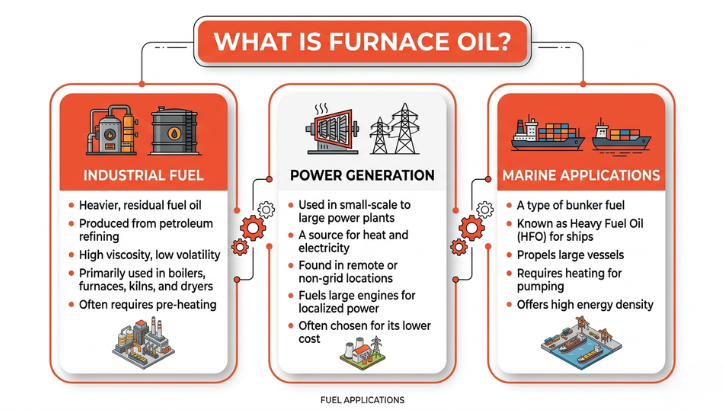
Furnace Oil is a heavy industrial fuel widely used in boilers, furnaces, kilns, and large heating systems where industries need high heat output at a lower fuel cost. It comes from the heavier fractions of crude oil during the refining process and contains higher viscosity compared to LDO. Industries choose Furnace Oil mainly because it offers strong thermal efficiency for large-scale operations like cement plants, steel units, and chemical factories. According to industrial fuel consumption trends in India, Furnace Oil remains one of the most commonly used fuels in heavy manufacturing due to its affordability and availability. It requires preheating before use because of its thick consistency, but it delivers excellent performance in high-capacity industrial systems. For businesses focused on cost-effective bulk fuel consumption, Furnace Oil remains a practical and powerful solution.
Definition of Furnace Oil
Furnace Oil is a heavy, dark, and viscous industrial fuel used mainly for heat generation in boilers, furnaces, thermic fluid heaters, and large industrial burners. It comes from the residue left after lighter fuels like petrol, diesel, and kerosene are separated during crude oil refining.
Industries prefer LDO vs Furnace Oil l when they need high heat output at a lower operating cost. Since it is heavier than Light Diesel Oil (LDO), it requires preheating before use. This helps the fuel flow smoothly and burn efficiently inside industrial systems.
You will commonly find Furnace Oil in:
- Cement factories
- Steel plants
- Chemical industries
- Paper mills
- Textile processing units
- Large manufacturing plants
- Industrial boilers and furnaces
Composition and Properties of Furnace Oil
Furnace Oil contains heavier hydrocarbon compounds left after refining lighter petroleum products. It has a thick consistency, dark appearance, and strong heat-producing capacity. Because of its high viscosity, industries must preheat it before pumping and combustion.
Compared to LDO vs Furnace Oil contains more carbon residue and higher sulphur content. This makes it more suitable for heavy industrial operations rather than clean combustion systems.
Key Properties of Furnace Oil
| Property | Furnace Oil |
| Appearance | Dark brown to black liquid |
| Density | Around 0.89 to 0.95 kg/litre |
| Viscosity | High |
| Flash Point | Above 66°C |
| Sulphur Content | Higher than LDO |
| Calorific Value | Around 10,000 to 10,500 kcal/kg |
| Ignition Quality | Slower than LDO |
| Residue Formation | High |
Advantages of Using Furnace Oil
Furnace Oil gives industries a strong advantage when they need high heat output at a lower fuel cost. Large manufacturing units often choose it because it supports continuous operations without creating excessive fuel expenses.
Its biggest strength is affordability. Compared to LDO vs Furnace Oil usually costs less per litre, which helps industries reduce production costs in the long run.
Major Advantages of Furnace Oil
1. Cost-Effective for Bulk Usage
Industries that consume large volumes of fuel save significantly by using Furnace Oil.
Example:
A steel rolling mill running 24/7 reduces operating expenses by choosing Furnace Oil over LDO.
2. High Heat Generation
Furnace Oil provides strong thermal energy, making it ideal for heavy-duty industrial heating.
Example:
Cement plants use it in kilns because they need continuous high-temperature operations.
3. Suitable for Large Boilers and Furnaces
Heavy industrial systems perform efficiently with Furnace Oil because they are designed for high-capacity fuel handling.
4. Easy Availability
Suppliers provide Furnace Oil widely across industrial zones in Chennai, Tamil Nadu, and South India.
5. Reliable for Continuous Production
Factories that run long production cycles depend on Furnace Oil for uninterrupted heating performance.
Which Industries Prefer Furnace Oil?
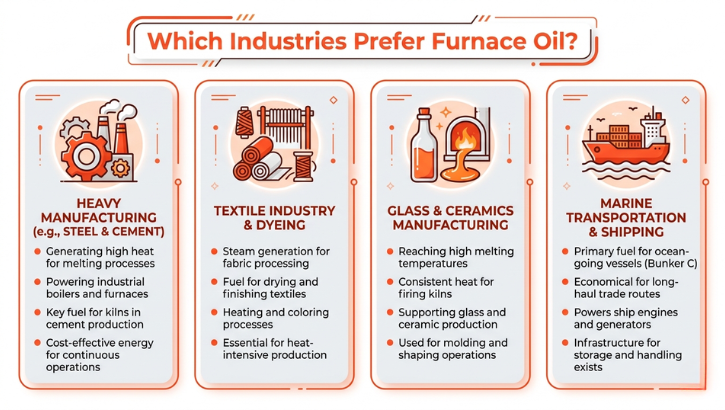
Industries that need continuous high-temperature operations and bulk fuel consumption often prefer Furnace Oil. Since it delivers strong thermal output at a lower cost, large-scale manufacturing sectors rely on it for daily production. Unlike, LDO vs Furnace Oil works best in heavy-duty boilers, kilns, furnaces, and thermic fluid heaters designed for high-capacity fuel handling. Industries such as cement, steel, chemical processing, paper mills, and textile dyeing units commonly use it for cost-effective heating solutions. According to industrial fuel usage patterns in India, heavy manufacturing sectors continue to depend on Furnace Oil because fuel cost directly affects production profitability. Although it requires preheating and regular maintenance, the long-term savings make it a practical choice. For industries focused on high output and operational efficiency, Furnace Oil remains one of the most trusted industrial fuels.
Cement Industries
Cement industries prefer LDO vs Furnace Oil because cement production requires continuous high-temperature heating for long hours. Rotary kilns in cement plants operate at extremely high temperatures, often above 1400°C, and they need a fuel that delivers strong and stable thermal energy at a lower operating cost.
Furnace Oil fits this requirement perfectly because it provides high heat output and supports bulk fuel consumption without significantly increasing production expenses.
Cement plants mainly use LDO vs Furnace Oil in:
- Rotary kilns
- Clinker production units
- Drying chambers
- Material preheating systems
- Large industrial boilers
Why Cement Industries Choose LDO vs Furnace Oil
- Lower fuel cost for high-volume usage
- Strong thermal efficiency for kilns
- Reliable performance for continuous production
- Suitable for heavy industrial burners
- Easy availability from industrial fuel suppliers
Since fuel cost plays a major role in cement manufacturing profitability, many cement plants in Tamil Nadu and South India depend on Furnace Oil for large-scale operations and long-term cost control.
Steel Plants
Steel plants require intense and continuous heating for metal processing, rolling, forging, and reheating operations. Because these processes demand high thermal energy every day, LDO vs Furnace Oil becomes a practical and cost-effective fuel choice.
Steel manufacturing depends heavily on reheating furnaces where billets, slabs, and metal sections must reach precise temperatures before shaping. Furnace Oil provides the consistent heat needed for these heavy industrial systems.
It commonly supports:
- Reheating furnaces
- Rolling mills
- Forging units
- Heat treatment plants
- Annealing operations
- Industrial boilers
Chemical Manufacturing
Chemical manufacturing industries use Furnace Oil because many production processes require controlled and continuous heating. Reactors, boilers, distillation units, and thermic fluid heaters depend on stable thermal energy to maintain product quality and process efficiency.
Since chemical plants often run nonstop, they need a fuel that supports long operational hours without creating excessive fuel costs. LDO vs Furnace Oil offers that balance between performance and affordability.
Common Uses in Chemical Manufacturing
1. Process Heating
Chemical reactions often need specific temperatures for proper mixing and conversion.
Example:
Solvent production units use Furnace Oil-fired heaters to maintain steady reaction temperatures.
2. Steam Generation
Boilers produce steam for heating, cleaning, and pressure-based operations across chemical plants.
3. Distillation Units
Refining and separation processes require constant heat for effective material separation.
Example:
Petrochemical plants use Furnace Oil in distillation systems for separating chemical compounds.
4. Thermic Fluid Heaters
These systems help maintain indirect heating where temperature control is critical.
Why Chemical Industries Prefer Furnace Oil
- Lower operational fuel cost
- Strong heat output for heavy-duty processes
- Reliable for continuous production cycles
- Suitable for large industrial heating systems
This makes Furnace Oil a dependable choice for chemical manufacturing units focused on stable production and cost efficiency.
Environmental and Compliance Considerations
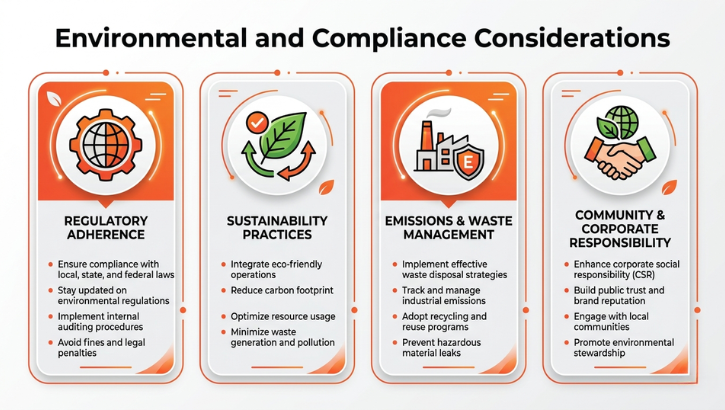
Choosing between LDO and Furnace Oil is not only about cost and performance it also affects environmental compliance and long-term business sustainability. Industries today must follow strict emission standards set by pollution control authorities to reduce air pollution and protect worker safety. Fuels with higher sulphur content, like Furnace Oil, often produce more smoke, SOx, and particulate emissions, which can increase compliance pressure. Cleaner fuels like LDO or re-refined fuel alternatives help industries reduce emissions and improve operational efficiency. Many manufacturing units in Chennai, Tamil Nadu, and across India now review fuel choices based on pollution norms as well as fuel costs. Regular fuel testing, proper burner maintenance, and approved storage systems also play a major role in meeting compliance standards. A smart fuel decision supports both productivity and environmental responsibility.
Emission Standards for Industrial Fuels
Industrial fuels like LDO and Furnace Oil directly affect air quality because combustion releases gases such as sulphur oxides (SOx), nitrogen oxides (NOx), carbon monoxide, and particulate matter. Industries must control these emissions to meet environmental standards and avoid penalties.
Fuels with higher sulphur content usually create more pollution. Furnace Oil often produces higher emissions than LDO because of its heavier composition and carbon residue. This makes fuel quality an important compliance factor.
Common Emission Standards Industries Monitor
- Sulphur Oxides (SOx)
- Nitrogen Oxides (NOx)
- Particulate Matter (PM)
- Carbon Monoxide (CO)
- Smoke Density
- Stack Emission Levels
Pollution Control Board Regulations
Pollution Control Boards monitor industrial fuel usage to reduce environmental damage and protect public health. In India, industries must follow guidelines from the Central Pollution Control Board (CPCB) and State Pollution Control Boards like the Tamil Nadu Pollution Control Board (TNPCB).
These authorities check how industries store, handle, and burn fuels such as LDO and Furnace Oil. They also inspect emissions from boilers, furnaces, and chimneys to ensure safe operating conditions.
Industries must maintain:
- Valid pollution control approvals
- Stack emission monitoring records
- Proper chimney height standards
- Safe fuel storage systems
- Regular equipment maintenance logs
- Waste disposal compliance records
For example, a chemical plant using Furnace Oil must monitor sulphur emissions and maintain proper stack height to reduce local air pollution.
If industries fail to meet these standards, they may face:
- Heavy penalties
- Temporary shutdown notices
- License suspension
- Increased compliance inspections
Because Furnace Oil creates higher emissions, industries using it often require stronger pollution control systems like scrubbers and filters.
Companies that use cleaner fuels like LDO or re-refined fuel alternatives usually find compliance easier and reduce long-term environmental risks.
Sustainability and Re-Refined Fuel Alternatives
Industries today focus more on sustainability because fuel choices affect both environmental impact and long-term operating costs. Traditional fuels like Furnace Oil and LDO support production, but they also create emissions, waste, and resource dependency. This pushes many companies to explore cleaner and smarter alternatives.
Re-refined fuel oil has become one of the most practical sustainable options. It comes from used oil that goes through a purification and refining process to restore industrial-grade quality. This reduces waste and supports circular energy practices.
Popular Sustainable Fuel Alternatives
1. Re-Refined Furnace Oil
This fuel offers similar heating performance while reducing waste oil disposal problems.
Example:
A manufacturing unit replaces standard Furnace Oil with re-refined fuel oil to lower fuel costs and improve sustainability reporting.
2. Low-Sulphur Industrial Fuels
These fuels help reduce SOx emissions and make pollution compliance easier.
3. Biofuel Blends
Some industries use blended fuels to reduce fossil fuel dependence and improve carbon footprint management.
Conclusion:
Choosing between LDO and Furnace Oil depends on your industry needs, fuel budget, and compliance requirements. LDO offers cleaner combustion, lower maintenance, and better efficiency for smaller operations. Furnace Oil works best for large industries that need high heat output at a lower cost. Textile units and food processing plants often prefer LDO, while cement, steel, and chemical industries rely on Furnace Oil. The right fuel choice improves productivity, reduces downtime, and controls long-term costs. Working with a trusted fuel supplier ensures better quality, reliable delivery, and smooth industrial operations.
FAQ:
1. Which is better for industrial boilers, LDO or Furnace Oil?
LDO works better for smaller boilers that need cleaner combustion and lower maintenance. Furnace Oil suits large industrial boilers that require high heat output and cost-effective bulk fuel usage.
2. Which fuel is cheaper, LDO or Furnace Oil?
Furnace Oil is usually cheaper than LDO in terms of price per litre. Large industries often choose it to reduce fuel expenses in long-term operations.
3. Does Furnace Oil create more pollution than LDO?
Yes, Furnace Oil usually creates more emissions because it contains higher sulphur and heavier residues. LDO burns cleaner and helps industries manage pollution control more easily.
4. Can LDO replace Furnace Oil completely?
Not always. Smaller industries can easily use LDO, but heavy industries like cement and steel plants often need Furnace Oil for stronger heat output and large-scale operations.
5. Which industries commonly use LDO?
Textile mills, food processing units, chemical plants, and small manufacturing industries commonly use LDO because it offers smooth combustion and easier handling.
6. Which industries prefer Furnace Oil?
Cement plants, steel factories, chemical manufacturing units, paper mills, and heavy industrial boilers usually prefer Furnace Oil for high-temperature operations.
7. Does Furnace Oil require preheating before use?
Yes, Furnace Oil has high viscosity, so industries must preheat it before pumping and combustion to ensure smooth fuel flow and efficient burning.
8. Is LDO safer to handle than Furnace Oil?
LDO is easier to store, pump, and handle because it has lower viscosity and creates less sludge. This reduces maintenance and operational difficulties.
9. What should industries check before choosing a fuel?
Industries should check boiler type, fuel cost, emission standards, maintenance needs, production scale, and pollution control requirements before selecting LDO or Furnace Oil.
10. Why is choosing the right fuel supplier important?
A reliable fuel supplier ensures consistent fuel quality, timely delivery, proper compliance support, and better long-term performance for industrial operations.