
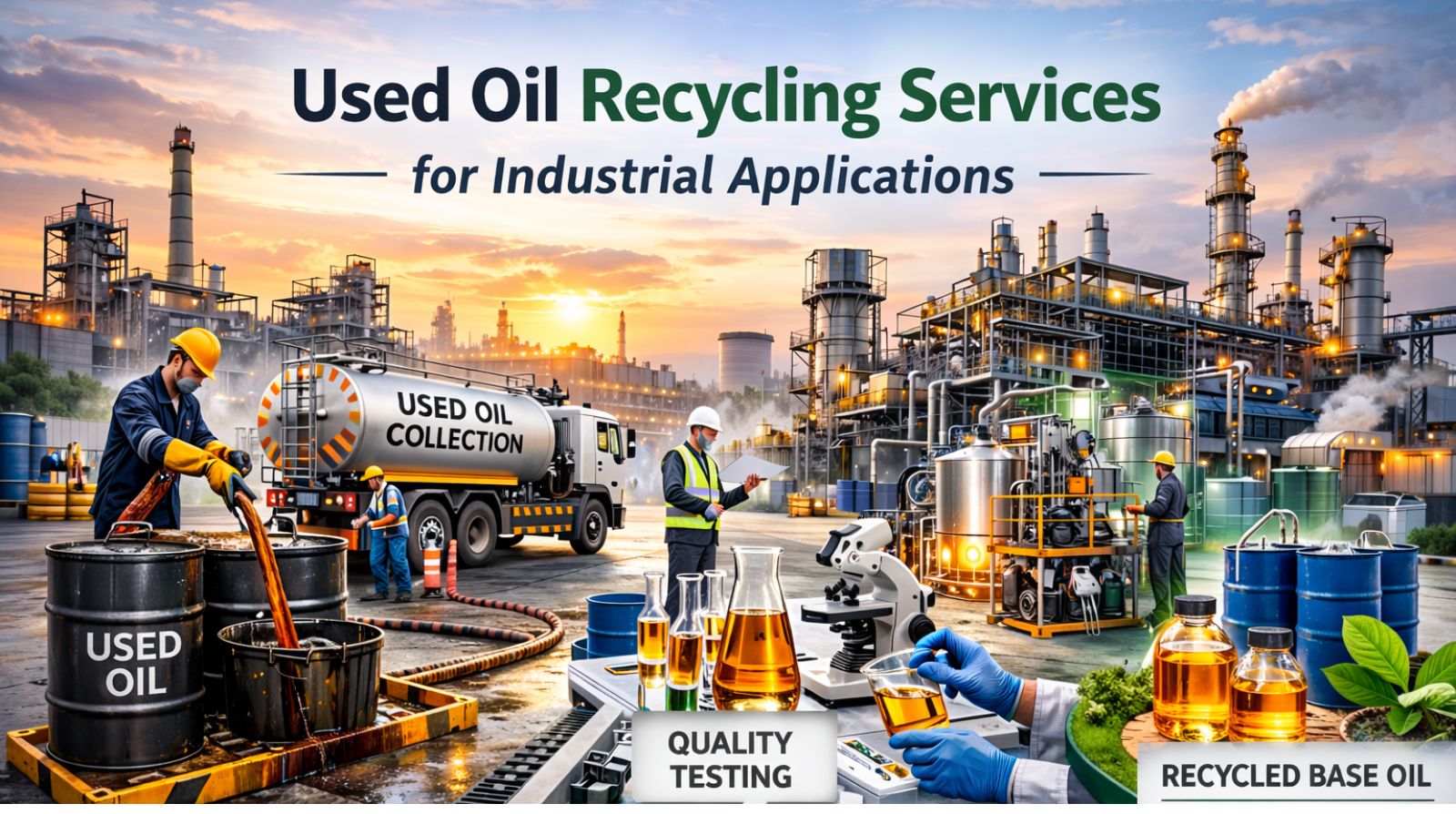
Used Oil Recycling Services for Industrial Applications
Used oil recycling services for industrial applications are becoming increasingly essential as industries generate large volumes of waste lubricating oil from machinery, fleets, turbines, and hydraulic systems. If this oil is improperly disposed of, it can contaminate land and water resources, creating serious environmental and regulatory challenges. According to the United States Environmental Protection Agency, one gallon of used oil can contaminate up to one million gallons of freshwater, highlighting the scale of the risk when waste oil is not managed responsibly.
At the same time, used oil still contains valuable hydrocarbons that can be recovered and reused through recycling and re-refining processes. Data from the American Petroleum Institute indicates that re-refining used oil requires significantly less energy than refining crude oil, making it a more sustainable industrial solution.
This is where professional used oil recycling services play a crucial role ensuring safe collection, testing, re-refining, and environmentally compliant disposal for industries. You can see the detailed information below.
What Are Used Oil Recycling Services?
Used oil recycling services refer to organized systems that collect, transport, test, and process waste lubricating oil generated from industrial machinery, vehicles, and power equipment. Instead of being disposed of as hazardous waste, used oil can be treated and reprocessed to recover valuable hydrocarbons for reuse in industrial applications. According to the United States Environmental Protection Agency, used oil is one of the most recyclable petroleum products and can be re-refined multiple times, reducing the need for crude oil extraction and minimizing environmental impact.
These services are particularly important for industries that generate large quantities of lubricants during regular operations. Recycling not only prevents soil and water contamination but also supports sustainable resource management.
Definition of Used Oil Recycling
Used oil recycling is the process of collecting contaminated lubricating oil and removing impurities such as water, metals, sludge, and carbon residues. Through specialized treatment and re-refining technologies, the oil can be transformed into reusable base oil or industrial fuel.
For example, recycling one gallon of used oil can produce around 2.5 quarts of new lubricating oil, according to industry estimates from the American Petroleum Institute.
Types of Industrial Used Oil
Industries generate several types of used oil depending on equipment and applications:
- Engine Oil – From transport fleets, generators, and construction machinery
- Hydraulic Oil – Used in manufacturing equipment and hydraulic presses
- Turbine Oil – Generated from turbines in power plants and energy facilities
- Gear Oil – Found in industrial gearboxes and heavy mechanical systems
Why Industries Generate Large Volumes of Used Oil
Industrial operations rely heavily on lubrication to reduce friction and maintain machinery performance. Large volumes of used oil are generated due to:
- Continuous equipment operation in factories
- Regular oil replacement during maintenance cycles
- Contamination from dust, metal particles, and heat degradation
This makes professional used oil recycling services essential for safe waste management and resource recovery.
Why Used Oil Recycling Is Important for Industries
Industrial facilities rely heavily on lubricating oils to keep machinery, turbines, hydraulic systems, and vehicle fleets running efficiently. However, once these oils degrade due to heat, contamination, and oxidation, they become used oil that must be managed carefully. Without proper recycling systems, waste oil can cause serious environmental damage and regulatory violations.
Environmental Protection
Improper disposal of used oil poses major environmental risks. Even small quantities can contaminate soil, groundwater, and surface water sources.
For example, the United States Environmental Protection Agency reports that one gallon of used oil can contaminate up to one million gallons of freshwater. When industries dump or mishandle waste oil, it may lead to long-term ecological damage and expensive cleanup costs.
Key environmental concerns include:
- Soil contamination from oil leaks or spills
- Water pollution affecting rivers, lakes, and groundwater
- Harm to aquatic ecosystems and wildlife
- Air pollution from uncontrolled burning of waste oil
Responsible recycling helps prevent these risks while supporting sustainable industrial practices.
Regulatory Compliance
Industrial waste oil handling is strictly regulated in India. The Central Pollution Control Board (CPCB) and State Pollution Control Boards (SPCB) require industries to manage used oil through authorized collectors and recyclers.
Compliance typically involves:
- Maintaining proper waste oil storage systems
- Documentation of used oil movement and disposal
- Partnering with approved recycling facilities
Sustainable Resource Recovery
Used oil still contains valuable hydrocarbons that can be recovered through recycling and re-refining processes. This approach helps industries reduce waste while conserving natural resources.
Benefits include:
- Reduced dependence on crude oil extraction
- Recovery of reusable base oil and industrial fuel
- Lower environmental footprint for industrial operations
Major Sources of Used Oil in Industrial Operations
Industrial sectors consume large volumes of lubricating oil to keep machinery, engines, and mechanical systems operating efficiently. Over time, these oils degrade due to heat, oxidation, contamination, and metal wear particles, turning into used oil that requires proper recycling and disposal. According to the International Energy Agency, industrial activity and transportation account for a major share of global lubricant consumption, which eventually generates significant quantities of waste oil.
Manufacturing Plants
Manufacturing facilities produce used oil from continuous machine operations and maintenance cycles.
Common sources include:
- Hydraulic presses and CNC machines
- Industrial gearboxes and drive systems
- Compressors, pumps, and production equipment
Automotive Workshops and Service Centers
Vehicle service centers generate large volumes of waste oil through routine maintenance.
Typical examples include:
- Engine oil from cars, trucks, and commercial vehicles
- Transmission and gear oil
- Brake and hydraulic fluids
Power Plants and Energy Facilities
Power plants rely on turbine and transformer oils that require periodic replacement to maintain performance and safety.
Transport Fleets and Heavy Machinery
Logistics fleets, mining equipment, and construction machinery require frequent lubrication, making them major contributors to industrial used oil generation.
Used Oil Collection and Logistics Process
Effective used oil recycling services for industrial applications start with a well-organized collection and logistics system. Industries generate large quantities of waste lubricants from machinery, engines, and hydraulic systems, so safe handling and transportation are critical. According to the Central Pollution Control Board (CPCB), used oil must be transferred only through authorized collectors and recyclers to prevent environmental contamination and illegal disposal.
Authorized Collection from Industrial Facilities
Professional recyclers collect used oil directly from:
- Manufacturing plants and factories
- Automotive service centers and workshops
- Power plants and energy facilities
- Fleet maintenance yards and logistics companies
Safe Storage and Sealed Containers
Industries must store waste oil safely before pickup. Recommended practices include:
- Leak-proof steel drums or storage tanks
- Clearly labeled hazardous waste containers
- Secondary containment systems to prevent spills
Transport and Documentation Compliance
Transportation requires strict documentation such as hazardous waste manifests , authorized transport vehicles, and regulatory records.
Traceability of Waste Oil Movement
Modern recycling systems maintain batch tracking and documentation, ensuring transparency, compliance, and responsible waste oil management throughout the logistics chain.
Used Oil Testing and Quality Assessment
Before used oil can be recycled or re-refined, it must undergo detailed laboratory testing to evaluate its condition and suitability for processing. Industrial used oil often contains contaminants such as water, metal particles, sludge, and degraded additives that can affect recycling efficiency. According to the ASTM International , standardized oil testing methods help maintain accuracy and consistency in lubricant analysis and recycling operations.
Density and Viscosity Testing
Two key indicators of oil quality are density and viscosity.
- Density helps detect contamination or dilution in the oil.
- Viscosity measures the oil’s resistance to flow and indicates whether it still meets operational requirements.
Flash Point and Pour Point Evaluation
These tests evaluate oil safety and performance:
- Flash Point identifies the temperature at which oil vapors ignite.
- Pour Point determines the lowest temperature at which oil remains fluid.
Water, Sediment, Carbon, and Sulphur Analysis
Laboratories also test for:
- Moisture and sludge contamination
- Carbon residue after combustion
- Sulphur levels affecting refining processes
Batch-wise test reports ensure traceability, compliance, and consistent recycling quality.
Re-Refining Process of Used Oil
The re-refining process converts contaminated used oil into high-quality base oil and reusable industrial products. Instead of discarding waste lubricants, specialized recycling facilities use advanced treatment methods to remove impurities and recover valuable hydrocarbons. According to the American Petroleum Institute, re-refining used oil requires significantly less energy than producing base oil from crude, making it a more sustainable industrial solution.
Pre-Treatment and Filtration
The first stage removes large contaminants from collected used oil.
Key steps include:
- Filtration to remove metal particles and sludge
- Water separation through dehydration processes
- Removal of suspended solids and sediments
Distillation and Impurity Removal
The filtered oil undergoes vacuum distillation to separate different hydrocarbon components and eliminate contaminants such as fuel residues and degraded additives.
Recovery of Base Oil Fractions
During distillation, valuable hydrocarbon fractions are separated and purified for further processing.
Production of Re-Refined Base Oil
After final treatment and polishing, the recovered oil becomes Re-Refined Base Oil (RRBO) , which can be reused in lubricant production or approved industrial applications.
Industrial Applications of Recycled Oil
Recycled oil recovered through professional used oil recycling services has several valuable industrial applications. Instead of treating waste lubricants as hazardous disposal material, industries can recover usable energy and base oil components through recycling and re-refining processes. According to the American Petroleum Institute, properly recycled used oil can be re-refined and reused multiple times, making it a sustainable resource for industrial operations.
Industrial Fuel for Furnaces
Recycled oil can be used as industrial fuel in furnaces and heating systems where controlled combustion is required.
Common applications include:
- Metal processing industries
- Cement plants
- Manufacturing units requiring high-temperature heating
Boiler and Thermic Fluid Systems
Many industries utilize processed recycled oil as fuel in boilers and thermic fluid heaters, which are widely used for steam generation and heat transfer systems.
Industrial Oil Blending Applications
Recovered oil fractions can be blended with other industrial fuels or oils, depending on quality parameters and regulatory approvals.
Lubricant Base Oil Production
Through re-refining processes, used oil can be converted into Re-Refined Base Oil , which serves as a base stock for producing new lubricants and industrial oils.
Environmental Benefits of Used Oil Recycling
Used oil recycling plays a crucial role in reducing environmental pollution and promoting sustainable industrial practices. When industries dispose of used lubricants improperly, the oil can contaminate soil and water ecosystems. According to the United States Environmental Protection Agency, one gallon of used oil can contaminate up to one million gallons of freshwater, making responsible recycling essential for environmental protection.
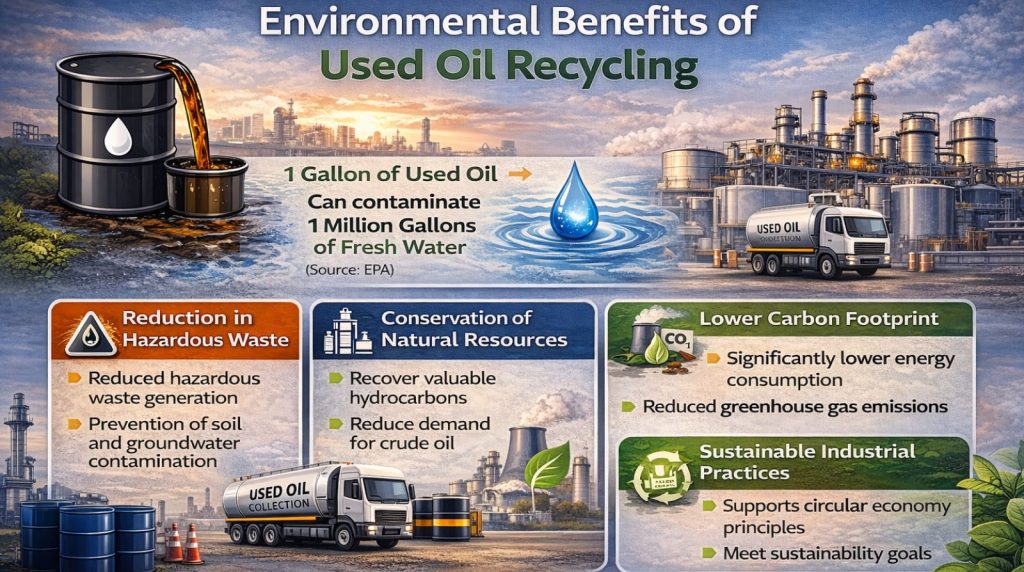
Reduction in Hazardous Waste
Recycling prevents large volumes of waste oil from entering landfills, drainage systems, or natural water bodies.
Key benefits include:
- Reduced hazardous waste generation
- Prevention of soil and groundwater contamination
- Safer waste management practices for industries
Conservation of Natural Resources
Re-refining used oil helps recover valuable hydrocarbons that can be reused in industrial applications, reducing the demand for crude oil extraction.
Lower Carbon Footprint
Studies from the American Petroleum Institute indicate that re-refining used oil consumes significantly less energy than refining crude oil, resulting in lower greenhouse gas emissions.
Sustainable Industrial Practices
Adopting used oil recycling supports circular economy principles and helps industries meet environmental compliance and sustainability goals.
Regulatory Framework for Used Oil Management in India
Used oil is classified as hazardous waste, which means its collection, transportation, recycling, and disposal are strictly regulated in India. These regulations ensure that industries handle waste lubricants responsibly to prevent environmental contamination and illegal disposal. The regulatory framework is primarily governed by the Central Pollution Control Board (CPCB) along with State Pollution Control Boards.
CPCB Guidelines
The CPCB establishes national rules for managing used oil under the Hazardous and Other Wastes (Management and Transboundary Movement) Rules. These guidelines require industries to:
- Store used oil in labeled and secure containers
- Hand over waste oil only to authorized recyclers or collectors
- Maintain proper records of waste oil generation and transfer
SPCB Authorization Requirements
Each state’s State Pollution Control Board (SPCB) grants authorization to recyclers, transporters, and industries handling used oil.
Documentation and Compliance Standards
Industries must maintain:
- Waste oil inventory records
- Transport manifests and tracking documents
- Compliance reports for regulatory audits
Safe Disposal of Non-Recoverable Residues
Residues that cannot be recycled must be disposed of at authorized hazardous waste treatment facilities, ensuring environmental safety and regulatory compliance.
Choosing the Right Used Oil Recycling Service Provider
Selecting the right partner for used oil recycling services for industrial applications is critical for compliance, environmental safety, and operational efficiency. Industries must work with authorized recyclers that follow strict quality, safety, and regulatory standards. According to the Central Pollution Control Board (CPCB), industries should only transfer used oil to registered recyclers and authorized collectors to ensure proper handling and legal compliance.
Regulatory Authorization
A reliable recycling provider must hold valid approvals from regulatory authorities.
Key requirements include:
- CPCB or State Pollution Control Board (SPCB) authorization
- Compliance with hazardous waste management rules
- Proper documentation and reporting systems
Testing and Quality Control
Professional recyclers perform laboratory testing to evaluate used oil quality and determine the best recycling process.
Safe Logistics Infrastructure
Efficient service providers maintain safe transportation systems, including sealed containers and authorized transport vehicles.
Environmental Compliance
The recycler should follow environmentally responsible processing methods and ensure safe disposal of non-recoverable residues.
Technical Expertise and Transparency
Experienced recycling companies provide technical knowledge, batch testing reports, and transparent documentation, helping industries maintain regulatory compliance and sustainable waste management practices.
Why Industries Choose Professional Used Oil Recycling Services
Industries generate large volumes of used lubricating oil from machinery, fleets, and industrial equipment. Managing this waste internally can be complex and risky. Professional used oil recycling services help industries handle waste oil safely, efficiently, and in compliance with environmental regulations. According to the Central Pollution Control Board, industries must transfer used oil only to authorized recyclers to ensure proper handling and disposal.
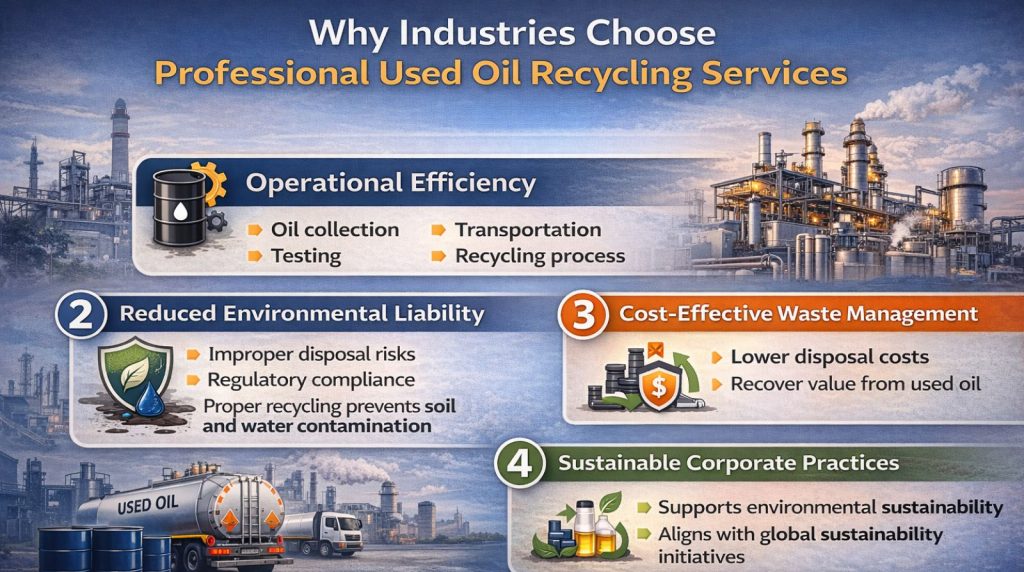
Operational Efficiency
Professional recyclers manage the entire process from collection and transportation to testing and recycling allowing industries to focus on core operations.
Reduced Environmental Liability
Improper disposal of used oil can lead to environmental damage and legal penalties. Partnering with authorized recyclers reduces these risks and ensures regulatory compliance.
Cost-Effective Waste Management
Recycling services help industries minimize waste disposal costs while recovering value from used oil through re-refining or energy recovery.
Sustainable Corporate Practices
Adopting responsible recycling solutions supports environmental sustainability and aligns with global sustainability initiatives promoted by organizations such as the International Energy Agency.
The Future of Industrial Used Oil Recycling
The future of industrial waste management is closely tied to sustainable practices, and used oil recycling services are becoming a key part of that shift. As industries focus more on environmental responsibility, recycling and re-refining used lubricants are gaining global attention. According to the International Energy Agency, improving resource efficiency and recycling petroleum products can significantly reduce industrial environmental impact.
Growing Industrial Sustainability Focus
Many industries are adopting sustainability policies to reduce waste and lower environmental footprints.
Examples include:
- Manufacturing companies implementing waste oil recycling programs
- Logistics fleets partnering with authorized recyclers
- Power plants adopting environmentally responsible disposal practices
Advancements in Re-Refining Technology
Modern re-refining technologies now allow used oil to be processed into high-quality base oil comparable to virgin base oil. Improved filtration, vacuum distillation, and hydrotreatment methods enhance recycling efficiency.
Circular Economy in the Oil Industry
Recycling used oil supports the circular economy model, where waste materials are recovered and reused instead of discarded. This approach helps conserve natural resources, reduce hazardous waste, and promote long-term industrial sustainability.
Conclusion
Used oil recycling services for industrial applications play a vital role in helping industries manage waste lubricants safely while recovering valuable resources. Industrial machinery, transport fleets, and power systems generate large volumes of used oil, and responsible recycling ensures this waste is handled without harming the environment. According to the United States Environmental Protection Agency, used oil can be re-refined and reused multiple times, making it one of the most recyclable petroleum products.
By adopting professional recycling solutions, industries can achieve several benefits:
- Environmental protection by preventing soil and water contamination
- Regulatory compliance with CPCB and SPCB waste management rules
- Resource conservation through recovery of reusable base oil and fuel
- Cost-effective waste management for industrial operations
Partnering with an experienced recycler ensures safe collection, proper testing, and environmentally responsible processing of used oil.
To learn more about compliant and sustainable waste oil management solutions, visit Rerol Refinery and explore professional recycling services designed for modern industrial needs.
Frequently Asked Questions (FAQs)
What is used oil recycling?
Used oil recycling is the process of collecting, treating, and reprocessing lubricating oil that has already been used in engines, machinery, or industrial equipment. Instead of disposing of it as hazardous waste, the oil is cleaned to remove contaminants such as water, metal particles, sludge, and degraded additives. According to the United States Environmental Protection Agency, used oil can be re-refined into high-quality base oil and reused multiple times, making it one of the most recyclable petroleum products.
Can used oil be fully recycled?
Yes. Most used lubricating oil can be reprocessed through re-refining technologies. The American Petroleum Institute notes that re-refined oil can meet the same performance standards as virgin base oil when proper treatment and testing are applied.
What industries generate the most used oil?
Industries producing large volumes include:
- Manufacturing plants and heavy industries
- Automotive workshops and service centers
- Power plants and energy facilities
- Logistics fleets and construction equipment
Is recycled oil safe for industrial use?
Yes, when processed through certified recycling facilities, recycled oil can be safely used for industrial fuel, blending, or lubricant production.
What regulations govern used oil recycling in India?
Used oil management in India is regulated by the Central Pollution Control Board under hazardous waste management rules, requiring industries to work with authorized collectors and recyclers.